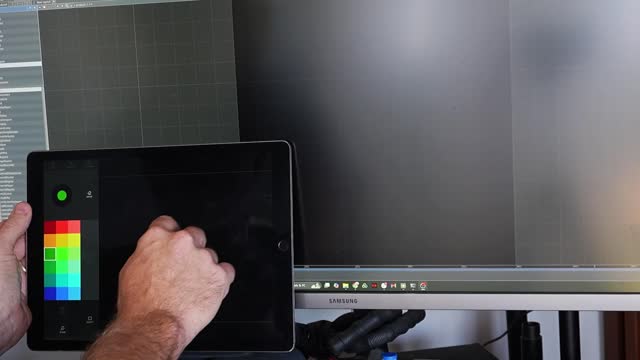
Imagine a digital world that doesn’t just display pre-built graphics, but actively grows and reacts to its environment in real-time. A landscape that shifts its aesthetic from watercolor to cyberpunk based on your heartbeat, or a virtual character whose clothing dynamically changes texture and style in response to the conversation. This is not a distant dream; it is the emerging frontier of live neural rendering with reactive diffusion synthesis, a technology that is fundamentally redefining the boundaries of visual computation.
At its core, this field represents a powerful fusion of two revolutionary AI concepts. Live neural rendering moves beyond traditional polygon-based graphics by using compact neural networks to represent and generate complex scenes. Instead of storing millions of textured polygons, a neural radiance field (NeRF) or similar model can capture a 3D scene as a function learned by a network, enabling photorealistic view synthesis from any angle. The “live” component means this is happening on-the-fly, allowing for dynamic, interactive experiences.
When this capability is supercharged by reactive diffusion synthesis, the magic truly begins. Diffusion models, the powerhouse behind modern AI image generators, work by iteratively refining random noise into a coherent image. “Reactive” synthesis means this generative process is guided by continuous, real-time input. It’s not just generating a static image; it’s creating a living, breathing visual stream that responds to an ever-changing stream of data.
The Technical Symphony: How It Works
The process is a sophisticated dance of data and inference. A live neural rendering model first establishes a base understanding of a scene’s geometry and lighting. Simultaneously, a diffusion model is primed and ready for action. The “reactive” element comes from a control signal—this could be audio, biometric data, user input, or even another video stream. This signal is fed into the diffusion model as a conditioning input, steering the denoising process at every step.
The key innovation lies in the seamless integration of these systems. The live renderer provides the foundational canvas, while the reactive diffusion model acts as a hyper-intelligent texture and style shader, painting onto that canvas in real-time. This fusion allows for previously impossible visual phenomena, such as a virtual object that not only sits perfectly in a real-world video feed but also morphs its material appearance to match the changing mood of a soundtrack.
Transforming Industries in Real-Time
The applications for this technology are as vast as they are transformative:
-
Interactive Entertainment & Gaming: Imagine a game where the entire environment evolves based on your playstyle. An aggressive player sees the world render in a harsh, metallic palette, while a stealthy player experiences a world of soft shadows and muted tones—all generated dynamically without loading new assets.
-
Personalized Social Media & Metaverse: Live streams and virtual meetings could become deeply personalized. Users could apply AI filters that don’t just add a hat, but completely re-render their background in the style of Van Gogh or a futuristic cityscape, reacting to the tone and content of the conversation.
-
Architectural Visualization & Design: Clients could walk through a neural rendering of a building design and verbally command, “Make the walls brick,” or “Show me how this room looks at sunset.” The reactive diffusion model would re-synthesize the materials and lighting in real-time, providing instant feedback.
-
AI-Driven Art and Performance: Live visual performances (VJing) will be revolutionized. Instead of triggering pre-made clips, performers could use music and movement as the control signal for a diffusion model, generating a unique, perfectly synchronized visual narrative that never repeats.
The Challenges and the Horizon
The primary hurdle is the immense computational cost. Running a diffusion model is resource-intensive, and doing so at high frame rates for live interaction requires significant optimization. However, advances in model distillation and specialized hardware are rapidly closing this gap.
Live neural rendering with reactive diffusion synthesis marks a paradigm shift from a “rendering-as-playback” to a “rendering-as-creation” model. It promises a future where our digital interfaces are not static displays, but collaborative partners in creation, capable of weaving reality itself from the threads of data and imagination.
Related posts:

What Is Time Dilation?
Blogs![telephone prefix 216]()
What Is Telephone Prefix 216?
Blogs![Crestwood High School Baulkham Hills NSW]()
Crestwood High School Baulkham Hills NSW: Address, Location, and Comprehensive Guide
Blogs![spectra home tamara day warwick poem apple chair]()
Spectra Home Tamara Day Warwick Poem Apple Chair: Timeless Elegance Meets Everyday Durability
Blogs
How to Craft a Highly Personalized Message for Prospect Based on Responsibilities
Blogs![Life After Separation Is About More Than Starting Again]()
Life After Separation Is About More Than Starting Again
Blogs