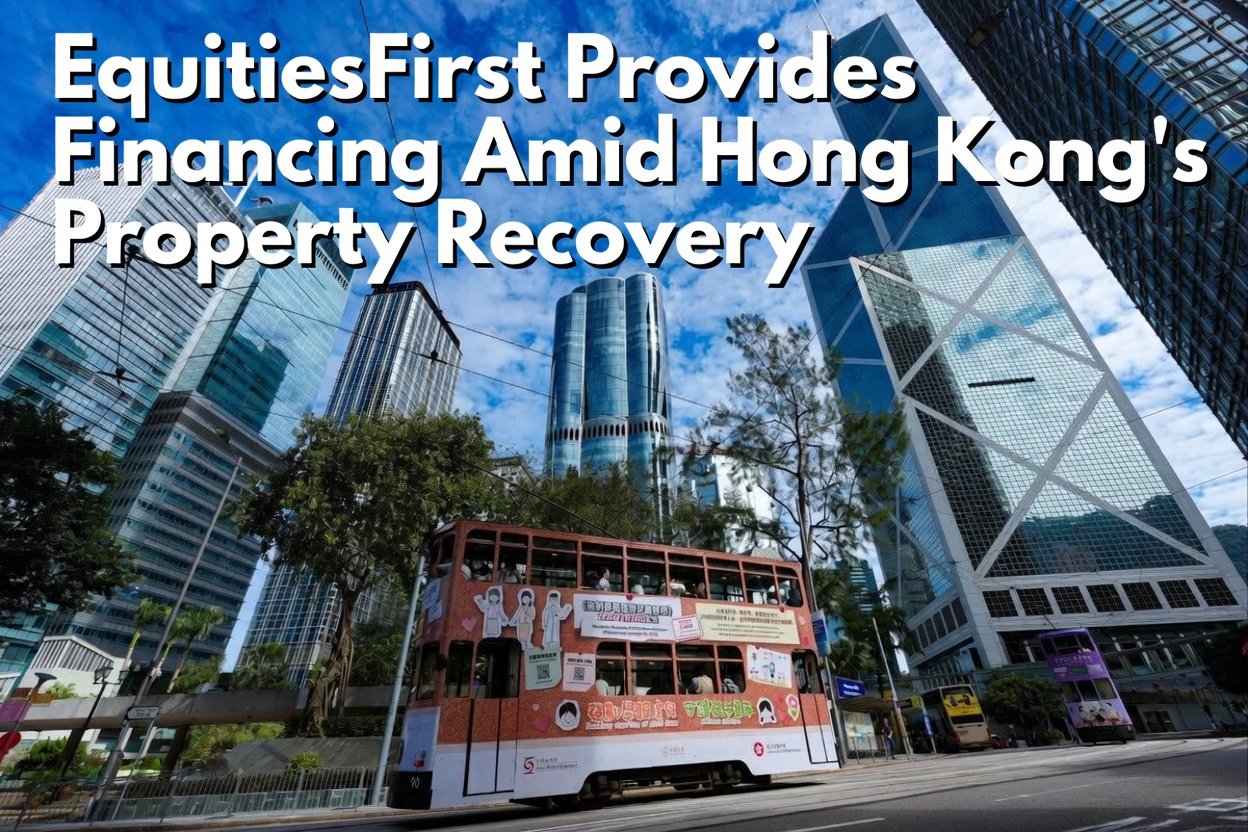
Hong Kong’s property market is outpacing the rest of the Greater China region in its recovery. Private home prices reached a 19-month high in February and have gained ground in eight consecutive months, with the cumulative rebound now running at 5.8% off the March 2025 trough.
Mainland China’s residential prices remain roughly 30% below their 2021 peak, and in real terms have retreated to levels not recorded since the early 2000s.
Hong Kong’s recovery, modest by historical standards, is increasingly backed by structural demand rather than a cyclical bounce. For some investors, the recovery has sharpened interest in liquidity options that enable investment while preserving long-term portfolio positions, including equities-backed financing structures offered by firms like EquitiesFirst.
A residential revival
The most direct driver is people. Over 270,000 professionals have been approved through Hong Kong’s various talent visa programs since 2022 and now call the city home, roughly offsetting a prior emigration wave.
Seventy percent of applicants under the Top Talent Pass Scheme rent private homes, generating net annual leasing demand of approximately 12,000 units between 2023 and 2027. The effect on the rental market is clear: residential rents continue to set record highs, extending a climb that has run since official indices began in the 1990s.
Rising rents have confirmed to potential buyers that income generation is viable, pulling forward purchase demand from professionals now settled enough to consider ownership. CBRE projects home prices to rise 5% to 10% in 2026, with new home sales expected to exceed 20,000 units for a second consecutive year, a benchmark last cleared in 2013.
At least 1.5 million additional residents are projected to arrive in Hong Kong by 2046, equal to roughly a fifth of the current population. But birth rates hit a record low in 2025, meaning virtually all medium-term population growth must come from net immigration.
Supply has not kept pace: Hong Kong’s topography and government conservation policies keep developable land scarce, and the private housing supply target is 126,000 units for the decade from 2026 to 2035. The gap between supply and demand stands to keep property values high.
Mainland capital anchors the premium tier
Mainland purchasers now dominate Hong Kong’s luxury property segment. They accounted for 80% of the city’s high-end sales last year, spending approximately US$2 billion in the Peak and Southern districts alone. Transactions above HK$100 million in the first 11 months of 2025 topped 200, compared with 128 recorded for all of 2024.
Technology entrepreneurs and second-generation family business owners are increasingly drawn to Hong Kong property as a wealth-preservation asset and succession planning base. For this cohort, persistent weakness in mainland real estate, with values at their lowest in real terms since the early 2000s, has strengthened the case for allocating capital across the border.
The broader economy provides the floor
Luxury demand is historically fragile without a solid underlying economy, and Hong Kong’s broad recovery has provided it. GDP grew 3.5% in 2025, beating consensus forecasts, with exports rising 15.5% in the fourth quarter as the city’s transshipment role drew fresh volumes. Trade, tourism, finance and professional services all posted strong results.
The financial sector has added a wealth-effect tailwind. Hong Kong reclaimed the top global IPO ranking in 2025, raising $37.4 billion across 119 listings, the exchange’s strongest showing in five years and more than the combined volume of the prior three years.
The Hang Seng logged its best annual performance since 2017. With more than 400 companies queued for listing, the pipeline for equity wealth generation is substantial, and equity wealth historically feeds housing demand.
Monetary conditions eased in parallel. Three Federal Reserve rate cuts in 2025, totalling 75 basis points, flowed directly into Hong Kong mortgage rates via the currency peg.
First-time buyer activity in the sub-HK$4 million segment rose 34% in 2025, with that tier capturing its highest share of total residential transactions since 2016.
A window opening across all segments
Residential prices, Central office rents and retail sales are all projected to expand in 2026, a synchronized upswing across Hong Kong’s three major property categories that has not occurred in nearly a decade.
Central’s Grade A office net absorption reached 1.63 million square feet in the second half of 2025, the highest half-year reading since the first half of 2019, driven by hedge funds and private banking expansion. Premium Central office rents are projected to grow up to 8% in 2026.
Investment transaction volumes across Hong Kong property reached HKD39 billion in 2025, up 12% year-on-year, with the fourth quarter alone recording a 65% sequential surge. Lower rates, rising incomes and six years of price correction suggest a market still in its early recovery phase, well below the valuations of 2021.
Equities-backed financing, where investors raise liquidity against existing shareholdings, offers one route to participate in a market where entry points remain well below prior peaks. EquitiesFirst, which specializes in equities-backed lending, is able to structure financing for shareholders looking to convert long-term portfolio positions into near-term liquidity for real asset purchases.
For shareholders holding concentrated or long-dated positions, EquitiesFirst’s financing approach provides capital access without requiring liquidation. In a market where all three commercial property segments are moving together for the first time in years, that kind of flexibility could carry practical value.