


A headphone jack is the socket that lets wired headphones, earphones, or other audio gear connect to a device so sound can travel through a physical cable. In everyday use, people also call it an audio jack, aux input, stereo plug connection, or phone connector, depending on the device and the style of connector involved. The most familiar version for consumers is the 3.5 mm jack, though 2.5 mm and 6.35 mm sizes also exist.
For many people, What is a headphone jack is not just a definition question. It is also a practical one: the jack determines whether you can plug in wired headphones, connect a microphone, monitor audio from a camera, or attach gear for music and recording. Even as wireless audio has become common, the headphone jack remains important in studios, instruments, desktop audio, and many accessories.
How a headphone jack works
A headphone jack is a small electrical connector with metal contacts inside. When you insert a matching plug, those contacts line up and carry the audio signal from the device to the headphones. In simple terms, the jack acts like a bridge between your device and your ears. The connector family behind this idea has been used for decades and includes multiple contact layouts, such as TS, TRS, TRRS, and more specialized forms.
The key idea is that sound can be sent as an analog signal through the cable. A plug with fewer contacts usually carries fewer channels, while plugs with more contacts can carry stereo sound plus microphone input or control functions. That is why one pair of headphones may work with a laptop but not fully support the microphone function on a phone unless the connector type matches.
The basic parts
A typical headphone jack system has two pieces: the socket on the device and the plug on the cable. The plug fits into the jack, and its metal sections touch the internal contacts. That contact point is what allows audio to move from the player, phone, mixer, or laptop into the headphones. In professional audio equipment, the same family of connectors is also used for line-level signals and instrument inputs.
When people ask What is a headphone jack, they usually mean the familiar 3.5 mm socket on a phone, laptop, camera, or speaker. But the word “jack” can also refer to the larger 6.35 mm version often found on amplifiers, mixers, and studio gear. Sennheiser and Neutrik both show how these connector families remain active across consumer and professional audio use.
Common headphone jack sizes
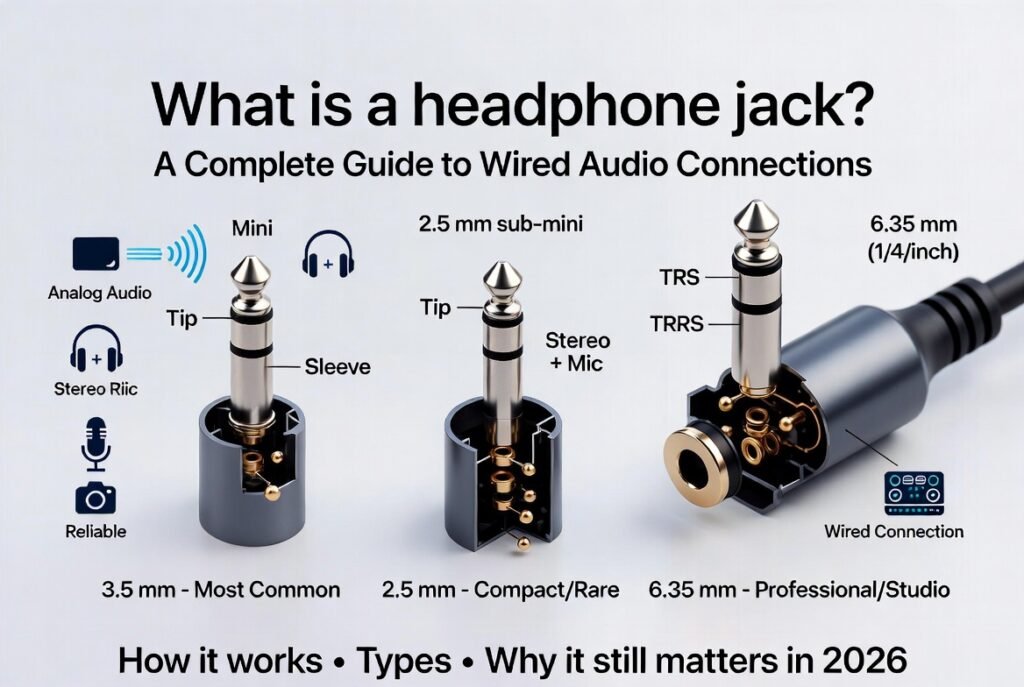
The three sizes most people encounter are 3.5 mm, 2.5 mm, and 6.35 mm. The 3.5 mm version became the everyday standard for portable audio because it is compact and easy to use with headphones, earbuds, and small electronics. The 6.35 mm version is larger and is still common in studio equipment, amps, and instruments. The 2.5 mm version is smaller and appears less often, but it still exists in some headsets and specialized devices.
3.5 mm headphone jack
The 3.5 mm headphone jack is the one most users recognize immediately. It has been widely used in portable audio devices for years and remains popular in microphones, headphones, cameras, and laptops. Sennheiser product pages still show 3.5 mm headphone outputs and 3.5 mm connectors on modern audio gear, which shows how current the format remains in real products.
This size is often called the “mini jack.” It is small enough for compact devices, yet strong enough for daily use. Because it is so widely supported, the 3.5 mm connector is one of the most practical answers to What is a headphone jack in modern consumer electronics.
6.35 mm headphone jack
The 6.35 mm jack, also called a quarter-inch jack, is larger and more durable. It is commonly used in professional headphones, guitar cables, amplifiers, mixers, and recording equipment. Neutrik’s professional plug documentation and Sennheiser’s headphone adapter listings both reflect the continued importance of this larger connector in audio workflows.
Because of its size, the quarter-inch connector is often preferred where reliability and repeated plugging matter more than compact design. Musicians, audio engineers, and live performers often depend on this connector because it handles demanding environments well.
2.5 mm headphone jack
The 2.5 mm jack is less common today, but it still appears in certain headsets, older phones, and niche audio devices. It belongs to the same connector family and follows the same basic idea: a compact plug-and-socket interface for transmitting audio.
TRS, TRRS, and what the rings mean
A lot of confusion around the headphone jack comes from the metal rings on the plug. These rings divide the connector into sections, and each section can carry a separate signal. The simplest version is TS, which has two contacts. TRS adds a third contact and is often used for stereo audio. TRRS adds a fourth contact and is commonly used for stereo sound plus microphone input or controls.
In practice, that means a plain stereo headphone plug may work perfectly in one device, while a headset with a microphone may need a different jack layout to function fully. This is why some headphones play sound but do not activate the microphone, or why some adapters are required for certain phones and laptops. The connector may look similar on the outside, but the contact pattern inside matters a great deal.
For consumers, the important lesson is simple: not every headphone plug is identical, even when the size matches. A 3.5 mm headphone plug can be wired differently depending on whether it is meant for stereo audio only or for a headset with a mic. Understanding that difference saves time and prevents frustration.
Where headphone jacks are used
Headphone jacks are used in far more places than just headphones. They appear in computers, tablets, cameras, microphones, musical instruments, audio interfaces, portable recorders, and home audio systems. Wikipedia’s technical overview explains that this connector family is used for headphones, speakers, microphones, mixing consoles, and electric instruments such as guitars and keyboards.
That broad range of use is one reason the headphone jack has lasted so long. A musician might use it with an amplifier. A student might use it with a laptop. A content creator might use it on a microphone or camera. A listener might simply use it to connect wired earphones and enjoy dependable sound.
It also helps that the connection is direct. There is no pairing step, no battery in the cable, and no wireless setup process. For many users, that simplicity is the main appeal of wired audio. It is a small detail, but it is one reason the answer to What is a headphone jack still matters in 2026.
Why the headphone jack still matters
Wireless audio has expanded quickly, but the headphone jack still has clear advantages. It provides a simple wired connection, it does not require charging, and it often avoids latency issues that can matter in gaming, recording, editing, and live monitoring. A wired connection can also be useful when battery life matters or when you want a dependable backup option.
There is also a practical reliability factor. A cable can be more predictable than a wireless connection in busy environments, on planes, or in places where Bluetooth pairing may be inconvenient. That is why many professionals still prefer wired monitoring gear and why adapters remain common in studio and field audio setups.
At the same time, many smartphones and modern portable devices have reduced or removed the built-in jack in favor of slimmer designs, waterproofing benefits, and USB or wireless audio options. Wikipedia’s overview notes that phone connectors have been removed from many smartphones, while remaining common in desktop and professional audio equipment.
Headphone jack vs wireless audio
The headphone jack and wireless audio solve the same basic problem in different ways. A headphone jack sends sound through a physical cable, while wireless audio sends sound through radio-based connections such as Bluetooth. Each method has strengths, and each works best in different situations.
Wireless audio is convenient. You can move freely, avoid cable clutter, and connect to several modern devices with ease. That convenience is why Bluetooth headphones are so popular, and why many users now pair headphones directly with phones, tablets, and computers. A BusinessToMark guide on connecting Bose headphones to Mac shows how common Bluetooth headphone use has become in daily life.
Wired audio, though, still has strengths that matter. It does not depend on pairing, it does not need charging for the connection itself, and it often gives a straightforward plug-and-play experience. For users who want reliability and simplicity, the headphone jack remains a very practical option.
How to tell which headphone jack you have
The easiest way to identify a headphone jack is to look at the size and number of black rings on the plug. A smaller plug is often 3.5 mm, a medium-sized one may be 2.5 mm, and a much larger plug is usually 6.35 mm. The number of ring sections helps you understand whether the connector is meant for stereo sound only or for a headset with microphone support.
A second clue is the device itself. Phones and lightweight laptops usually use 3.5 mm if they have any jack at all. Musical equipment and studio gear often use 6.35 mm. Compact microphones, camcorders, and some accessories may use 3.5 mm for audio monitoring or recording.
If you are uncertain, check the device manual or product specification. Audio manufacturers often list the connector type clearly because compatibility matters so much in practice. Sennheiser’s product pages, for example, distinguish between 3.5 mm outputs, mini-jack connections, and adapter options.
Adapters and compatibility
Adapters are common because the headphone world includes several sizes and wiring styles. A 3.5 mm-to-6.35 mm adapter lets smaller headphones connect to larger studio equipment, and many brands sell these as standard accessories. Sennheiser, for example, lists a 1/4-inch jack adapter for headphone use.
Adapters are helpful, but compatibility still matters. A plug can fit physically and still not deliver every function you expect if the wiring is different. That is especially true with headset microphones and devices that use different ring assignments. In other words, size is only part of the story.
A good rule is to match both the size and the purpose. If you need sound only, a simple adapter may be enough. If you need sound plus microphone support, check whether the device expects TRRS, TRS, or a special breakout cable.
Common problems and easy fixes
One common problem is a loose or partially inserted plug. If the audio cuts in and out, the plug may not be seated properly in the jack, or the jack may contain dust or lint. Another issue is using the wrong connector type, which can lead to missing microphone support or sound only on one side.
A third issue is physical wear. Like any connector, a headphone jack can loosen over time if it is used heavily or if the plug is frequently pulled sideways. That is one reason professional connectors are designed to be rugged and why some equipment uses better strain relief at the cable end. Neutrik’s product materials emphasize heavy-duty phone plug construction for professional use.
If sound quality seems poor, test with another pair of headphones or another device. That simple check helps you figure out whether the problem is the headphones, the cable, or the jack itself. This is one of the fastest ways to troubleshoot wired audio without guessing.
How the headphone jack compares with other connectors
The headphone jack is part of a larger family of audio connectors. There are also XLR connectors, USB audio devices, and other specialized plugs used in professional or digital setups. The headphone jack remains popular because it is compact, inexpensive, and easy for everyday users to understand.
In some cases, a single jack can carry more than one kind of signal. A combined audio jack may handle headphone output and microphone input together. In other cases, separate ports are used for each function. The exact setup depends on the device design and on how the manufacturer wants to balance size, cost, and flexibility.
This is why the phrase What is a headphone jack has a broader answer than many people expect. It is not only a socket for headphones. It is a long-standing connector system that supports many forms of audio communication and remains embedded in music, media, and professional gear.
Practical advice before buying headphones or adapters
Before buying headphones, check whether your device still has a built-in jack. If it does, confirm the size and whether the port supports headphone-only audio or headset microphone functions. That simple check can prevent unnecessary returns and compatibility problems.
If you plan to use headphones with a laptop, desktop, or microphone setup, think about the end goal. For music listening, a standard stereo connector may be enough. For calls, gaming, or recording, you may need a headset plug with a microphone-compatible wiring pattern. For studio work, you may need a 6.35 mm adapter or a different cable entirely.
If you already own headphones, check the manufacturer page before purchasing anything else. Modern audio brands often provide exact connector details, which is the safest way to avoid mismatches. Sennheiser’s catalog and documentation are examples of how manufacturers specify connector type, jack size, and adapter compatibility clearly.
If you want to explore more audio and tech content on BusinessToMark, these pages are useful starting points: How to Connect Bose Headphones to Mac for Optimal Sound and Productivity , Geekzilla T3: Ultimate Hub for Tech Enthusiasts , and the Tech category page on BusinessToMark .
For a broader technical overview, the Wikipedia page for the phone connector (audio) provides a useful summary of connector sizes, contact types, and common uses.
Conclusion
A headphone jack is a simple idea with a surprisingly large role in audio history and everyday use. It connects wired headphones, microphones, instruments, and other audio equipment through a physical socket and plug, and it comes in several sizes and wiring formats. From the familiar 3.5 mm jack to the larger 6.35 mm studio connector, this family of ports remains useful because it is reliable, practical, and easy to use.