Introduction
Photography enthusiasts often face a tough choice when upgrading their gear: stick with a compact, feature-rich APS-C system or step up to the broader capabilities of full-frame mirrorless technology. The Fujifilm X-T5 vs Sony a7 IV stands out as one of the most balanced head-to-head matchups in the mirrorless category today. Both cameras deliver outstanding image quality, advanced stabilization, and hybrid photo-video functionality, yet they cater to slightly different user preferences.
The Fujifilm X-T5 emphasizes creative joy, high-resolution stills, and a classic design that feels like an extension of the photographer’s hand. In contrast, the Sony a7 IV prioritizes technical excellence, low-light prowess, and seamless workflow for professionals who shoot both stills and motion. This article dives deep into every key aspect—design, sensor performance, autofocus, video, ergonomics, and value—to help you decide which model aligns best with your shooting style. Whether you prioritize portability and fun JPEGs or superior tracking and dynamic range, the Fujifilm X-T5 vs Sony a7 IV comparison reveals clear strengths on both sides.
By the end, you’ll have a clear picture of how these two cameras perform in real scenarios like landscape work, street photography, wildlife, portraits, and travel. Let’s break it down step by step.
Design and Ergonomics: Classic Dials vs Modern Versatility
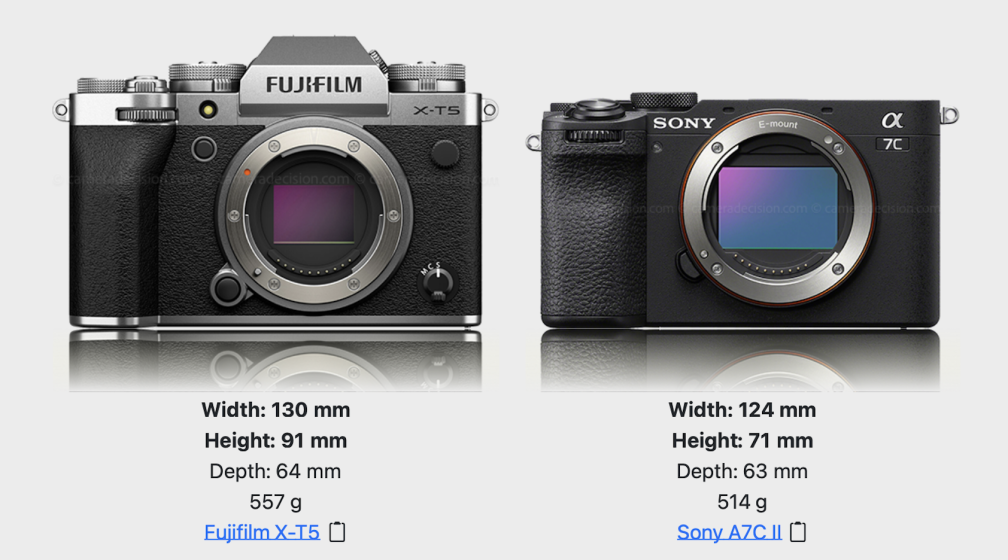
One of the first things photographers notice is how each camera feels in the hand. The Fujifilm X-T5 revives the beloved X-series retro styling with three dedicated top-plate dials for ISO, shutter speed, and exposure compensation. These physical controls allow instant adjustments even when the camera is powered off—an intuitive experience that many longtime Fuji users swear by. The body is compact and lightweight at just 557 grams with battery and card, making it ideal for all-day carry without fatigue.

The three-way tilting LCD screen offers 1.84 million dots and excellent visibility for high or low angles, while the 3.69-million-dot electronic viewfinder provides a bright, lag-free preview with 0.8x magnification. Weather sealing protects against dust and moisture, and the overall build feels premium yet unobtrusive—perfect for street or travel work.
On the other side, the Sony a7 IV adopts a more contemporary, grip-focused design that prioritizes customization. Its deeper handgrip accommodates larger lenses comfortably, and the fully articulating 3-inch touchscreen (1.03 million dots) flips out for vlogging or awkward angles. The electronic viewfinder matches the X-T5’s resolution at 3.69 million dots but offers slightly different magnification. At 658 grams, it feels more substantial—still portable but noticeably heavier after extended sessions. Dual card slots (one UHS-II SD, one CFexpress Type A) provide backup flexibility for both models.
If you love tactile, film-camera-like operation and want something that slips easily into a small bag, the X-T5 wins here. For users who shoot long events or need quick menu access via customizable buttons, the Sony’s layout feels more efficient. Both cameras include Bluetooth and Wi-Fi for easy transfer to smartphones, but the Sony adds USB Power Delivery for extended shooting.
Sensor Technology and Image Quality: Resolution vs Dynamic Range
At the heart of any camera comparison lies the sensor. The Fujifilm X-T5 features a 40.2-megapixel APS-C X-Trans CMOS 5 HR sensor paired with the X-Processor 5. This back-illuminated design delivers exceptional detail, especially in landscapes or architectural work where cropping is common. Fujifilm’s unique X-Trans color filter array minimizes moiré without an optical low-pass filter, resulting in crisp, film-like JPEGs straight out of camera. The 40 MP resolution gives you plenty of headroom for large prints or heavy post-crop editing.
In real-world tests, the X-T5 excels in good lighting conditions. Colors pop with Fujifilm’s signature film simulations—Classic Chrome, Velvia, and Acros remain favorites among users who want creative looks without editing software. In-body image stabilization reaches up to 7 stops, allowing handheld shots at slow shutter speeds that would otherwise require a tripod.
The Sony a7 IV, meanwhile, uses a 33-megapixel full-frame Exmor R BSI CMOS sensor with the powerful Bionz XR processor. The larger sensor size inherently provides better light gathering, wider dynamic range, and superior high-ISO performance. While it has fewer megapixels, the full-frame advantage shines in low-light scenarios—think indoor events, night street photography, or astrophotography—where noise is noticeably lower up to ISO 12,800 and beyond. Dynamic range allows more recovery in highlights and shadows during RAW editing.
When comparing the Fujifilm X-T5 vs Sony a7 IV side by side in controlled scenes, the Sony often edges out in overall tonal gradation and shadow detail at higher ISOs. However, the Fuji’s higher resolution captures finer textures in daylight, making it a favorite for studio or product work. Both support 14-bit RAW files, but the Sony also offers lossless compressed RAW for smaller file sizes without quality loss.
Pixel-shift multi-shot on the X-T5 can create 160 MP images for ultimate detail in static subjects, a feature absent on the Sony. For most users, though, the Sony’s full-frame sensor delivers more “wow” factor in challenging lighting.
Autofocus Performance: Speed and Tracking Reliability
Autofocus is where the two cameras diverge most noticeably. The Fujifilm X-T5 employs a 425-point hybrid phase- and contrast-detection system with subject detection for humans, animals, birds, cars, and more. It performs admirably for stills and moderate action, especially with the latest firmware updates that refine eye and face tracking. The X-Processor 5 helps it lock on quickly in most situations.
However, when subjects move unpredictably—wildlife, sports, or kids running around—the Sony a7 IV pulls ahead dramatically. Its 759 phase-detection points cover nearly the entire frame, and Real-time Tracking combined with Eye AF is legendary for reliability. The Bionz XR engine processes data faster, resulting in fewer missed shots during continuous burst sequences. In the Fujifilm X-T5 vs Sony a7 IV autofocus tests shared by users on forums, the Sony consistently maintains focus on erratic subjects where the Fuji occasionally hunts or loses lock.
Both cameras offer continuous autofocus during video, but the Sony’s system feels more “set it and forget it.” If your work involves fast-paced action, the Sony is the safer choice. For deliberate, landscape, or portrait photography where you have time to compose, the X-T5’s AF is more than capable and pairs beautifully with its manual dials.
Video Capabilities: Hybrid Strengths Compared
Modern photographers often shoot both stills and video, so hybrid performance matters. The Fujifilm X-T5 records open-gate 6.2K at 30p, 4K 60p, and FHD 240p for slow-motion, all with 10-bit color. It supports ProRes and Blackmagic RAW over HDMI for professional workflows. The 7-stop IBIS delivers smooth handheld footage, and the film simulations apply to video for consistent looks.
The Sony a7 IV offers 4K 60p in Super 35mm (APS-C) crop mode and full-frame 4K 30p with 10-bit 4:2:2 internal recording. It reaches higher bitrates (up to 600 Mbps) and includes S-Log3 for maximum dynamic range in grading. Unlimited recording time (with proper cooling) and a full-size HDMI port make it more studio-friendly. Rolling shutter is better controlled on the Sony thanks to its sensor readout speed.
In the Fujifilm X-T5 vs Sony a7 IV video comparison, the Sony wins for professional videographers needing top-tier low-light performance and advanced codecs. The Fuji shines for creators who want beautiful colors out of the box and lighter gear for run-and-gun shooting. Both include microphone inputs and headphone jacks (Sony adds a 3.5mm audio jack directly).
Build Quality, Portability, and Battery Life
Portability often decides daily use. The X-T5’s smaller body and lighter weight make it a joy for hiking or travel. Its weather sealing matches the Sony’s, and the magnesium alloy construction feels robust. Battery life rates at approximately 580 shots (CIPA) for both, but real-world performance favors the Fuji slightly due to its efficient processor and fewer power-hungry features. The Sony’s NP-FZ100 battery is larger and widely available as a spare.
Connectivity is similar—Wi-Fi, Bluetooth, and USB-C charging—but the Sony supports faster data transfer with CFexpress cards. For users who travel light and value discretion, the Fujifilm X-T5 is hard to beat. Those who need a more robust grip for telephoto lenses or video rigs will appreciate the Sony’s ergonomics.
Lens Ecosystem and Accessories
Fujifilm’s X-mount offers a growing selection of high-quality, compact primes and zooms optimized for the APS-C sensor. Many include weather sealing and aperture rings that complement the camera’s dials. Third-party options from Sigma and Tamron expand choices without breaking the bank.
Sony’s E-mount ecosystem is massive, with native full-frame lenses from Sony, Zeiss, and third parties like Sigma and Tamron. Adapters allow use of older glass, and the sheer variety suits every genre. However, full-frame lenses tend to be larger and more expensive. In the Fujifilm X-T5 vs Sony a7 IV lens discussion, Fuji wins for lightweight travel kits; Sony wins for ultimate flexibility and future-proofing.
Price and Value Considerations
As of 2026, the Fujifilm X-T5 body typically retails lower than the Sony a7 IV, making it more accessible for enthusiasts. Factor in lenses and the total cost of ownership favors Fuji for compact setups. The Sony commands a premium for its full-frame sensor and advanced AF, but it often holds value well on the used market.
Both represent excellent value, but your budget and priorities matter. If you shoot primarily stills in good light and want creative tools, the X-T5 delivers more bang for the buck. For hybrid shooters or low-light specialists, the Sony justifies the extra investment.
For more insights on selecting the perfect mirrorless system, check our best mirrorless cameras guide and photography equipment buying tips. Advanced users may also enjoy understanding camera features explained.
Who Should Choose the Fujifilm X-T5?
- Landscape and travel photographers who value resolution and portability
- Enthusiasts who enjoy film simulations and tactile controls
- Users who prioritize JPEG quality and lighter gear for everyday carry
- Creators focused on stills with occasional video
Who Should Choose the Sony a7 IV?
- Action, wildlife, or event shooters needing reliable tracking AF
- Hybrid photo-video creators working in varied lighting
- Professionals who require maximum dynamic range and low-light performance
- Users invested in or planning a full-frame lens collection
Final Thoughts: The Fujifilm X-T5 vs Sony a7 IV Verdict
After examining every angle in the Fujifilm X-T5 vs Sony a7 IV comparison, there is no universal winner—only the best fit for your workflow. The X-T5 offers a delightful, inspiring shooting experience with class-leading resolution in a compact package. The Sony a7 IV delivers technical superiority in autofocus, low light, and video versatility thanks to its full-frame sensor.
Many photographers keep both systems for different purposes, but if forced to choose one, consider your primary subjects and shooting style. Test both in person if possible—the tactile difference is significant. Whichever you pick, both cameras will elevate your photography and inspire creativity for years to come.
For official specifications on the Fujifilm X-T5, see the detailed entry on Wikipedia.