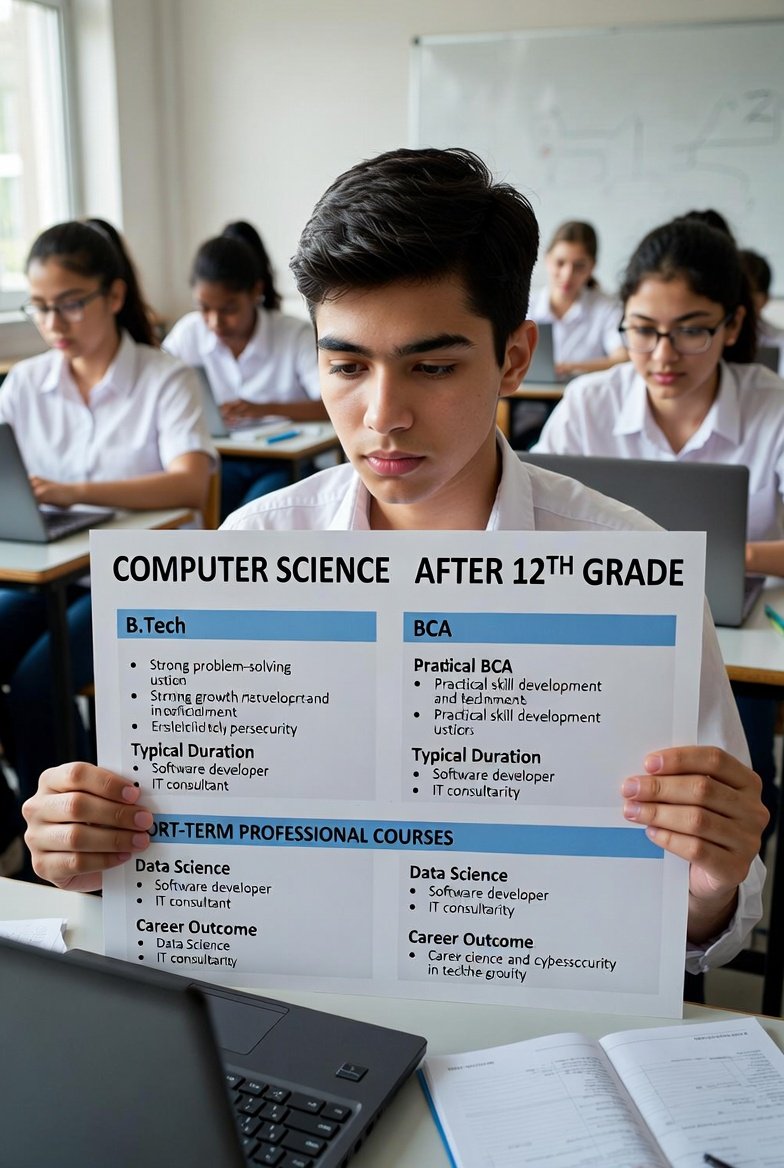
Choosing which course is best after 12th computer science is one of the most important decisions for students who want to build a strong professional future in technology and digital careers. With technology touching every industry, the right path after class 12 can open doors to rewarding jobs, skills development, and long‑term growth opportunities in today’s evolving digital landscape.
In this detailed article, we will explore the best options available after completing 12th Computer Science, including degree courses, diplomas, professional certifications, and skill‑oriented programs that can help you progress in the world of information technology and digital careers.
Understanding the Importance of Choosing the Right Course
The transition from school to higher education is a critical phase in a student’s life. At this stage, identifying and selecting the right course not only shapes your knowledge and skills but also impacts your career direction.
After class 12th with a focus on computer science, students often ask: What are the options available? What will help build a successful career? The answer lies in matching your interest with market needs and future trends in technology.
Career options in this domain are not limited to traditional engineering studies alone. There are numerous specialisations such as web development, data science, cybersecurity, and more that offer strong growth prospects.
Why Computer Courses Are Worth Considering
Information technology is one of the fastest expanding sectors globally, with every industry from healthcare to finance and retail requiring digital expertise. This makes technical knowledge highly valuable. Modern businesses need professionals who can build software, secure systems, manage data, and create digital solutions.
Whether you aspire to design software, analyse data, or manage digital systems, the right computer course can give you the foundation, skills, and confidence to succeed.
Core Undergraduate Degree Programs
Bachelor of Technology (B.Tech) in Computer Science Engineering
A widely recognised degree, B.Tech in Computer Science Engineering provides thorough training in programming, algorithms, system design, and digital systems. It is an ideal choice for students who want a deep technical foundation and plan to work in software development, engineering, or research.
Key Benefits:
- Strong problem‑solving and programming skills
- High demand in software industries
- Opportunities for higher studies and research
Typical Duration: 4 years
Career Outcomes: Software developer, systems engineer, AI specialist
Bachelor of Computer Applications (BCA)
BCA is a popular choice for students who want to enter the IT sector with a focus on software applications, database management, and computer networks. It emphasizes practical aspects of computer science, often requiring fewer eligibility constraints than engineering degrees.
Key Benefits:
- Application‑oriented curriculum
- Practical skill development
- Good stepping stone to advanced IT roles or postgraduate studies
Typical Duration: 3 years
Career Outcomes: Software developer, IT consultant, system analyst
Bachelor of Science (B.Sc) in Computer Science / Information Technology
This program blends theoretical understanding with practical skills in computing and networking. It is suitable for those who want to balance conceptual learning with industry‑relevant technology insights.
Key Benefits:
- Strong foundational knowledge
- Research or higher education path
- Flexible career options
Typical Duration: 3 years
Career Outcomes: IT analyst, software tester, research roles
Professional and Short‑Term Courses
Data Science and Artificial Intelligence
With the rise of data across industries, short‑term and certification courses in data science help students learn how to interpret data, build predictive models, and create intelligent systems. These skills are highly valued in analytics, research, and business intelligence.
Skills Covered: Python, machine learning, data visualisation
Potential Roles: Data analyst, AI developer
Full Stack Web Development
Web development courses teach students how to build interactive and dynamic web applications from scratch. These are practical courses that often include hands‑on experience with real projects.
Skills Covered: HTML, CSS, JavaScript, backend frameworks
Career Outcomes: Web developer, front‑end engineer, application developer
Cybersecurity and Ethical Technology Practices
As digital systems grow, securing them becomes even more essential. Cybersecurity courses equip learners with the skills to identify threats, protect systems, and ensure data privacy.
Focus Areas: Network security, risk assessment, ethical protection
Potential Roles: Security analyst, network security consultant
Creative and Alternative Technology Courses
Not all technology paths are purely code‑centric. Students with creative interests can choose programs that intersect both design and technology.
UI/UX and Digital Product Design
User interface and user experience design courses equip students with skills to build user‑friendly products. These courses blend design thinking with technical tools.
Career Roles: UI designer, UX researcher
Graphic and Animation Design
For students interested in visual innovation and multimedia, courses in graphic design and animation can open doors in digital media, marketing, and creative tech.
Outcome: Creative designer, motion graphics specialist
How to Choose the Right Course
Selecting the best pathway depends on several factors:
- Your personal interests and strengths – what subjects excite you the most
- Industry trends and demand – what skills are needed in the job market
- Career goals – whether you want to work in tech companies, research, or freelance roles
Start with a clear understanding of your strengths. If coding and algorithms interest you, an undergraduate engineering degree may be ideal. If you’re more inclined towards practical tech skills, professional certifications could be a better match.
Practical Tips for Students
Gain Hands‑On Experience
Books and theory are foundational, but practical projects and internships give you real world insights into the technology you want to specialise in. Build a portfolio to showcase projects you have worked on.
Upskill Continuously
Technology evolves rapidly. Learning new languages, frameworks, and tools consistently keeps you competitive in the job market. Participate in workshops, online courses, and real‑world challenges.
Seek Career Guidance
If you’re unsure, seek advice from mentors, counsellors, or professionals in the field who can help you assess which path aligns with your goals.
✔ For more insights on technology careers and education, consider this informative discussion on IT career paths
Conclusion
Choosing which course is best after 12th computer science requires thoughtful planning, awareness of opportunities, and clarity about your own interests. Whether you pursue traditional degrees like B.Tech and BCA, or diversify with professional certifications in web development, cybersecurity, or data science, there is no shortage of options. The key is to align your goals with skill‑based learning that prepares you for real‑world roles and future challenges.
Related posts:
![What to Expect from a Change Management Certification Program]()
What to Expect from a Change Management Certification Program
Education![Bhavans Scholarship Exam Sample Papers]()
Discover the Best Bhavans Scholarship Exam Sample Papers to Boost Your Exam Performance Today
Education![Which course is best after 12th Computer Science – Top Career Options Guide]()
Which Course Is Best After BSc Computer Science – Complete Guide for 2026
Education![The Role of Foreign Study Consultants in Streamlining Overseas Admissions]()
The Role of Foreign Study Consultants in Streamlining Overseas Admissions
Education![psy2012 general psychology broward college steven phillips quizlet exam 1]()
Mastering Psy2012 General Psychology Broward College Steven Phillips Quizlet Exam 1
Education![https://www.businesstomark.com/creating-safe-and-healthy-learning-spaces/]()
Online Quran Classes in UAE: Learn with Expert Teachers in Dubai and Beyond
Education