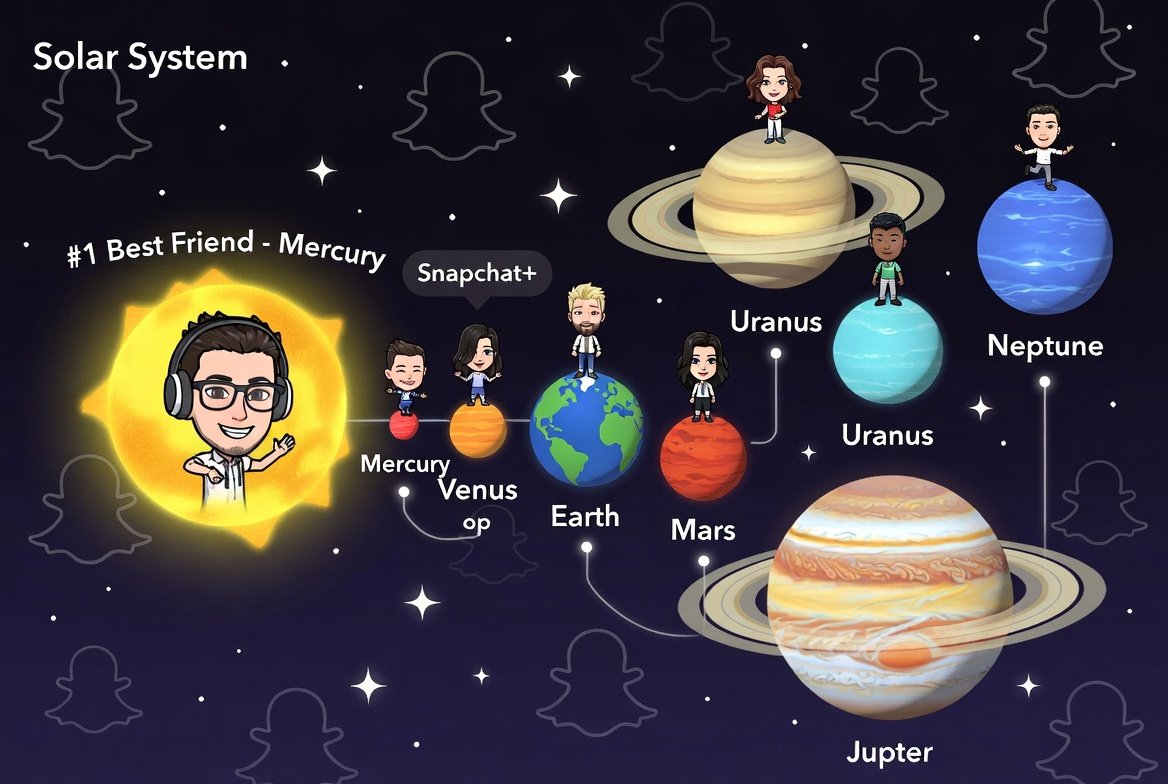
Snapchat continues to innovate with features that make connecting with friends more engaging and visual. One of the most intriguing additions for Snapchat+ subscribers is the Snapchat Solar System, a creative way to visualize your closest friendships.
Whether you’re a long-time Snapchatter or new to the app, understanding the Snapchat Solar System can add a fun, cosmic twist to managing your Best Friends list. This comprehensive guide explains everything you need to know in 2026, from the basics to practical tips and potential considerations.
In this article
- What Is the Snapchat Solar System?
- How Does the Snapchat Solar System Work?
- Snapchat Planets Order and Meanings in 2026
- Requirements: Snapchat+ Subscription Needed
- Real-World Scenarios and Practical Examples
- Expert Tips to Improve Your Position in the Snapchat Solar System
- Benefits vs. Drawbacks of the Snapchat Solar System
- How to Enable or Disable the Feature
- Common Questions About Snapchat Solar System in 2026
- Comparing Snapchat Solar System to Other Friendship Features
- Maintaining Healthy Friendships Beyond the Solar System
- Conclusion
What Is the Snapchat Solar System?
The Snapchat Solar System, also known as Friend Solar Systems or Snapchat Planets, is an exclusive Snapchat+ feature that represents your top eight Best Friends as planets orbiting around you—the Sun.
 Also readI Tested 20 Free and Paid Video Editing Tools in 2026 — Here’s Which One Actually Fits You
It transforms abstract interaction data into a visually appealing solar system model. You appear as the central Sun, while your most frequent contacts occupy positions from Mercury (closest) to Neptune (eighth).
This feature builds on Snapchat’s existing Best Friends mechanics, which have long tracked interaction levels through snaps, chats, and streaks. The solar system simply makes this data more intuitive and entertaining.
Key Point: The Snapchat Solar System is private. Only you can see your own system and your position in others’ systems. It does not publicly expose anyone else’s full friend list.
How Does the Snapchat Solar System Work?
The system ranks friends based on interaction frequency and quality. Snapchat’s algorithm considers:
- Number of snaps sent and received
- Chat frequency and length
- Snap Streaks consistency
- Story views and interactions (to a lesser extent)
Higher and more consistent engagement moves a friend closer to the Sun in your Solar System.
To view your own Snapchat Solar System:
- Open Snapchat and tap your profile icon.
- Navigate to the Snapchat+ section or scroll to find the Solar System option (ensure the feature is toggled on).
- Explore the interactive display showing your Bitmoji as the Sun with friends’ Bitmojis on their respective planets.
To see your position in a friend’s Solar System:
- Go to a friend’s profile.
- Look for the “Best Friends” badge (with a gold ring for Snapchat+ users).
- Tap the badge to reveal which planet you occupy in their system.
If you see a “Friends” badge instead, you’re in their top eight, but they aren’t in yours.
The feature is off by default for new Snapchat+ subscribers. You can enable it anytime via the Snapchat+ management settings.
Snapchat Planets Order and Meanings in 2026
Here is the standard order, mirroring our real solar system:
| Planet | Position | Meaning |
|---|---|---|
| Mercury | 1st | Your #1 Best Friend – highest interaction levels, longest streaks. |
| Venus | 2nd | Second closest friend with very frequent snaps and chats. |
| Earth | 3rd | Strong, consistent third-place friend. |
| Mars | 4th | Solid mid-tier Best Friend. |
| Jupiter | 5th | Fifth closest with good but less intense engagement. |
| Saturn | 6th | Reliable sixth friend. |
| Uranus | 7th | Seventh in your Best Friends list. |
| Neptune | 8th | Eighth and farthest in the top tier. |
Each planet features unique visuals and your friend’s Bitmoji positioned on it. The closer to the Sun, the stronger the friendship signal based on recent activity.
Requirements: Snapchat+ Subscription Needed
The Snapchat Solar System is available only to Snapchat+ subscribers. In 2026, the subscription typically costs around $3.99 per month or $39.99 annually in the US, with regional variations.
Snapchat+ offers many other perks like custom app icons, story rewatch counts, Ghost Trails, and more. The Solar System is just one highlight for users who enjoy deeper friendship insights.
Pro Tip: New subscribers should check the Snapchat+ settings immediately to enable the Solar System, as it starts disabled.
Real-World Scenarios and Practical Examples
Imagine Sarah and her college roommate, Alex. They snap daily, maintain long streaks, and chat frequently. Alex appears as Mercury in Sarah’s system. When exams hit and snaps decrease for a week, Alex might shift to Venus, giving Sarah a gentle visual cue to reconnect.
In another scenario, a long-distance friendship benefits immensely. Regular video snaps and streak maintenance keep the friend near the Sun despite physical distance. The Snapchat Solar System encourages consistent communication that strengthens bonds.
Families also use it: Parents and kids can see where they rank, prompting more fun family snaps and chats.
Expert Tips to Improve Your Position in the Snapchat Solar System
Want to become someone’s Mercury? Here are actionable strategies:
- Send personalized snaps daily — Generic mass snaps count less than thoughtful, direct ones.
- Maintain and extend Snap Streaks — These heavily influence rankings.
- Engage meaningfully — Longer chats and replies boost your score more than quick “hey” messages.
- View and react to Stories — Consistent interaction helps, though direct snaps matter most.
- Be consistent — The algorithm favors steady activity over sporadic bursts. Changes can take a few days to two weeks to fully update.
Beginner Advice: Start small. Pick one or two friends and increase genuine interactions. Authenticity matters more than gaming the system.
Benefits vs. Drawbacks of the Snapchat Solar System
Benefits:
- Makes friendship dynamics fun and visual.
- Encourages more meaningful engagement.
- Provides private insights into reciprocity.
- Adds entertainment value to Snapchat+.
Drawbacks:
- May cause anxiety or overthinking about rankings.
- Requires a paid subscription.
- Rankings update with some delay.
- Potential for temporary hurt feelings if positions change.
Snapchat addressed early concerns by making the feature opt-in, showing they prioritize user well-being.
Many users report it positively motivates them to nurture important friendships.
How to Enable or Disable the Feature
- Subscribe to Snapchat+ if not already.
- Go to your profile → Snapchat+ banner → Manage features.
- Toggle “Friend Solar Systems” on or off.
You retain full control and can hide it anytime.
Common Questions About Snapchat Solar System in 2026
Does it update in real-time? No. It refreshes periodically, often every few days, based on accumulated activity.
Can non-Snapchat+ users see planets? No. They cannot access the visual system or see badges indicating positions.
What if I have fewer than 8 close friends? Only active high-interaction friends appear. Empty spots simply show no planet.
Can I customize planet appearances? Basic visuals are set, but Bitmoji customizations and Snapchat+ themes can enhance the experience.
Comparing Snapchat Solar System to Other Friendship Features
Unlike Instagram’s close friends list or BeReal’s basic interaction stats, Snapchat’s version stands out for its playful astronomy theme and two-way visibility (your system + your position in theirs). It combines gamification with genuine relationship insights better than most competitors.
Maintaining Healthy Friendships Beyond the Solar System
While the Snapchat Solar System is entertaining, remember it represents only one platform’s data. Real friendships thrive on in-person time, phone calls, and shared experiences outside any app.
Use the feature as a fun tool, not a definitive measure of value. If a close friend drops in ranking, reach out personally rather than worrying about the planets.
Conclusion
The Snapchat Solar System offers a delightful, insightful way to visualize Best Friends dynamics in 2026. By turning you into the Sun and your top contacts into orbiting planets—from speedy Mercury to distant Neptune—it makes tracking interactions both educational and enjoyable.
Whether you’re using it to strengthen existing bonds, reconnect with friends, or simply enjoy the visuals as a Snapchat+ subscriber, the feature adds real value when approached with the right mindset. Focus on authentic engagement, and the planets will naturally reflect stronger connections.
Actionable Takeaways:
- Subscribe to Snapchat+ and enable the feature today.
- Prioritize quality snaps and consistent streaks with important people.
- Check positions regularly but don’t obsess—use insights positively.
- Balance digital rankings with real-world relationships.
Ready to explore your own cosmic friend circle? Open Snapchat, enable the Solar System, and see where your friendships orbit. The universe of your Best Friends awaits!
This guide is based on official Snapchat documentation and user experiences as of 2026. Features may evolve, so always check the latest in-app updates or Snapchat Support.