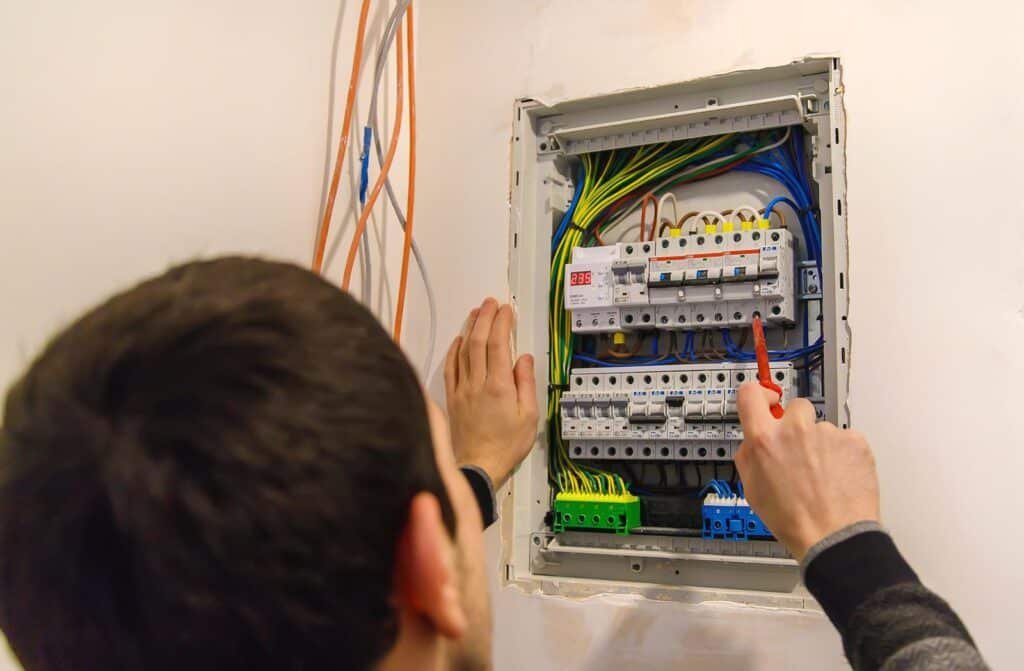
Your AC system doesn’t run on refrigerant alone, it relies on steady, properly managed electrical power to perform the way it should. When that power supply isn’t right, small electrical issues can quickly turn into bigger performance problems and even lead to costly AC repair. Understanding how your electrical panel supports your HVAC system is key to keeping everything running efficiently and reliably.
How Your HVAC Electrical Panel Affects Performance
Think of the electrical panel as the control center that decides how cleanly and consistently your HVAC system gets power. It determines how consistently and safely your system receives power, especially during high-demand moments like startup.
Compressors and blower motors require a surge of energy to begin operating, and if the panel cannot deliver stable voltage under that load, the system compensates by drawing more current. That added strain increases heat, reduces efficiency, and accelerates wear on key components. If power is unstable, undersized, or overloaded, your system can’t run the way it was designed to.
A properly configured HVAC electrical panel ensures the system starts without strain, components run at consistent voltage, and safety devices don’t interrupt operation unnecessarily. When the panel is dialed in, your system runs smoother, cycles correctly, and avoids premature wear. When it’s not, even a brand-new HVAC unit can behave like a struggling one.
In practical terms, the panel doesn’t just supply power, it directly affects how smoothly your system starts, how efficiently it runs, and how long it lasts.
HVAC Electrical Requirements Explained
Most homeowners focus on tonnage and SEER ratings, but HVAC electrical requirements are just as important.
An HVAC system isn’t just a plug-in appliance, it’s a high-demand electrical load that requires a dedicated, properly sized setup designed for both continuous operation and short bursts of high demand. This includes a dedicated circuit, correct breaker sizing based on the unit’s MCA (Minimum Circuit Ampacity) and MOCP (Max Overcurrent Protection), appropriate wire gauge to handle amperage safely, consistent voltage delivery (typically 208/230V for central systems), and a disconnect switch for servicing and safety.
Understanding HVAC electrical requirements means ensuring every component, from breaker to wiring, is aligned with the system’s load. What matters most is alignment: the breaker, wiring, and system load must all match the unit’s electrical requirements. Even small mismatches can lead to overheating, inefficiency, or repeated shutdowns.
What Size Breaker for HVAC Unit
There’s no one-size answer, and that’s where a lot of homeowners (and even some contractors) go wrong.
The correct breaker size is determined by the unit’s data plate, not guesswork. The breaker must not exceed the Maximum Overcurrent Protection (MOCP) listed on the data plate, and this number is not flexible. You’ll also see MCA (Minimum Circuit Ampacity), which tells you the minimum wiring capacity.
The breaker should never exceed the MOCP, even if the system keeps tripping. If a system requires a 40-amp maximum breaker, installing a larger one does not improve performance, it removes protection and increases the risk of equipment damage or electrical hazards.
If a properly sized breaker continues to trip, the issue lies with system load or electrical conditions, not breaker size, and may point to an HVAC tripping circuit breaker issue that needs deeper inspection.
Outdated HVAC Electrical Panel and System Efficiency
An outdated panel doesn’t just limit power, it quietly stresses your system every time it runs.
An outdated HVAC electrical panel often struggles to deliver consistent voltage under load. This forces HVAC components, especially motors and compressors, to work harder than intended, increasing energy use, internal temperatures, and accelerating the degradation of parts like capacitors and contactors.
Common impacts include voltage drops that make motors work harder, inconsistent power delivery that causes control boards and capacitors to fail sooner, limited capacity that prevents the system from running at full output, and frequent breaker trips that interrupt cooling cycles and add wear.
Instead of failing suddenly, systems connected to older panels tend to lose efficiency gradually, leading to higher utility bills, more frequent repairs, and a shorter equipment lifespan.
It’s similar to running a high-performance engine on poor fuel, it still runs, but it’s constantly under strain.
HVAC Tripping Breaker Causes and Fixes
A tripping breaker is a symptom, not the problem. It’s your system protecting itself.
An HVAC tripping breaker indicates that the system is drawing more current than the circuit is designed to handle or that there is a fault in the system. Common causes include overloaded circuits where the system draws more amps than the circuit can handle, short circuits or ground faults from wiring or component failure, failing compressors or motors pulling excessive amperage, dirty coils or airflow issues forcing the system to overwork, and loose electrical connections causing heat and intermittent spikes.
In many cases, the root cause of an HVAC tripping breaker is increased mechanical or electrical resistance within the system, which leads to higher power demand and triggers the breaker as a protective response.
The key insight is that if the breaker trips repeatedly, the issue is usually mechanical or electrical stress, not the breaker itself.
Upgrading Your HVAC Electrical Panel for Better Performance
A panel upgrade doesn’t make your AC “stronger,” but it removes bottlenecks that limit performance by providing stable voltage, proper circuit capacity, and dedicated power delivery.
Upgrading your HVAC electrical panel can make a noticeable difference when the old panel was undersized or overloaded, voltage delivery was inconsistent, or the system couldn’t run on a dedicated circuit.
You’ll see improvements when the old panel was undersized or overloaded, voltage delivery was inconsistent, or the system couldn’t run on a dedicated circuit.
The improvement is typically seen in more stable operation, fewer nuisance shutdowns or interruptions, reduced strain and wear on components, and better alignment with modern high-efficiency systems.
In short, it allows your HVAC system to operate the way it was engineered to.
HVAC Electrical Panel Compatibility With New Systems
Before installing a new unit, you need to check if your panel can handle both the startup surge and the continuous load, along with the rest of the home’s electrical demand.
A panel must have sufficient capacity to handle both the continuous load and the startup surge of a new HVAC system. Meeting modern HVAC electrical requirements is critical when upgrading or replacing equipment.
Indicators that a panel may not be adequate include no available space for a dedicated breaker, existing circuits already near capacity, an older panel (especially 20+ years old), aluminum wiring or outdated breaker types, or frequent breaker trips with the current system.
A proper evaluation includes load calculation for the entire home, comparing the system’s electrical requirements (MCA and MOCP) with the panel’s available capacity, and verifying wire size, condition, and that the breakers can safely support those values.
Skipping this step is one of the biggest reasons new HVAC systems underperform right out of the gate.
Signs Your HVAC System Has Electrical Issues or a Tripping Breaker
Electrical issues often show up as “performance problems” before they’re identified correctly.
Electrical issues often appear as inconsistent system behavior rather than immediate failure. Breaker trips when the system starts or during peak cooling, AC turning on and off rapidly (short cycling), weak airflow or inconsistent cooling without a clear cause, difficulty starting, or the system shutting off during peak demand are all common signs.
Many of these symptoms are tied to an HVAC tripping breaker, especially when the issue appears during startup or heavy load conditions. You may also notice burning smells or buzzing sounds near the panel, disconnect, or other electrical components, along with outdoor units struggling to start, making clicking noises, or rising energy bills without increased usage.
The pattern to notice is that if the system behaves inconsistently, or worsens under heavy demand, there’s a strong chance the issue is electrical, pointing to instability in power delivery or excessive electrical load within the system.