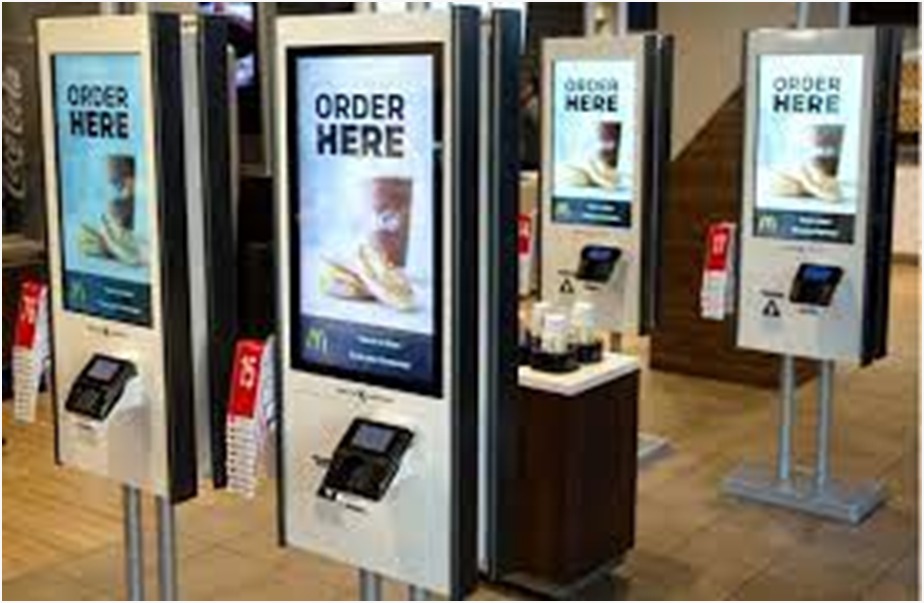
Technology has woven itself into nearly every corner of modern life, and the food industry is no exception. Over the past decade, interactive kiosks have fundamentally changed how people order, pay for, and experience their meals. From fast-food chains to upscale casual dining, these touch-screen systems are reshaping the restaurant landscape in ways that benefit customers, staff, and business owners alike.
In this article
The Evolution of Dining
Picture walking into a bustling restaurant and being greeted not only by a host or server, but also by a row of sleek, touch-screen kiosks positioned near the entrance or built directly into tabletops. Just a few years ago, this scene would have felt futuristic. Today, it is increasingly commonplace. Interactive restaurant kiosks have become a defining feature of modern dining, quietly but decisively redefining what it means to place an order.
The shift did not happen overnight. It grew out of a broader technological transformation across retail and hospitality, as businesses sought smarter ways to serve customers faster and more accurately. Restaurants, long dependent on human-led service, began recognizing that technology could complement — rather than replace — their teams in meaningful ways.
 Also readWhy Is X (Twitter) Not Loading? Feed and Login Issues Explained
Enhancing Customer Engagement
One of the most compelling strengths of interactive kiosks is their ability to draw customers in and keep them engaged throughout the ordering process. Unlike a traditional menu handed over by a server, a digital kiosk presents vibrant, high-resolution images of dishes, detailed ingredient lists, allergen information, and customization options — all at the customer’s fingertips.
Patrons can effortlessly browse the full menu, swap ingredients, adjust portion sizes, and explore daily specials or limited-time promotions without any pressure. This freedom to explore at one’s own pace often leads to greater satisfaction with the final order. Customers feel more in control of their dining experience, and that sense of autonomy goes a long way toward building loyalty.
Customization, in particular, has proven to be a major draw. Whether someone wants to remove gluten-containing ingredients, add extra protein, or simply swap one side dish for another, kiosks make these adjustments simple and immediate. The order is logged exactly as specified, reducing the chance of miscommunication that can occur in a verbal exchange.
Efficiency Redefined
Beyond customer-facing benefits, interactive kiosks deliver a core operational advantage: efficiency. In a busy dining environment, speed matters enormously. Long queues discourage customers and hurt revenue. Kiosks help distribute the load of order-taking, allowing multiple customers to place orders simultaneously without waiting for a single cashier to become available.
The streamlined process also reduces human error. When a customer inputs their own order directly, there is far less risk of a misheard request or a forgotten modification. Orders flow directly from the kiosk to the kitchen display system, ensuring accuracy from the moment a customer taps “confirm.” For restaurants, fewer errors mean less food waste, fewer refunds, and higher overall customer satisfaction.
Staff, freed from the pressure of managing a long queue of impatient customers, can redirect their energy toward food preparation, quality control, and hospitality — the aspects of restaurant work that genuinely benefit from a human touch.
The Impact on Service
It is worth addressing a common concern directly: the fear that kiosks eliminate jobs or reduce the quality of human service. In practice, the opposite is often true. When employees are no longer tethered to a cash register taking orders one by one, they have more capacity to engage meaningfully with guests, check on tables, assist customers who need help navigating the kiosk, and ensure the overall dining experience feels warm and welcoming.
This shift in staff responsibility can improve morale as well. Repetitive order-taking, while necessary, is rarely the most fulfilling part of a restaurant job. When technology handles the transactional elements, employees can focus on the relational ones — the aspects of service that make dining out feel special rather than merely functional.
Post-Pandemic Adaptation
The global pandemic accelerated the adoption of interactive kiosks in ways no one had anticipated. As restaurants scrambled to reassure customers that dining out was safe, contactless technology moved from a convenience to a necessity. Kiosks aligned perfectly with the heightened emphasis on hygiene and social distancing, allowing customers to order and pay without handing over a card to a server or touching a shared paper menu.
Many restaurants that had been hesitant about the upfront investment in kiosk technology made the leap during this period, discovering that the transition was smoother than expected and that customer acceptance was higher than anticipated. The pandemic, for all its devastation, served as a powerful catalyst for digital transformation across the food industry.
What’s on the Horizon?
The trajectory of interactive kiosk technology points toward even greater sophistication in the years ahead. Artificial intelligence is already beginning to play a role, with some systems capable of making personalized menu suggestions based on a customer’s previous orders or stated preferences. As AI becomes more refined, these recommendations will grow more accurate and more genuinely useful.
Enhanced data analytics represent another exciting frontier. Every interaction at a kiosk generates data — what items customers browse, what they ultimately order, what promotions they respond to, and when they visit. Restaurants that harness this information thoughtfully can make smarter decisions about menu design, staffing levels, and marketing strategies.
Beyond Ordering: Multifunctional Kiosks
The capabilities of interactive kiosks are expanding well beyond simple order placement. Forward-thinking restaurants are exploring kiosks that allow customers to submit real-time feedback about their meal, sign up for loyalty programs, and access exclusive member deals — all from the same screen they used to order. Some concepts are experimenting with live cooking demonstrations or chef interaction features embedded directly into the kiosk interface, blending entertainment with the dining experience in genuinely novel ways.
Payment integration has also become more seamless. Modern kiosks support a wide range of payment methods, from credit and debit cards to mobile wallets and contactless payments, making the checkout process as frictionless as possible.
Challenges and Opportunities
No technology is without its complications, and interactive kiosks are no different. Maintenance requirements are a real consideration — screens need cleaning, software requires regular updates, and hardware can malfunction during peak service hours, precisely when reliability matters most. The initial implementation cost can also be substantial, particularly for smaller independent restaurants operating on tight margins.
There are also accessibility considerations to bear in mind. Kiosks must be designed to accommodate customers with visual impairments, limited mobility, or low digital literacy. A poorly designed kiosk experience can frustrate and exclude the very customers a restaurant hopes to serve.
Yet each of these challenges is also an opportunity. The need for reliable maintenance has spurred the growth of specialized service providers. The accessibility challenge is pushing designers to create more inclusive interfaces. And the cost barrier is gradually falling as the technology matures and economies of scale bring prices down. Restaurants willing to invest thoughtfully in kiosk technology — and to train their teams to support it — are well positioned to reap long-term rewards.
A New Chapter in the Dining Experience
The rise of interactive restaurant kiosks represents more than a passing trend. It reflects a fundamental shift in how restaurants think about the relationship between technology and hospitality. When implemented well, kiosks do not make dining feel cold or impersonal — they remove friction from the transactional elements of a meal so that the human elements can shine more brightly.
Convenience, accuracy, speed, and personalization are no longer nice-to-haves in the food industry; they are baseline expectations. Interactive kiosks are one of the most effective tools restaurants have for meeting those expectations consistently, at scale, and across every service period.
As the food industry continues to evolve, the integration of interactive kiosks is set to remain a key ingredient in reshaping how we dine. The restaurants that embrace this technology thoughtfully — balancing innovation with genuine hospitality — will be the ones best equipped to thrive in the years ahead.