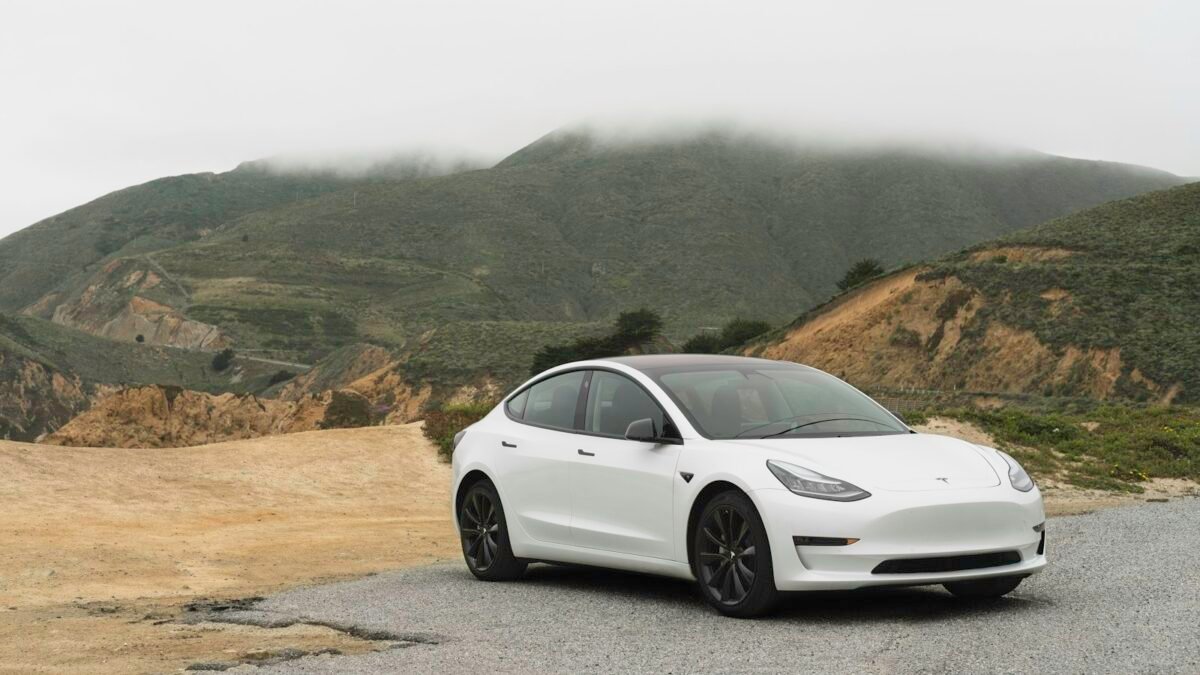
Tesla reports its Q3 2026 earnings on October 21, 2026, after the US market closes, and the earnings call starts at 5:30 p.m. ET. Wall Street expects flat revenue of about $28.06 billion and adjusted earnings of $0.45 per share, down from $0.50 a year ago. The headline numbers matter, but this quarter is really about margins, cash burn and how fast the Cybercab robotaxi business can grow.
This Tesla Q3 2026 earnings preview walks through what analysts expect, what the delivery and energy data already tells us, and the six questions most likely to move the stock after the report.
In this article
- Tesla Q3 2026 earnings: the key numbers at a glance
- Deliveries beat expectations, but they still fell year over year
- Margins are the number that matters most
- Cash flow and a $25 billion spending plan
- Energy storage missed estimates
- Cybercab and robotaxi: the story behind the stock price
- What shareholders are asking Tesla
- How Tesla stock has performed before the report
- Six things to watch when Tesla reports
- Frequently asked questions
- The bottom line
Tesla Q3 2026 earnings: the key numbers at a glance
Here is what Wall Street is looking for, based on consensus figures compiled by Electrek’s earnings preview:
 Also readCan Secured Credit Cards Offer Rewards? Features to Compare
| Metric | Q3 2026 expectation / result | Year earlier (Q3 2025) |
|---|---|---|
| Revenue (consensus) | $28.06 billion | $28.1 billion |
| Adjusted EPS (consensus) | $0.45 | $0.50 |
| Vehicle deliveries (reported) | 486,532 | 497,099 |
| Vehicle production (reported) | 464,391 | n/a |
| Energy storage deployed (reported) | 13.7 GWh | 12.5 GWh |
The revenue estimates are spread widely, from $25.1 billion to $30.6 billion, and EPS forecasts range from $0.30 to $0.70. That spread tells you analysts are unsure how much pricing pressure and spending have eaten into profit.
Deliveries beat expectations, but they still fell year over year
Tesla already published its delivery numbers in early October. The company handed over 486,532 vehicles in the third quarter, well ahead of the analyst consensus of 461,974. That was a genuine beat, and it helped the stock in the weeks before earnings.
Look a little closer, though, and the picture is mixed:
- Deliveries were still down about 2.1% from 497,099 in Q3 2025.
- Model 3 and Model Y made up 478,237 of the total. “Other models”, which includes Cybertruck, Model S and Model X, fell 48% to 8,295.
- Tesla delivered 22,141 more cars than it built, which means it sold down inventory. That helps cash flow this quarter but cannot repeat forever.
- Year-to-date deliveries reached 1,324,681, up 8.8% on 2025.
China tells a similar two-sided story. According to OANDA’s preview, Shanghai-made exports jumped 58% in September while domestic Chinese sales fell 9%. Strong exports are covering for a weaker home market in China.

Margins are the number that matters most
If deliveries are the headline, automotive gross margin is the real test. In Q2 2026, Tesla’s auto gross margin excluding regulatory credits slipped to 16.3%, down from 19.2% in Q1. Operating margin was just 1.4%, and operating income fell 57% to $398 million while operating expenses rose 47% to $4.35 billion.
Three things squeeze margins right now:
- Price cuts and discounts, especially in China, where competition from local EV makers is intense.
- Falling regulatory credit income. Tesla earned only $146 million from credits in Q2, down 67% from a year earlier. Those credits used to be almost pure profit.
- Heavy spending on AI, autonomy and robotics, which shows up in operating expenses before it produces any revenue.
Investors will want to see auto margins stabilise around the mid-teens at least. Another slide would suggest that selling more cars is costing Tesla more than it earns.
Cash flow and a $25 billion spending plan
Tesla’s free cash flow was negative $1.09 billion in Q2 2026, and capital expenditure more than doubled to $5.8 billion. Management has guided to more than $25 billion in capex for 2026, weighted toward the second half of the year.
That means Q3 and Q4 should carry even bigger spending bills. The question for shareholders is simple: how long can Tesla fund chips, data centres, Cybercab production lines and Optimus robots from a car business with thin margins? A clear capex number and an update on funding will matter as much as EPS.
If you follow how big tech companies are spending on AI, our piece on Elon Musk’s view of the global AI compute race gives useful background on why Tesla is pouring so much money into compute.
Energy storage missed estimates
Tesla’s energy business, which sells Megapack and Powerwall batteries, has been the steady part of the story. It deployed 13.7 GWh in Q3, up 9.6% from a year earlier, but analysts had expected around 15.9 GWh. The record is still 14.2 GWh from Q4 2025.
Energy storage gross margin was 20.4% in Q2, and Tesla’s long-term target is in the low-to-mid 20% range. Watch for any comment on new Megafactory capacity and whether the Q3 shortfall was timing or weaker demand.
Cybercab and robotaxi: the story behind the stock price
For many investors, Tesla is now valued more on autonomy than on car sales. That is why the robotaxi update could move the share price more than any line in the income statement.
Here is where things stand going into the call:
- Cybercabs registered in Texas rose from 169 to 319, and the Austin fleet reportedly passed 300 vehicles. Registrations do not automatically mean those cars are carrying paying riders.
- Dallas has been mentioned as a possible next city, but Tesla has not announced a launch date.
- The US National Highway Traffic Safety Administration (NHTSA) has sent Tesla 21 questions on Cybercab safety certification, including whether a car without conventional pedals meets braking rules. Tesla’s reported deadline to respond is October 30, nine days after earnings.
We covered the start of that review in Tesla’s Cybercabs under federal investigation after the Austin launch. Any sign that Tesla might need design changes would be a big deal, because the Cybercab was built without a steering wheel or pedals.
What shareholders are asking Tesla
Tesla takes questions from retail shareholders through the Say Technologies platform. This quarter, about 2,860 participants submitted 832 questions. The top questions, ranked by shares represented, show what ordinary investors care about:
- How Tesla will scale the Cybercab fleet beyond Austin, given the open NHTSA safety review.
- When unsupervised Full Self-Driving (FSD) will arrive in customer-owned cars.
- When customers will be able to buy or own a Cybercab.
- The unit economics per paid robotaxi mile.
- Whether owners of cars with older HW3 computers will get a free hardware upgrade for unsupervised FSD.
- What an Optimus humanoid robot costs to build and who the first paying customer will be.
Elon Musk usually answers some of these directly on the call, and his tone on timelines often moves the stock in after-hours trading.
How Tesla stock has performed before the report
Tesla shares closed the week before earnings at $382.70 after a 3.27% weekly gain, helped by strong China export data. Even so, the stock was down roughly 15% for the year, making it the weakest member of the so-called Magnificent Seven tech stocks in 2026.
That sets up an interesting test. Expectations for profit are low, so a decent margin number could spark a rally. On the other hand, the stock still carries a high valuation built on autonomy hopes, so any delay on Cybercab or FSD could hurt more than a small earnings miss.
Tesla has missed EPS estimates in two of the last four quarters, and its EPS has fallen year over year in five of the last seven quarters. In Q2 2026 it reported $0.33 against a $0.53 consensus.
Six things to watch when Tesla reports
- Automotive gross margin excluding credits: is it holding near 16% or still falling?
- Free cash flow: did the inventory sell-down turn cash flow positive, or did capex swamp it?
- Capex guidance: is the more-than-$25 billion plan for 2026 unchanged or rising?
- Energy storage: why deployments missed and what Q4 looks like.
- Cybercab timeline: new cities, fleet size, paid miles and the NHTSA response.
- Q4 and 2027 outlook: any guidance on deliveries, especially with analysts forecasting about 1.77 million deliveries in 2026.
Frequently asked questions
When does Tesla report Q3 2026 earnings?
Tesla releases its third-quarter 2026 results on Wednesday, October 21, 2026, after the US stock market closes. The earnings call starts at 5:30 p.m. Eastern Time.
What EPS is expected for Tesla in Q3 2026?
The Wall Street consensus is adjusted EPS of $0.45, down 10% from $0.50 in Q3 2025. Estimates range from $0.30 to $0.70.
How many cars did Tesla deliver in Q3 2026?
Tesla delivered 486,532 vehicles and produced 464,391 in the third quarter of 2026. Deliveries beat estimates but were about 2.1% lower than a year earlier.
Why does the Cybercab matter for Tesla earnings?
Much of Tesla’s market value is based on expectations for robotaxis and self-driving software. Updates on Cybercab expansion, safety approval and unit economics can move the stock as much as quarterly profit.
The bottom line
Tesla goes into its Q3 2026 earnings with a delivery beat in hand but plenty of open questions. Flat revenue and lower EPS are already expected. What will decide the market’s reaction is whether margins have stopped falling, how much cash the AI and robotaxi push is burning, and whether Elon Musk can show real progress on the Cybercab without new regulatory trouble.
For more on Musk’s wider business moves this month, read our story on Musk’s pledge of a SpaceX share for every kid in America. This article is for information only and is not investment advice.