
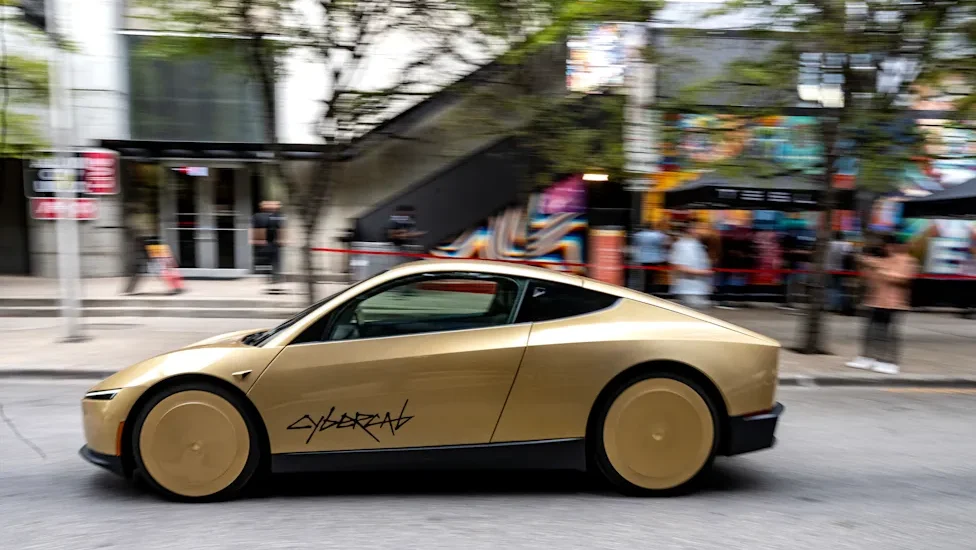
Tesla’s newest robotaxi hit the streets of Austin on a Thursday. By Friday morning, federal regulators had already opened a formal investigation — a genuinely fast regulatory response that centers on a design decision Tesla made deliberately, not an accident or malfunction.
What Actually Triggered the Investigation
The National Highway Traffic Safety Administration opened an audit query into Tesla’s Cybercab hours after the vehicle began paid rides in Austin, according to TechCrunch’s coverage of the probe, with NHTSA Administrator Jonathan Morrison stating the agency “fully supports the safe development and deployment of automated vehicles” while emphasizing federal safety laws still need to be followed.
The Specific Design Choice at the Center of This
Unlike a typical safety investigation triggered by a malfunction or accident, this probe centers on Tesla’s deliberate decision to build the Cybercab entirely without a steering wheel, pedals, or mirrors — components federal vehicle safety standards generally require, though the Department of Transportation has separately proposed removing those requirements specifically for vehicles designed to operate autonomously.
Why Tesla Believed This Was Legally Permissible
Under current federal law, automakers are allowed to self-certify that their vehicles meet safety regulations before deployment, according to Electrek’s detailed breakdown of the certification dispute, and Tesla had formally notified NHTSA that it certified roughly 1,000 Cybercab units as compliant with all applicable standards — the investigation specifically examines whether that self-certification was actually correct.
Why This Matters Beyond Tesla Specifically
Tesla plans to manufacture more than 125,000 Cybercabs annually with a target price under $30,000, meaning this isn’t a limited pilot program awaiting regulatory clearance before scaling — it’s already a full commercial launch, making the outcome of this specific investigation genuinely consequential for how quickly Tesla can continue expanding the program regardless of the eventual finding.
The Precedent This Investigation Is Following
NHTSA previously ran a similar audit process against Amazon-owned Zoox in 2022 after that company self-certified its own driverless vehicle design, ultimately requiring Zoox to obtain a formal Part 555 exemption from several federal vehicle safety standards before scaling commercial deployment — a process that took several years and did meaningfully slow Zoox’s path to full commercialization during that period.
What This Means for Tesla’s Robotaxi Timeline
If NHTSA’s audit concludes Tesla’s self-certification was flawed, the company could face a similar exemption-application process to the one Zoox went through, a path that historically takes considerable time — a genuine business risk given how aggressively Tesla has already begun scaling Cybercab production and deployment ahead of that determination being finalized.
How Investors and the Market Are Reading This
An active federal investigation into a core, newly launched product line represents genuine regulatory uncertainty that markets typically price into a company’s near-term outlook, independent of whether the investigation ultimately finds any actual compliance problem. This connects to the same regulatory-risk pattern we’ve covered in how AI safety debates are increasingly involving formal government review, where government scrutiny of fast-moving new technology has become a genuinely important business variable across multiple tech sectors simultaneously, not just autonomous vehicles.
What to Actually Watch For Next
NHTSA’s audit findings, and specifically whether the agency requires Tesla to pause or modify the Cybercab program before the investigation concludes, will determine how directly this affects Tesla’s stated production and deployment targets. This connects to [CLIENT LINK PLACEHOLDER] the broader pattern of fast-moving tech companies navigating regulatory scrutiny after rather than before major product launches, a strategy that carries real business risk when regulators move as quickly as NHTSA has here.
Frequently Asked Questions
Has NHTSA found Tesla’s Cybercab to be unsafe?
Not as of this reporting — the investigation is examining whether Tesla’s self-certification process was conducted correctly, which is a distinct question from whether the vehicle has actually been found unsafe.
Can Tesla continue operating Cybercabs while the investigation is ongoing?
Based on current reporting, Tesla has continued operations during the audit process, though this could change depending on NHTSA’s findings and any resulting formal action.
The Bottom Line
Tesla’s Cybercab investigation centers on a genuinely novel legal question — whether a vehicle designed with no traditional manual controls at all can be properly self-certified under current federal safety standards — and the outcome will likely shape how quickly other automakers pursue similarly control-free autonomous vehicle designs going forward.