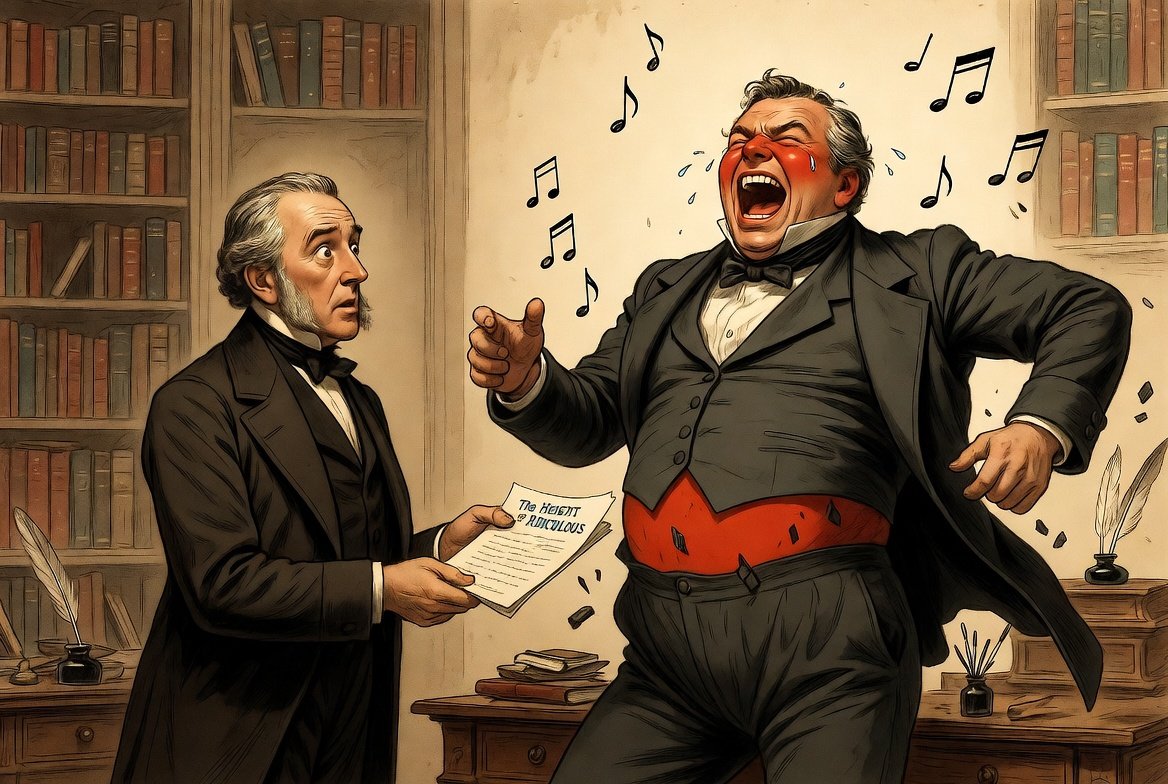
The phrase Appreciation of the Height of the Ridiculous often surfaces in educational contexts, particularly in literature curricula. It refers to the critical appreciation or literary analysis of Oliver Wendell Holmes’ witty poem “The Height of the Ridiculous.” This delightful piece uses humor and exaggeration to explore how something intended as light-hearted fun can spiral into absurdity.
Far from being a complex philosophical concept, it invites readers to enjoy the lighter side of life while gently warning about the dangers of excess—even in laughter. In this article, we’ll dive deep into the poem’s meaning, structure, themes, and enduring appeal.
The Origins of the Poem and Its Author
Oliver Wendell Holmes (1809–1894), often called Oliver Wendell Holmes Sr. to distinguish him from his son the Supreme Court Justice, was a prominent American physician, professor, and writer. Known for his contributions to medicine and his engaging “Breakfast-Table” essays, Holmes infused his work with wit and observational humor.
“The Height of the Ridiculous” was published in the mid-19th century. It reflects Holmes’ ability to turn everyday experiences into entertaining commentary. The poem draws from a simple premise: a writer creates something funny, shares it, and watches the reaction escalate beyond control.
This piece fits into the tradition of American humor literature, alongside writers like Mark Twain, emphasizing self-deprecation and gentle satire.
Full Text of “The Height of the Ridiculous”
Here is the complete poem for reference:
I wrote some lines once on a time, In wondrous merry mood, And thought, as usual, men would say They were exceeding good.
They were so queer, so very queer, I laughed as I would die; Albeit, in the general way, A sober man am I.
I called my servant, and he came; How kind it was of him To mind a slender man like me, He of the mighty limb.
“These to the printer,” I exclaimed, And, in my humorous way, I added, (as a trifling jest,) “There be the devil to pay.”
He took the paper, and I watched, And saw him peep within; At the first line he read, his face Was all upon the grin.
He read the next; the grin grew broad And shot from ear to ear; He read the third; a single laugh A crow’s laugh, I might hear.
The fourth; he broke into a roar; The fifth; his waistband split; The sixth; he burst five buttons off, And tumbled in a fit.
Ten days and nights, with sleepless eye, I watched that wretched man, And since, I never dare to write As funny as I can.
Line-by-Line Summary and Explanation
The poem unfolds as a first-person narrative. The speaker writes humorous lines in a merry mood, expecting praise. Instead, the verses prove so absurdly funny that they affect his servant dramatically.
- Stanzas 1-2: The poet creates and laughs at his own work.
- Stanzas 3-4: He sends it to the printer via his servant, adding a joking warning.
- Stanzas 5-8: The servant’s laughter escalates from a grin to uncontrollable fits, causing physical comedy (split waistband, burst buttons).
- Final Stanza: The poet watches anxiously for ten days and vows never to write anything so funny again.
This narrative structure builds comedic tension masterfully.
Key Themes in “Appreciation of the Height of the Ridiculous”
- The Power and Danger of Humor — Laughter is wonderful, but excess leads to chaos.
- Irony and Self-Deprecation — The poet’s pride in his work backfires hilariously.
- Exaggeration in Everyday Life — Even simple acts can reach absurd heights.
- Human Folly — We often underestimate the impact of our creations.
These themes make the poem timeless.
Literary Devices and Poetic Techniques
Appreciation of the Height of the Ridiculous shines through its clever use of devices:
- Hyperbole: Extreme exaggeration, such as the servant’s laughter causing physical damage.
- Tautology: Repetition for emphasis, like “so queer, so very queer.”
- Alliteration: Sounds like “wondrous merry mood.”
- Transferred Epithet: “Sleepless eye” attributes sleeplessness to the eye instead of the person.
- Onomatopoeia: Words evoking sounds of laughter.
- Rhyme Scheme: ABAB or ABCB pattern, creating a light, song-like rhythm.
These elements enhance readability and comedic effect.
Historical and Cultural Context
Written in an era of rapid printing press growth, the poem playfully nods to publishing. Holmes’ medical background may influence the vivid physical descriptions of the servant’s “illness” from laughter. It also reflects 19th-century Bostonian intellectual culture, blending wit with moral observation.
Real-World Scenarios and Practical Examples
Consider these modern parallels:
- A comedian posts a viral joke that spirals into unintended consequences.
- A writer crafts a satirical article that readers take too literally.
- Social media content intended as harmless fun leads to widespread misinterpretation.
In each case, the height of the ridiculous emerges when something crosses from amusing to overwhelming.
Expert Tip: When creating content, test it with a small audience first to gauge reactions and avoid unintended escalation.
Benefits and Drawbacks of Embracing Ridiculous Humor
| Aspect | Benefits | Drawbacks |
|---|---|---|
| Emotional Impact | Boosts mood, reduces stress | Can lead to exhaustion or chaos |
| Creativity | Encourages innovation | Risk of losing credibility |
| Social Connection | Builds bonds through shared laughs | Potential for offense if excessive |
| Personal Growth | Promotes humility | May discourage bold expression |
Humor’s benefits outweigh drawbacks when balanced carefully.
How to Write Your Own “Height of the Ridiculous” Style Poem
- Start with a simple, relatable scenario.
- Introduce exaggeration gradually.
- Use rhyme for flow.
- End with a reflective twist.
- Revise for clarity and punch.
Actionable Advice: Keep a humor journal. Note daily absurd moments and expand one into a short piece.
Comparisons with Other Humorous Works
Holmes’ poem echoes elements in Lewis Carroll’s nonsense verse or James Thurber’s stories. Unlike darker satires, it remains light-hearted, focusing on self-mockery rather than criticism of society.
For further reading on literary humor, explore resources like Wikipedia’s page on Oliver Wendell Holmes Sr. for biographical depth.
Why This Poem Matters Today
In our fast-paced digital world, Appreciation of the Height of the Ridiculous reminds us to laugh at ourselves. It encourages mindfulness about content creation and consumption, relevant for bloggers, influencers, and everyday communicators.
Expert Tips for Deeper Literary Appreciation
- Read aloud to appreciate rhythm.
- Discuss with others for varied interpretations.
- Research Holmes’ other works for context.
- Analyze personal reactions: What makes you laugh uncontrollably?
- Compare translations or adaptations if available.
These practices transform passive reading into active engagement.
Common Misconceptions About the Poem
Some view it solely as children’s literature, but its sophisticated irony appeals to adults. Others miss the subtle warning about moderation. True appreciation recognizes both its surface humor and deeper commentary.
Classroom Applications and Educational Value
Teachers often use this poem for:
- Introducing poetic devices.
- Teaching summary and appreciation writing.
- Discussing tone and mood.
- Encouraging creative writing exercises.
Its accessibility makes it ideal for various age groups.
Conclusion
Appreciation of the Height of the Ridiculous opens a window into Oliver Wendell Holmes’ brilliant mind, revealing how humor, when pushed to extremes, becomes both delightful and cautionary. Through its engaging narrative, masterful literary devices, and timeless themes, the poem teaches us to embrace laughter while recognizing its boundaries.
Key takeaways include:
- Balance creativity with awareness of impact.
- Find joy in self-deprecation.
- Use exaggeration thoughtfully in writing and life.
- Appreciate classic literature for its enduring wisdom.
Whether you’re a student preparing an appreciation paragraph, a writer seeking inspiration, or simply someone who enjoys a good laugh, this poem offers valuable lessons. Next time you encounter something absurdly funny, remember Holmes’ servant—and perhaps pause to appreciate the height of the ridiculous in your own world.
By understanding this classic, readers gain not just literary knowledge but a healthier perspective on humor’s role in human experience. Start by rereading the poem today and crafting your own humorous reflection. Your appreciation will deepen with every revisit.
Related posts:

What Is Time Dilation?
Blogs![telephone prefix 216]()
What Is Telephone Prefix 216?
Blogs![Crestwood High School Baulkham Hills NSW]()
Crestwood High School Baulkham Hills NSW: Address, Location, and Comprehensive Guide
Blogs![spectra home tamara day warwick poem apple chair]()
Spectra Home Tamara Day Warwick Poem Apple Chair: Timeless Elegance Meets Everyday Durability
Blogs
How to Craft a Highly Personalized Message for Prospect Based on Responsibilities
Blogs![Life After Separation Is About More Than Starting Again]()
Life After Separation Is About More Than Starting Again
Blogs