Donald Trump Scrooge Mcduck Political Cartoon: A Political Cartoon Stirring Debate

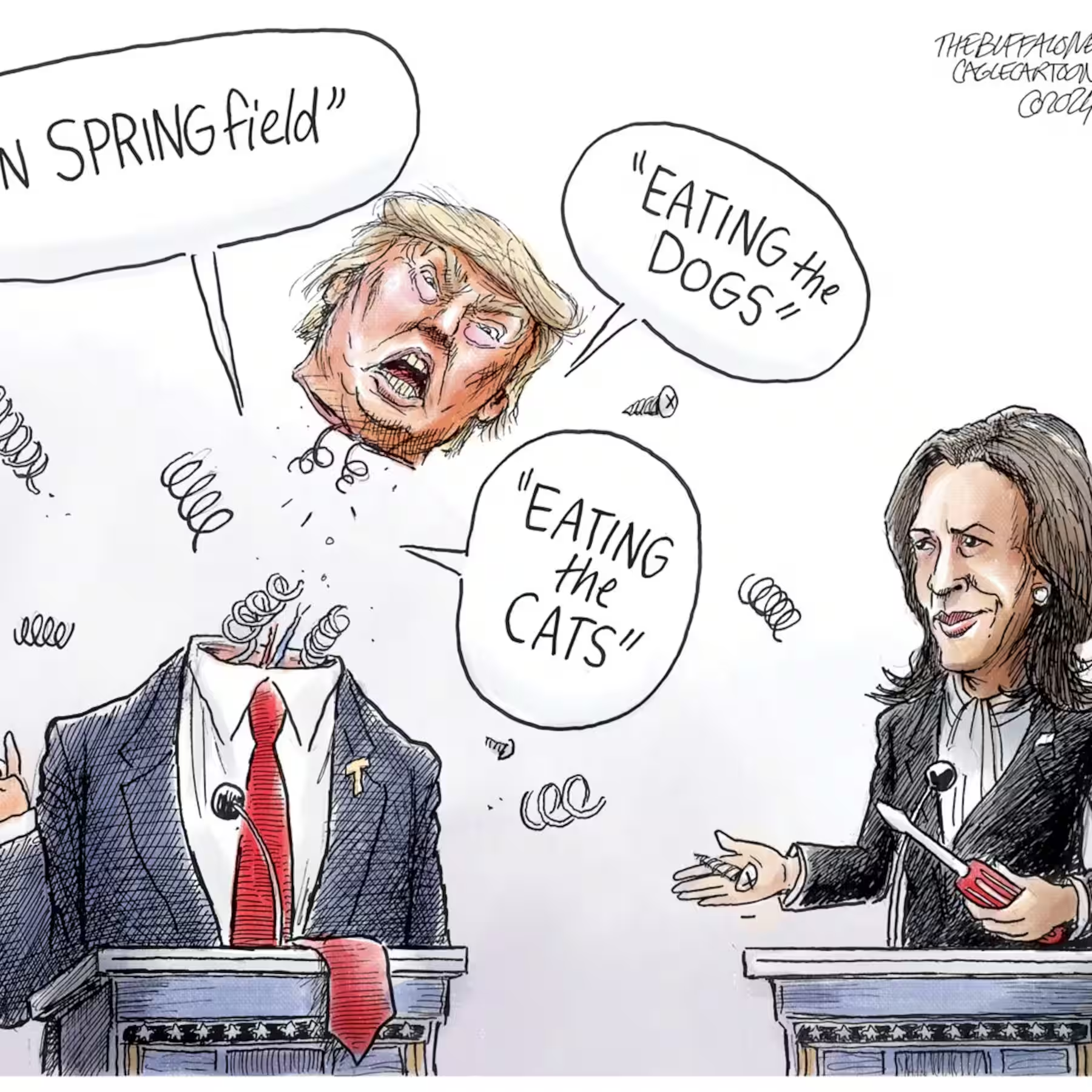
Political cartoons have long served as one of democracy’s sharpest tools. Long before the age of social media, editorial illustrators used pen and ink to puncture the pretensions of the powerful, reduce complex policy debates to a single striking image, and give ordinary people a language for their frustrations. Few recent examples have sparked as much conversation as the illustration that depicts Donald Trump as Scrooge McDuck — the famously miserly, gold-obsessed Disney character. Simple in its execution yet layered in its meaning, the cartoon has divided audiences, ignited debate, and demonstrated once again that a well-crafted image can say what thousands of words cannot.
The Image Itself: What the Cartoon Shows
For anyone unfamiliar with the Disney universe, Scrooge McDuck is the archetypal cartoon billionaire. He wears a top hat and red coat, sports gold-rimmed spectacles, and is most famously depicted diving headfirst into an enormous vault filled with gold coins — swimming in wealth, literally and figuratively. The character was created as a satirical embodiment of extreme capitalism: a duck so consumed by accumulating riches that little else seems to matter.
In the cartoon in question, Donald Trump is rendered in McDuck’s signature wardrobe and pose. The visual substitution is deliberate and economical — it communicates an entire argument without a single word of caption. The message the illustrator intends is unmistakable: Trump, like McDuck, represents extravagant wealth, self-interest, and an almost cartoonish devotion to opulence. By borrowing one of popular culture’s most recognizable symbols of greed, the artist shortcircuits the need for lengthy political analysis. Viewers get the point instantly.
That immediacy is part of what makes editorial cartooning so enduring. In an era of information overload, a single well-constructed image can cut through the noise in a way that even the most carefully argued op-ed cannot.
Criticism of Trump’s Wealth and Business Ties
The cartoon does not exist in a vacuum. It draws on years of public debate about the relationship between Trump’s personal finances and his conduct in office. Critics of Trump have long argued that his policies — including significant tax cuts, deregulation across multiple industries, and a general orientation toward business interests — disproportionately benefited the wealthy while offering comparatively little to working-class Americans.
His real estate empire, his network of golf courses, and his long-running disputes over the disclosure of his tax returns have all fed the narrative that his presidency was, at least in part, profit-driven. For those who hold this view, the Scrooge McDuck comparison feels apt rather than absurd. They see a leader who arrived in Washington already embedded in a world of extreme privilege and who, they argue, never truly left it behind.
The cartoon leans into these concerns visually. Scrooge McDuck’s vault of coins becomes a stand-in for Trump’s towers and resorts. The duck’s famous penny-pinching — hoarding wealth rather than distributing it — becomes a metaphor for policies critics say favored billionaires over ordinary citizens. Whether or not one agrees with that interpretation, it is the argument the image is making, and it makes it efficiently.
The Media’s Role in Amplifying the Message
No political cartoon in the modern era lives only on the page where it was first published. Once an image enters the digital ecosystem, it travels at speed. This illustration was no exception. Shared across social media platforms, embedded in news articles, and reproduced in international publications, it quickly transcended its origins and became a talking point in its own right.
Editorial cartoonists have always understood that their work functions as a challenge to power. This portrayal of Trump taps into long-standing concerns about his financial ethics and corporate favoritism. When media outlets circulated the image, they were not simply reporting on a piece of artwork — they were participating in the debate the artwork was designed to provoke. Discussions broke out across political lines, with commentators on both sides using the cartoon as a jumping-off point for broader arguments about wealth, leadership, and accountability.
There is something worth noting here about the particular power of cartoon satire in political media. Unlike a written critique, which requires a reader to engage with argument and evidence, a cartoon delivers its message in a fraction of a second. It works on an emotional and associative level, linking Trump to a character the audience already has strong feelings about. That emotional efficiency can make the message stickier — but it can also flatten nuance in ways that more detailed analysis would not.
Supporters Push Back Against the Cartoon
Not everyone viewed the image as clever satire. Many Trump supporters saw it as precisely the kind of elite, media-driven mockery they have come to expect — and resent. From their perspective, the cartoon does not critique Trump so much as caricature him unfairly, reducing a complex political figure to a one-dimensional symbol of greed.
Supporters frequently argue that Trump’s wealth is, in fact, a qualification rather than a liability. The logic goes something like this: a man who has already made his fortune has less reason to be corrupted by the financial incentives that shape the behavior of career politicians. His personal success, in this reading, is what allowed him to run without being beholden to the donors and special interests who fund most political campaigns — a point that resonated strongly with his base.
Many Trump loyalists also pointed to his stated commitment to drain the swamp and put America first as evidence that the cartoon’s characterization was not only unfair but the opposite of the truth. They saw the illustration as a product of media bias rather than legitimate criticism, and said so loudly on the same social platforms where the cartoon was spreading.
This pushback is itself an important part of the cartoon’s story. The image did not simply preach to the converted — it provoked a genuine argument, which is arguably what the best political cartoons are supposed to do.
Cultural Impact and Viral Spread
Beyond the immediate political debate, the cartoon achieved something that most pieces of political commentary never manage: it became a genuine pop culture moment. Memes multiplied. Hashtags trended. Late-night television referenced it. International publications ran it alongside coverage of American political divisions.
The image triggered discussion well beyond the borders of the United States, resonating with audiences in countries where Trump’s presidency was watched with a mixture of fascination and alarm. In that sense, the Scrooge McDuck comparison became an international shorthand — a symbol of how wealth and political power have become increasingly intertwined not just in America but in democracies around the world.
The choice of Scrooge McDuck specifically, rather than some other symbol of wealth, was a shrewd one. The character is universally recognizable across generations and cultures, having appeared in comics, animated series, and films for decades. He carries instant connotations that require no explanation. Anyone who has ever seen the character knows exactly what his presence in the image is meant to suggest.
Deeper Implications in Political Discourse
Strip away the humor and the duck costume, and what the cartoon is really engaging with is one of the central anxieties of contemporary democracy: the question of economic inequality and whether elected leaders genuinely represent the interests of ordinary people or primarily serve the wealthy and well-connected.
By depicting Trump as a character defined entirely by the accumulation of personal wealth, the cartoon poses an implicit question: can a billionaire truly govern for everyone? Is leadership about public service, or has it become another arena in which the rich exercise power over the rest? These are not trivial questions, and they extend far beyond any single politician. The cartoon uses Trump as its subject, but the anxieties it expresses are systemic — fears that democratic institutions are increasingly shaped by money, and that the gap between the governing class and the governed has grown too wide to bridge.
That broader resonance is part of what gives the image its staying power. It is not just about one man in a top hat. It is about what kind of democracy Americans — and people in many other countries — want to live in.
A Cartoon That Strikes a Nerve
The Donald Trump–Scrooge McDuck cartoon succeeds as political commentary precisely because it does more than poke fun. It opens a genuine dialogue about power, wealth, and democratic representation. It draws on a shared cultural vocabulary — the beloved, ridiculous, gold-obsessed duck — and uses it to make an argument that connects emotionally with large numbers of people, even as it infuriates others.
Political cartoons hold their influence because they blend humor with critique in a form that is accessible, shareable, and immediate. Whether you find this particular image devastatingly accurate or profoundly unfair likely tells you something about your broader political outlook. But regardless of where you land, the image delivers its message with force — and it sticks. That, ultimately, is the test of any good piece of political satire: not whether everyone agrees with it, but whether it makes people think, argue, and engage. On that measure, this cartoon has done its job.

Nathan Cole
Nathan Cole is a tech writer at BusinessToMark who covers video editing software, creative tools and AI apps. He tests the tools he writes about and focuses on clear, beginner-friendly comparisons that help creators and small businesses choose the right software without overspending.