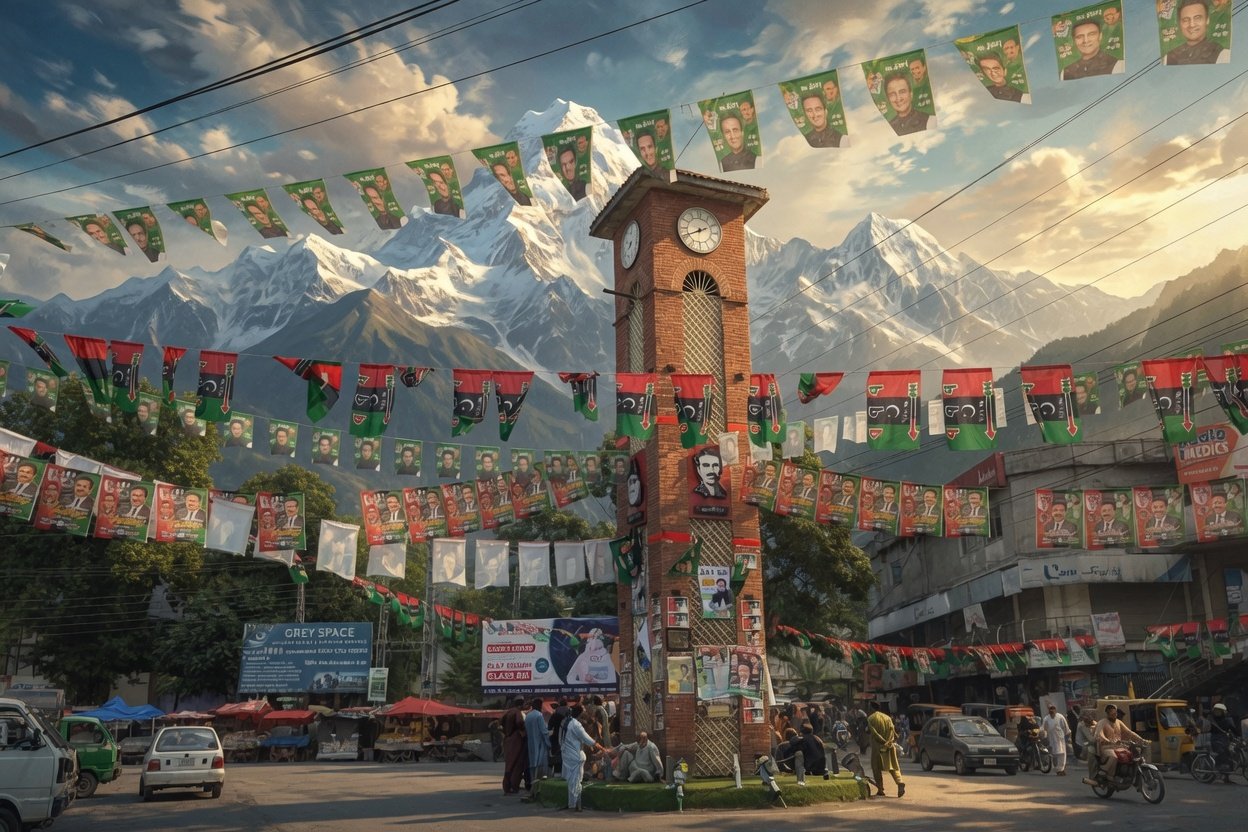
Muzaffarabad Pakistan-administered Kashmir – As election season heats up, the streets of Muzaffarabad are adorned with colorful party banners and flags fluttering overhead. Pakistan Muslim League-Nawaz (PML-N) symbols and Pakistan Peoples Party (PPP) arrows dominate key spots like Lal Chowk, signaling that campaigning is underway despite recent turmoil.
Yet beneath this appearance of normalcy lies deep uncertainty. The region has endured weeks of intense protests and a heavy-handed response since early June, resulting in dozens of deaths. These demonstrations are closely linked to the upcoming legislative elections, originally set for July 27 but now rescheduled across multiple dates due to security issues.
According to the region’s Chief Election Commissioner, Justice (retired) Ghulam Mustafa Mughal, voting in Mirpur division will proceed on July 27 as planned. Polls in the protest epicenter of Poonch division have been pushed to August 10, while voting in Muzaffarabad and for the 12 reserved seats for Kashmiri refugees living elsewhere in Pakistan is slated for August 2.
Core Dispute Fueling the Unrest
At the center of the controversy are those 12 reserved seats in the 45-seat Azad Jammu and Kashmir (AJK) Legislative Assembly. These seats, allocated to refugees who settled in Pakistan after the 1947 partition, have long been a point of contention. Protesters, led by the Jammu Kashmir Joint Awami Action Committee (JAAC), argue that only residents of Pakistan-administered Kashmir should have the right to contest and influence local governance and budgets. They demand the seats be eliminated.
The JAAC, formed in 2023 around demands for subsidized essentials like wheat and electricity, as well as limits on official perks, shifted its focus this year to these reserved constituencies. The group was banned in early June under anti-terrorism laws, its leader Shaukat Nawaz Mir and many supporters were arrested, and nomination papers from affiliated independents were largely rejected. This sparked some of the deadliest clashes in the region in years, with reports of nearly 30 fatalities. Internet and banking services were disrupted for extended periods, and access to parts of Poonch was severely restricted.
Many locals express sympathy for the protesters’ grievances even if they didn’t join the sit-ins. A 60-year-old driver in Muzaffarabad told reporters he supports the movement because it represents ordinary people fighting for rights, but he plans to boycott the vote, viewing the available candidates as corrupt and the process as flawed since JAAC voices are sidelined.
Mixed Views on Legitimacy and Turnout
Officials insist the electoral process is moving forward. Deputy Commissioner Munir Qureshi in Muzaffarabad highlighted active markets, traffic, and campaigning as signs of stability, emphasizing that whether people vote is their democratic choice. Additional security has been deployed across hundreds of polling stations.
However, the absence of JAAC from the ballot raises questions about the election’s credibility. JAAC leaders have called for a boycott, describing the polls as a “selection” rather than a genuine election. A JAAC member from Sudhnoti district claimed his independent nomination was unfairly rejected.
Political parties on the ballot acknowledge the challenges. PML-N and PPP candidates report that campaigning was nearly halted throughout June due to the unrest but has picked up recently. Some note potential lower turnout, especially among strong JAAC supporters, and social divisions emerging within families and communities. PPP, the current governing party in AJK, maintains a strong visible presence on the streets.
Broader Context
Pakistan-administered Kashmir (AJK) operates with a semi-autonomous setup, including its own president, prime minister, and legislature, but remains deeply tied to Islamabad. Historically, governments in AJK have aligned with the ruling party in Pakistan’s federal capital. The 12 refugee seats, rooted in 1960s legislation and the 1974 Interim Constitution, have rarely been decisive in forming governments, according to local analysts, but their growing voter base has intensified debates.
The AJK Supreme Court recently ruled that abolishing these seats requires a constitutional amendment by the assembly, not street protests. Federal officials, including Defence Minister Khawaja Asif, have warned against yielding to protest pressure, calling it a threat to the democratic process.
Related posts:
![WhatsApp verification code not received]()
Why Your WhatsApp Verification Code Not Received and How to Fix It Quickly
General![Instagram login error today]()
Instagram Login Error Today: Is Instagram Down or Just a Temporary Glitch?
General![How a Margaret River Wine Estate Built a Brand Around Conservation]()
How a Margaret River Wine Estate Built a Brand Around Conservation
General![pit viper sunglasses worn by tyler robinson killer]()
Ultimate Guide to Pit Viper Sunglasses Worn by Tyler Robinson Killer
General
The Complete Guide to Understanding mannacote? Benefits and Uses
General![Poppers Aromas: 7 Powerful Reasons This EU Store Stands Out]()
Poppers Aromas: 7 Powerful Reasons This EU Store Stands Out
General