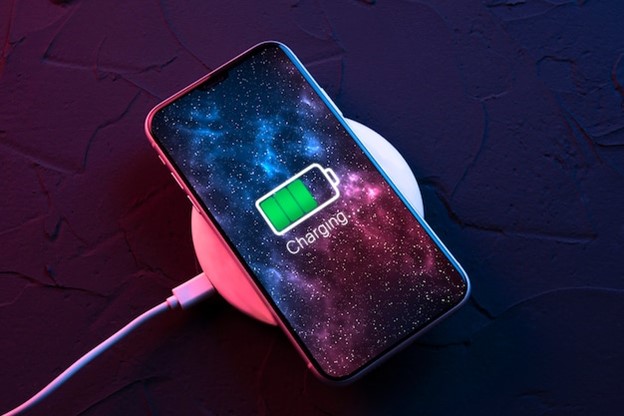
Cut the Cords: Embracing the Future with Wireless Charging

As we sail further into the 21st century, the rapid pace of technological advancement beckons us to adopt a more convenient and untethered lifestyle. Among the innovations leading this charge is wireless charging, a technology that allows us to power up our devices without the need for cumbersome cables and connectors. It’s an advancement that not only promises to simplify our daily rituals but represents a significant leap towards a more seamless and interconnected future.

The Evolution of Wireless Charging

The concept of wireless power transfer isn’t new; it can be traced back to the pioneering work of Nikola Tesla, who experimented with transferring power without wires over a century ago. However, it wasn’t until recent years that wireless charging technology began to mature, finding its footing in consumer electronics. Today, wireless charging is becoming increasingly ubiquitous in consumer devices, particularly smartphones, smartwatches, and earbuds.

One of the key attractions of this technology is its ability to reduce clutter. The elimination of wires can help create cleaner workspaces and living areas, not to mention the convenience of not having to remember to carry the right charging cable for each device. This wireless approach is also safer; there are no frayed cables or loose connections to pose electrical hazards.

The Fundamentals of Wireless Charging Technology

At its core, wireless charging works on the principle of electromagnetic induction. This involves a charger, which is a device that creates an alternating electromagnetic field from electricity, and a receiver, which is a coil inside the electronic device that converts this field back into electrical current to charge the battery.

The process is straightforward for the user: you simply place your device on a charging pad or near a charging station, and it begins to recharge. The efficiency of the charge transfer varies depending on the distance between the charger and receiver, the alignment of the coils, and the power output of the charging station.

Emerging Trends in Wireless Charging

As technology progresses, we are beginning to see advanced applications of wireless charging that stretch beyond personal devices. Some of these applications include electric vehicle charging stations that can power up a car without the need to plug in, as well as furniture integrated with wireless charging capabilities, allowing phones and tablets to be charged by simply placing them on tabletops.

Futuristic still, there are developments in room-scale wireless charging, which aims to supply power to devices anywhere within a room, eliminating the need for charging stations altogether. While still in its infancy, this could potentially transform the way we power devices, leading to homes and offices where charging becomes automatic and omnipresent, keeping our devices perpetually powered up.

Choosing the Right Wireless Charger

With a growing number of devices supporting wireless charging, consumers are faced with the challenge of selecting suitable chargers. The factors to consider range from the charging speed and compatibility with devices, to design and portability.

A wireless charger, like those developed by companies such as Belkin, is designed to cater to a wide array of needs. Belkin’s chargers are known for their sleek design, high efficiency, and strong compatibility with various devices. Before purchasing a wireless charger, it is crucial to confirm that it supports the Qi (pronounced “chee”) standard, which is the most widely adopted wireless charging standard globally.

Wireless Charging and the Environment

As we become increasingly environmentally conscious, it’s essential to consider the sustainability aspects of new technology. Wireless charging, though convenient, has faced criticism over its energy efficiency compared to traditional wired charging. Advances in technology are aimed at reducing this gap, and some wireless charging units are now competing closely with wired chargers in terms of energy conservation.

Manufacturers are also focusing on creating chargers using eco-friendly materials, reducing electronic waste, and improving the recyclability of their products. As consumers, we can do our part by choosing responsibly made wireless charging solutions and disposing of old electronics properly.

Integrating Wireless Charging into Society

Given its growing popularity, we’re starting to see wireless charging points being integrated into public spaces such as cafes, airports, hotels, and cars. This level of integration serves to make the technology more accessible, encouraging further adoption and normalising the vision of a world where keeping your device charged is as simple as setting it down on a surface.

The adoption of this technology in public infrastructure also signifies the potential for wireless charging to expand into other spheres. As we consider the role of wireless charging in public transport systems, healthcare environments and smart cities, it becomes increasingly clear that this technology will likely be a significant part of our connected future.

Embracing Wireless Charging

Embracing wireless charging is more than a convenient choice; it’s a statement of moving with the times. As this technology integrates into our lives, we’re seeing a glimpse of a future where our interactions with the devices that surround us become even smoother and more intuitive. Cutting the cords isn’t just about getting rid of physical wires; it’s about unleashing the true potential of our devices, creating an environment characterised by seamless connectivity and endless possibilities.

In conclusion, the future we once envisioned where power transfer is invisible, effortless, and omnipresent isn’t quite science fiction anymore—it’s a tangible future that is being charged up by innovations in wireless charging. As consumers, embracing this technology not only simplifies our lives but also fuels the continued evolution and integration of wireless power solutions into our homes, workplaces, and communities at large.

The next time you find yourself tethered to a charging cable, remember that there is an alternative emerging—one that invites you to cut the cords and embrace the freedom of a wireless world.


Author: Zafar Jutt
How to Convert Solana to Tron (SOL to TRX) in 2026
Moving from Solana to Tron connects a high-speed innovator with a stable, cost-effective network focused on content and stablecoin dominance. Whether balancing portfolio exposure, accessing Tron's vast USDT liquidity, or preparing for everyday transfers, a straightforward SOL to TRX conversion handles it efficiently. Instant non-custodial platforms enable direct wallet exchanges, emphasizing privacy and simplicity.
 
Solana continues leading in 2026 for cutting-edge performance, powering real-time DeFi, gaming, and scalable apps with sub-second finality and negligible fees. Tron complements this with energy-efficient consensus, hosting the majority of circulating USDT and supporting entertainment dApps seamlessly. Many swap SOL to TRX to leverage Tron's predictability for payments or stablecoin operations, especially when Solana's intensity feels overwhelming.
Solana's architecture
Solana's architecture excels for demanding workloads, attracting developers with tools for massive concurrency. Tron prioritizes accessibility, offering near-zero costs that make micro-transactions and remittances practical worldwide. This dynamic encourages rotations — a SOL to TRX swap when seeking lower risk or broader compatibility, particularly as Tron expands in emerging markets.
 
The pair's rate often reacts to chain-specific news, like Solana upgrades improving reliability or Tron partnerships boosting adoption. Monitoring the SOL to TRX exchange helps time moves aligned with personal strategies.
 
Preview tools on swap services aggregate liquidity for transparent estimates. Entering your SOL generates the forecasted TRX return after fees, clarifying expectations upfront. Quickex supports fixed-rate locking against brief volatility or floating for market alignment, fitting varied preferences.
 
Execution flows smoothly on trusted instant services. Select SOL as source and TRX as destination, input your amount for the live projection, and provide a Tron address. Review the breakdown — including rate and costs — then send SOL to the deposit. Solana's efficiency ensures TRX arrives rapidly, verifiable in your wallet. This non-custodial design maintains control throughout.
 
Bridges provide routed alternatives with wrapped tokens, adding layers and dependencies. Centralized trading suits higher volumes but typically involves verification. Direct instant SOL to TRX exchange balances convenience and independence effectively for most cases.
 
Cross-chain activity requires careful attention. Inspect Tron addresses fully after entry, as blockchain sends are final. Hardware wallets enhance SOL signing protection. Incremental tests confirm flow for substantial amounts. Secure connections and updates reduce common risks.
FAQ
Is a SOL to TRX swap traceable across chains?
Separate ledgers limit direct linking post-completion.
How long do typical swaps take?
Often minutes, thanks to Solana's speed and optimized routing.
What influences daily rate changes?
Ecosystem updates, liquidity shifts, and sentiment drive fluctuations. Conclusion
A Solana–Tron connection thoughtfully pairs Solana's innovation with Tron's accessibility. Precise forecasts and reliable platforms facilitate meaningful adjustments. When needs evolve, proven instant options offer consistent, user-focused results.