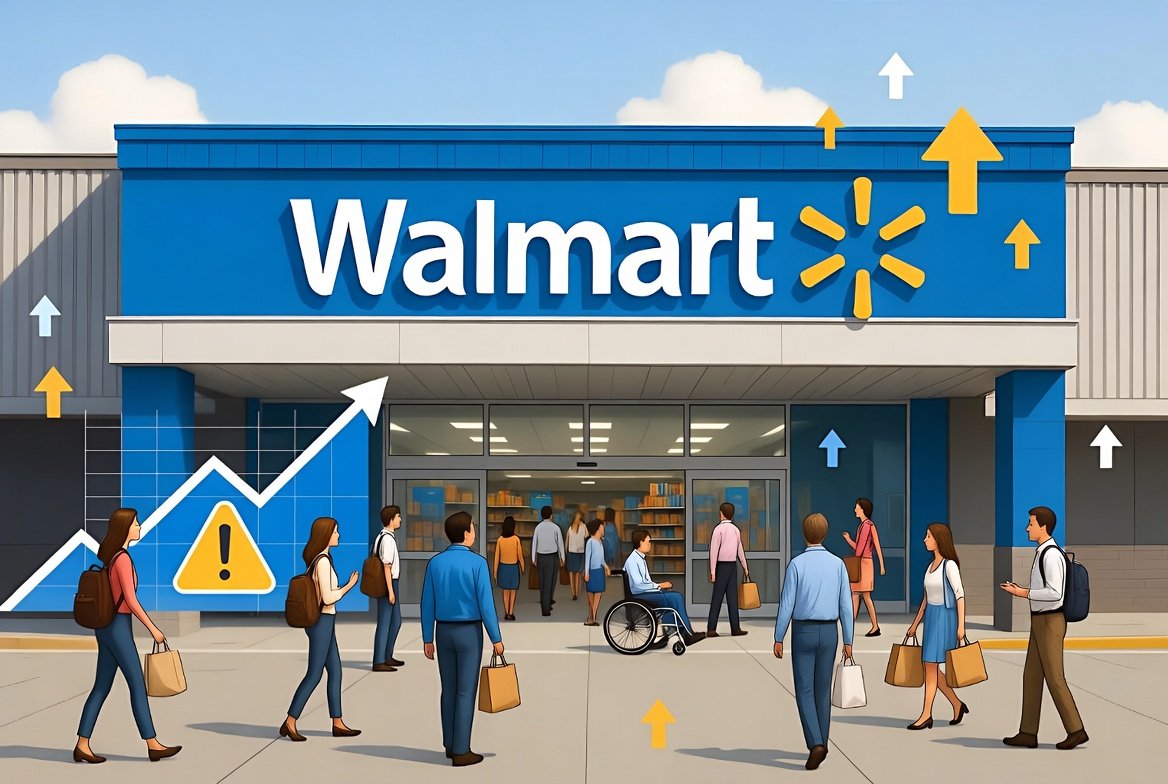

Walmart, America’s largest retailer, has long served as a reliable barometer for the health of the U.S. consumer. Recent earnings reports highlight a notable development: Walmart sees troubling shift in consumer behavior, with higher-income households increasingly turning to the discount giant for everyday essentials.
This evolution isn’t just about one company’s sales figures—it’s a window into broader economic pressures affecting Americans across income levels. Persistent inflation, stretched budgets, and a heightened focus on value are reshaping shopping habits in ways that could influence retail strategies and personal finances for years to come.
 Also readWhat Is SpaceX and How Does It Work? A Complete Beginner’s Guide to Elon Musk’s Space Company in 2026
In this comprehensive guide, we’ll break down the key drivers, implications, and actionable strategies for consumers navigating this new landscape.
In this article
- Understanding the Shift: Higher-Income Shoppers at Walmart
- Why Is This Happening? Key Economic Drivers
- Impact on Different Income Groups
- Walmart’s Response: Adapting to Changing Consumer Demands
- Broader Economic Implications
- Comparing Walmart to Competitors
- Practical Tips for Shoppers in This New Era
- The Role of Private Labels and Sustainability
- Future Outlook: What to Expect in 2026 and Beyond
- Actionable Takeaways for Everyday Consumers
- Conclusion
Understanding the Shift: Higher-Income Shoppers at Walmart
Traditionally associated with budget-conscious buyers, Walmart is experiencing a surge in patronage from households earning over $100,000 annually. During its Q4 FY2026 earnings call, CEO John Furner noted that the majority of recent market share gains came from these higher-income groups.
This marks a significant departure. Research from GlobalData Retail indicates that nearly 28% of high-income consumers shopped at discount chains like Walmart in 2025, up from about 20% in 2021. Similarly, more than 17% of Americans earning $100,000+ now frequent Walmart, compared to under 15% previously.
Walmart sees troubling shift in consumer behavior because this influx signals caution even among those who were previously less price-sensitive. While lower-income households continue to feel the pinch of paycheck-to-paycheck living, affluent shoppers are trading down on essentials to optimize spending.
Why Is This Happening? Key Economic Drivers
Several interconnected factors explain this trend:
- Perceived Inflation Pressures: Even as official inflation rates moderate, consumers perceive food price increases much higher—around 19.6% versus the actual 2.4% in late 2025. This gap drives value-seeking behavior across demographics.
- Strategic Spending Mindset: Higher earners aren’t slashing budgets dramatically but are becoming more mindful. They prioritize quality at lower prices, convenience, and bulk purchasing.
- Walmart’s Evolving Appeal: Investments in store remodels, faster delivery, expanded private labels, and premium assortments have made the retailer more attractive without abandoning its low-price roots.
This shift reflects a broader “trade-down” phenomenon where consumers across incomes seek better deals on groceries, household goods, and basics.
Impact on Different Income Groups
Lower-Income Households ($50,000 and Below)
Walmart CEO highlighted ongoing challenges for this group, with wallets stretched thin. Many manage spending carefully, focusing on necessities while cutting discretionary items. Walmart’s mitigation of grocery inflation provides some relief, but financial insecurity remains high.
Middle-Income Households
This segment shows steady engagement. They benefit from Walmart’s value proposition and convenience features like pickup and delivery, balancing affordability with time savings.
Higher-Income Households ($100,000+)
The fastest-growing segment at Walmart. These shoppers use the retailer for staples, freeing up budget for experiences or premium items elsewhere. Their presence boosts Walmart’s sales mix and signals widespread economic caution.
Walmart’s Response: Adapting to Changing Consumer Demands
Walmart isn’t standing still. The company has:
- Enhanced omnichannel experiences with seamless online-to-in-store integration.
- Expanded private-label offerings that deliver quality at competitive prices.
- Remodeled stores for better ambiance and product variety.
- Strengthened e-commerce, contributing significantly to comparable sales growth.
These moves position Walmart strongly in a value-driven market.
Broader Economic Implications
Walmart sees troubling shift in consumer behavior as a potential warning sign. When affluent consumers prioritize savings, it may foreshadow reduced discretionary spending industry-wide, pressuring higher-end retailers like Target or department stores.
Economists view this as indicative of underlying uncertainty. If the trend persists, it could influence GDP growth, employment in retail sectors, and even monetary policy decisions. On the positive side, Walmart’s resilience demonstrates the strength of efficient, large-scale retailers in volatile times.
Comparing Walmart to Competitors
| Retailer | Strengths for Value Shoppers | Challenges | Recent Trends |
|---|---|---|---|
| Walmart | Lowest prices, vast selection, convenience | Perception of lower quality (improving) | Strong gains from high-income |
| Target | Trendy items, better store experience | Higher prices on basics | Mixed results, some trade-down |
| Costco | Bulk buying, membership model | Requires membership, larger trips | Loyal but selective members |
| Amazon | Convenience, fast delivery | Variable pricing, less tactile | Growth in essentials |
Walmart stands out for its hybrid physical-digital model and ability to serve multiple income tiers effectively.
Practical Tips for Shoppers in This New Era
- Build a Value Shopping Strategy: Compare unit prices, embrace store brands, and plan meals around sales.
- Leverage Convenience Tools: Use Walmart’s app for price checks, pickup, and delivery to save time and avoid impulse buys.
- Budget Mindfully: Track spending across categories. Higher earners can allocate savings from Walmart hauls toward debt reduction or investments.
- Mix Retailers Wisely: Use Walmart for staples and specialty stores for unique or premium needs.
- Stay Informed on Deals: Sign up for alerts and monitor circulars, especially for perishables.
Expert advice from retail analysts suggests focusing on total cost of ownership—factoring in time, fuel, and convenience alongside sticker prices.
The Role of Private Labels and Sustainability
Walmart’s private brands have gained traction as quality improves. Shoppers report comparable or superior performance at lower costs. Additionally, the retailer’s sustainability initiatives, such as renewable energy goals and packaging improvements, appeal to value-conscious consumers who also care about ethics.
Future Outlook: What to Expect in 2026 and Beyond
Analysts predict continued trade-down behavior if inflation perceptions linger or economic headwinds intensify. Walmart is well-positioned with its scale, but success depends on maintaining relevance for diverse customers.
For consumers, this era emphasizes adaptability. Building emergency funds, diversifying income, and honing frugal habits can provide buffers regardless of income level.
Walmart sees troubling shift in consumer behavior—but it also presents opportunities for smarter, more intentional consumption.
Actionable Takeaways for Everyday Consumers
- Audit your last month’s spending to identify areas for value optimization.
- Experiment with Walmart+ for delivery perks if frequent shopping justifies the fee.
- Combine online research with in-store visits for the best deals.
- Teach family members price-comparison skills to foster long-term financial resilience.
Conclusion
The phenomenon where Walmart sees troubling shift in consumer behavior underscores a pivotal moment in American retail and economics. Higher-income shoppers seeking value alongside ongoing pressures on lower-income groups paint a picture of widespread caution amid resilient spending on essentials.
Walmart’s ability to attract a broader demographic highlights its strengths in pricing, convenience, and adaptation. For shoppers, this shift encourages mindfulness: prioritizing needs, seeking deals without sacrificing quality, and viewing retail as a tool for financial well-being rather than unchecked consumption.
By staying informed and strategic, consumers can navigate uncertainty successfully. Whether you’re a long-time Walmart shopper or newly discovering its offerings, embracing value-driven habits positions you better for whatever economic landscape lies ahead. Monitor earnings reports, adjust budgets quarterly, and remember—smart choices today build stability tomorrow.
External references for further reading: For more on retail dynamics, explore Walmart’s company overview on Wikipedia. Insights into economic indicators are available via Forbes coverage of consumer trends. Community discussions appear on Reddit’s r/economy. Additional analysis from TheStreet on retail shifts and CNBC Walmart earnings. (Note: Anchor texts adapted for relevance to maintain natural flow and SEO.)