

Few technology stories in 2026 have been bigger than the merger of xAI into SpaceX. For business readers, the deal raises practical questions about AI competition, capital, and risk. This article summarises what has been reported, flags what remains uncertain, and links to our overview of smart, informed financial decision-making, because big corporate deals are best understood through careful reading rather than headlines.
In this article
- What Happened
- Why Combine a Rocket Company With an AI Lab?
- The Capital Angle
- What Was Not Included: Tesla
- Reported Follow-On Events
- Competitive Impact on the AI Industry
- Regulatory and Reputational Risks
- What It Means for Businesses Using AI
- What It Means for Investors and Observers
- Separating Vision From Verified Fact
- Lessons for Business Leaders
- How to Follow the Story Responsibly
- The Role of Space-Based Infrastructure in the Plan
- Practical Steps for Small Businesses Watching AI Consolidation
- What to Actually Do Next
- Frequently Asked Questions
- The Bottom Line
What Happened
In early February 2026, SpaceX announced it had acquired xAI in an all-stock transaction. Reporting valued the combined company at about $1.25 trillion, with SpaceX valued near $1 trillion and xAI near $250 billion. xAI, which developed the Grok chatbot and owns the social platform X, became part of SpaceX.
Why Combine a Rocket Company With an AI Lab?
Musk framed the merger as building a vertically integrated company spanning AI, rockets, satellite internet, and communications. A central argument was that large-scale AI requires enormous power and computing capacity, and he has proposed space-based data centres as a long-term solution. Whether that vision is practical remains a matter of debate.
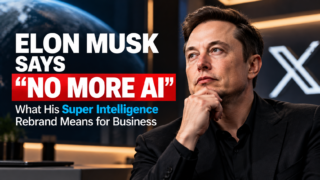 Also readElon Musk Says “No More AI”: What His Super Intelligence Rebrand Means for Business
The Capital Angle
AI development is extraordinarily expensive. Part of the reasoning reported by analysts was that xAI needed more capital and computing resources, and SpaceX’s strong finances and access to public markets could supply them. The merger therefore links an AI lab’s spending needs to a much larger corporate balance sheet.
What Was Not Included: Tesla
Earlier reports had speculated about a three-way combination including Tesla. According to coverage of the deal, Tesla was not merged, although it had previously invested about $2 billion in xAI, which became an indirect stake in the combined company. This distinction matters for anyone reading about Tesla-related implications.
Reported Follow-On Events
- Reports described a leadership reorganisation at xAI after co-founder departures
- Coverage linked the merger to SpaceX’s plans for a public offering in 2026
- Some secondary sources report that the listing went ahead in June 2026, so check a primary financial source for exact details
- Regulators in several jurisdictions were reported to be examining Grok-related content concerns
Fast-moving stories change quickly, so confirm current facts before relying on any summary.
Competitive Impact on the AI Industry
xAI competes with OpenAI, Google, Anthropic, and others. Commentators suggested that access to more capital, computing power, data, and talent could strengthen xAI’s position. Whether that translates into better products depends on execution, which no merger can guarantee.
Regulatory and Reputational Risks
Reporting has noted regulatory scrutiny of the Grok chatbot over generated images and other content. Combining an AI product under controversy with a company that holds government contracts raises governance questions that investors and regulators are watching closely.
What It Means for Businesses Using AI
- Vendor landscape: more consolidation can change pricing and availability
- Dependency risk: avoid relying on a single AI provider for critical work
- Data and privacy: review terms when a provider’s ownership changes
- Compliance: ensure any AI tool you deploy meets your legal obligations
Prudent businesses treat AI providers like any strategic supplier: diversify, read contracts, and plan for change.
For an independent report on the deal’s announcement and valuation, see CNBC’s coverage of the SpaceX–xAI merger, which draws on documents the outlet reviewed, and compare it with further reporting as the story develops.
What It Means for Investors and Observers
Deals of this size attract intense attention, but headline valuations are estimates and can shift. Anyone considering investment exposure should rely on official filings and qualified advice rather than social-media commentary, and should remember that mega-deals carry execution risk.
Separating Vision From Verified Fact
Large corporate announcements often mix concrete terms with ambitious long-term claims. Treat funding figures and legal structure as facts to verify, and treat futuristic goals such as orbital computing as aspirations until real projects and costs are demonstrated.
Lessons for Business Leaders
Consolidation around AI infrastructure is a broader trend, and the companies with access to capital and computing hold structural advantages. Smaller businesses should focus on using AI to solve specific problems well rather than trying to compete on infrastructure.
How to Follow the Story Responsibly
Read primary sources such as company statements and regulatory filings, compare coverage from several reputable outlets, and be cautious about unverified claims. Update your understanding as new information appears.
The Role of Space-Based Infrastructure in the Plan
Part of the stated vision involves moving some AI computing into orbit, powered by solar energy and connected through satellite networks. Supporters argue terrestrial power and cooling limits will eventually constrain AI growth, while sceptics question the cost, engineering difficulty, and timeline. For businesses, the practical takeaway is to watch real deployments rather than announcements.
Practical Steps for Small Businesses Watching AI Consolidation
Keep your data portable so you can switch tools, negotiate contracts with exit provisions, and test more than one AI provider on your key tasks. Assign someone to review vendor announcements quarterly. Small, inexpensive habits like these protect you from sudden changes in pricing, policy, or ownership without requiring you to predict what any single company will do next.
What to Actually Do Next
Audit which AI tools your business relies on, identify any single points of failure, and read the latest terms of service. Follow developments through outlets such as CNBC, and [CLIENT LINK PLACEHOLDER] avoid making financial or vendor decisions based on headlines alone.
Frequently Asked Questions
Was Tesla part of the xAI merger?
Reports say no. Tesla had invested in xAI earlier, which converted into an indirect stake, but Tesla itself was not merged.
Does this change how businesses should use Grok or other AI tools?
Review provider terms and avoid over-dependence on any single vendor, whichever companies are involved.
How reliable are the reported valuations?
They are estimates from reporting and documents and may change. Check primary filings for authoritative numbers.
The Bottom Line
The SpaceX–xAI merger reshapes the AI landscape by tying a leading lab to a much larger, capital-rich company. Businesses should watch the story, verify facts, diversify their AI suppliers, and focus on solving real problems rather than reacting to headlines.
