
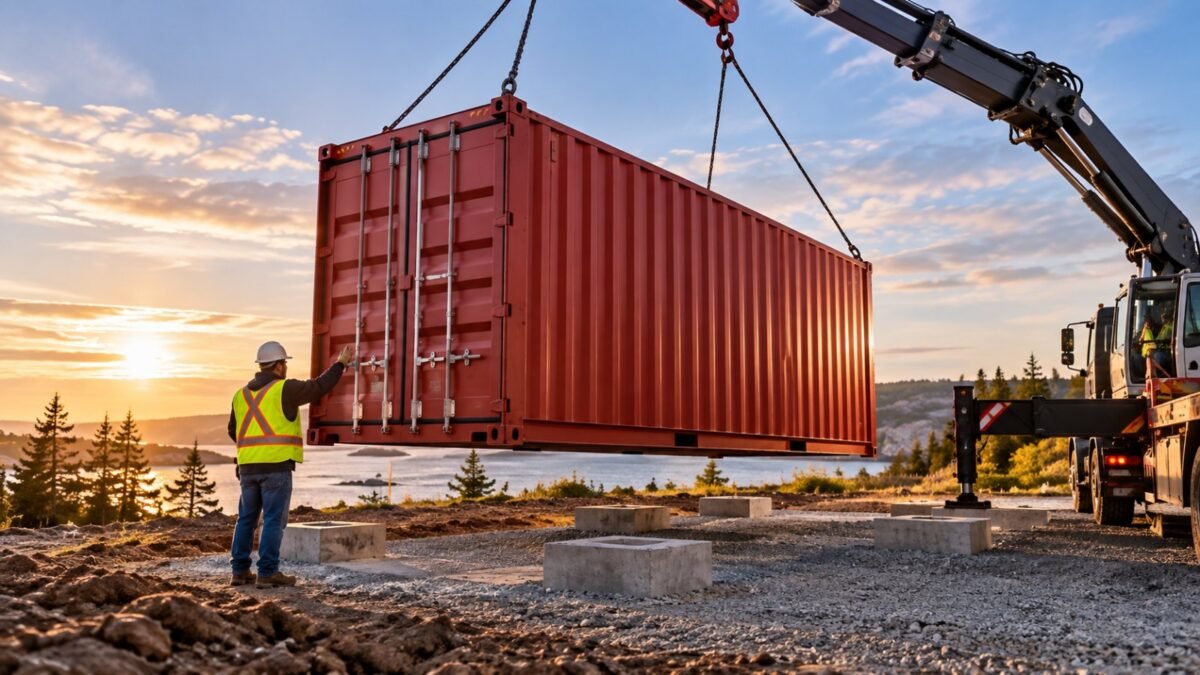
Determine the right size and condition, calculate the complete delivered cost, and confirm your site can accommodate delivery before choosing a container.
Buying a shipping container can seem straightforward until practical requirements enter the equation. A business needs to decide how much usable space it requires, what condition is appropriate, how the container will reach the property and what the complete purchase will cost.
- 100% free
- Call direct
- Voice search
- Urdu & English
For companies storing inventory, tools, equipment or materials, these decisions should come before comparing prices. Define the job first, then find the container that fits it. That approach makes it easier to compare suitable options without paying for capacity or features the business does not need.
 Also readHow to Spot Fake Paid Political Group Scams on WhatsApp, Facebook & Telegram
In this article
Start With What the Business Needs to Store
Begin by documenting what will go inside the container and how employees will use it.
Total volume matters, but usable space matters more. Equipment that needs to be accessed frequently should remain reachable without unloading everything in front of it. Shelving, walkways and clearance around larger items can also reduce the practical capacity of a container.
Consider future requirements as well. If inventory fluctuates seasonally or the business expects storage needs to increase, sizing exclusively around today’s volume could create another capacity problem.
Freight containers follow established dimensional standards. The International Organization for Standardization’s ISO 668 standard classifies Series 1 freight containers according to external dimensions and specifies associated ratings and certain minimum internal and door-opening dimensions.
Once the required capacity and intended use are clear, reviewing available shipping containers allows the business to compare container options against defined requirements instead of starting with price.
Match Container Condition to Its Intended Use
Not every application requires the same container condition.
A unit used for equipment storage at an industrial property may have different cosmetic requirements from one positioned near a customer-facing area. A business planning modifications may also evaluate appearance differently from a buyer that intends to use the container without substantial changes.
Separate functional requirements from cosmetic preferences. Consider what needs to be protected, the expected period of use and whether exterior appearance matters at the proposed location.
Businesses planning to return a freight container to international transportation should consider additional requirements. The International Maritime Organization’s Convention for Safe Containers guidance explains that the CSC establishes testing, inspection, approval, maintenance and structural safety requirements for containers within its scope.
The practical objective is to purchase the condition the application requires, rather than assuming the newest or least expensive option will automatically provide the right value.
Calculate the Complete Delivered Cost
The advertised price of a container is only one component of the purchasing decision.
Ask for written quotes that clearly identify the container specification, condition, transportation, unloading or placement, applicable taxes and additional services. If modifications or accessories are required, account for those costs as well.
Site preparation may also affect the budget. The intended location may require work before delivery, depending on its surface, drainage, accessibility and the way the container will be used.
This is why two headline prices should not automatically be treated as equivalent. One quote may include services that another excludes.
Give potential suppliers the same requirements and compare the resulting quotes against the same scope. The meaningful number for a business is the complete cost of getting an appropriate container delivered and ready for its intended use.
Confirm the Site Before You Commit
A suitable container still needs a suitable place to go.
Before finalizing the purchase, discuss the proposed location with the delivery provider. Confirm access, approach space, gates, ground conditions, overhead obstacles and the intended orientation of the container doors. Delivery equipment can require considerably more working space than the container’s footprint itself.
Local land-use requirements should also be investigated before placement. Toronto’s zoning by-law, for example, defines “open storage” to include storing containers outside a wholly enclosed building, while specific requirements differ according to zoning category.
Businesses in Toronto can consult the City of Toronto Zoning By-law for applicable provisions. Businesses elsewhere should verify requirements with the municipality responsible for their property rather than assuming the same rules apply.
Resolve these questions before scheduling delivery, when the placement plan can still be adjusted.
Compare Every Container Using the Same Criteria
Once the requirements are documented, the final comparison becomes simpler.
Assess every shortlisted option against four factors: usable capacity, appropriate condition, complete delivered cost and site compatibility.
If a container fails an essential requirement, eliminate it before allowing price to determine the decision. This approach also gives suppliers clearer information about what the business needs, making quotes easier to compare.
Buy for the Job the Container Needs to Do
The right container is not necessarily the largest, newest or lowest-priced option. It is the one whose capacity, condition, delivered cost and placement requirements align with its intended purpose.
Define those requirements first, verify the site and compare equivalent options. A structured purchasing process can make additional business storage easier to plan, budget and implement.