
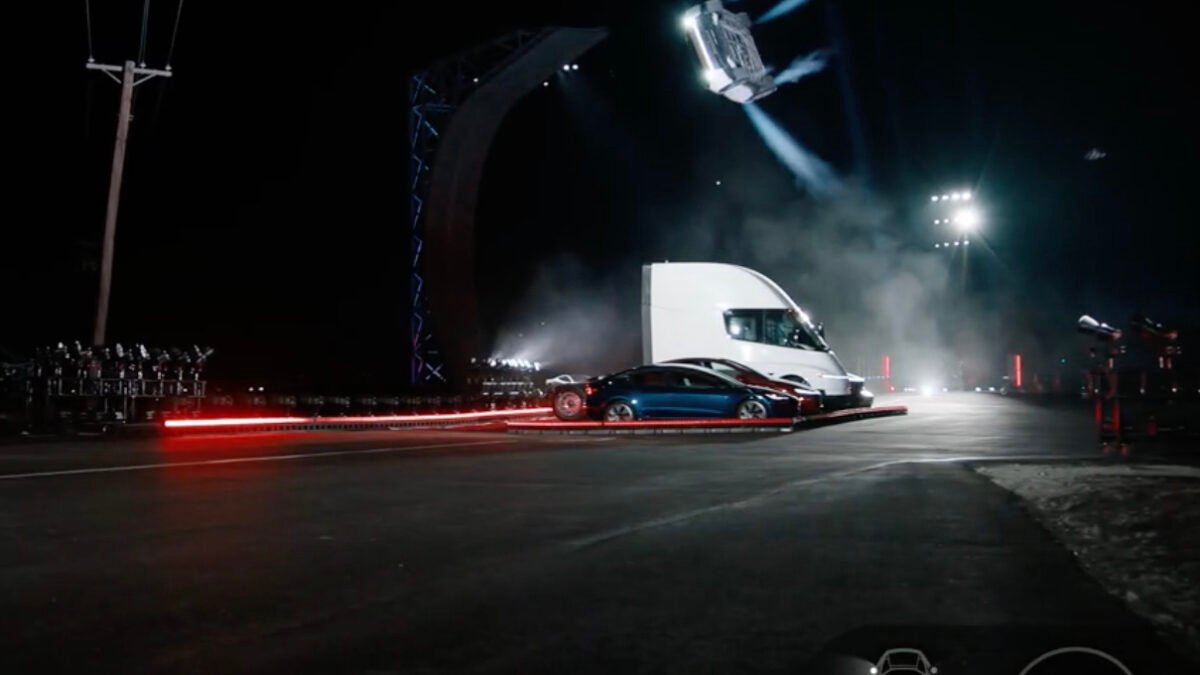
For years, Elon Musk teased that the next Tesla Roadster would do something no production car had ever done. On the night of October 15, 2026, at a SpaceX-linked event in Texas, he finally showed it: a Roadster that lifted off the ground, flipped, spun in midair and landed back on its wheels. Within hours, headlines around the world were calling it Tesla’s “flying car.”
So is it real? Can you actually buy a car that flies? The short answer is yes, the car is real and the demo happened, but it isn’t a flying car in the way most people imagine. It doesn’t cruise above traffic like a helicopter. It uses rocket-style thrusters to jump, hop and manoeuvre for short moments. Here’s what Tesla actually launched, how the “flying” works, what it will cost, and what’s still unknown. For more car and gadget coverage, browse our Tech Review section.
In this article
What Did Tesla Actually Launch?
Tesla unveiled the second-generation Tesla Roadster, a car first announced back in November 2017. At the time, deliveries were promised for 2020, but the project was delayed repeatedly. The reveal itself was also pushed back several times, from the end of 2025 to April 2026, and then an October 1 date was postponed because of bad weather.
 Also readStellar Migrator for Exchange Review: Migrating from Exchange Server to Microsoft 365

During the live demo, the prototype:
- Used powerful fans and thrusters to drive up an inverted ramp, spin and land on the pavement below
- Lifted itself over a line of other Tesla vehicles, including a Cybertruck, Cybercab, Tesla Semi, Model Y and Model 3
- Showed 0 to 60 mph acceleration in about one second
Musk himself admitted before the demo that success wasn’t guaranteed, and afterwards said, in effect, that it worked.
How Does the “Flying” Tesla Work?
The Roadster doesn’t have wings or propellers. Instead, it borrows technology from SpaceX rockets:
- Cold-gas thrusters: Tesla’s engineering team said the top version uses 10 thrusters around the car.
- Compressed air tanks: the thrusters are fed by around 600 litres of compressed air stored in carbon-fibre-wrapped pressure vessels (COPVs), similar to those used in rockets. The tanks can be recharged.
- Fans and diffusers: these create strong downforce and suction for grip and help with lift and control.
In simple terms, the car fires blasts of compressed air to push itself off the ground and control its movement for a short time. It’s closer to a rocket-powered stunt than a vehicle that can fly from one place to another. Tesla has not said how high the car can go, how long it can stay in the air or how far it can “fly.”
Technology outlet TechCrunch’s coverage of the reveal describes the thruster system and the three trim levels in more detail.
The Three Tesla Roadster Versions
| Version | Seats | Key Feature | Reservation |
|---|---|---|---|
| Performance | 2 | “Road ready,” active aerodynamics and suction system | $50,000 deposit |
| Thrust | 2 | “Race ready,” rear cold-gas thrusters, sub-one-second 0–60 mph | $250,000 deposit |
| Rocket | 1 | “Air ready,” 10 cold-gas thrusters for lift and spin | Invite only |
Tesla says all versions offer around 300 miles of range and top speeds above 230 mph. The design is sharper and more angular than the 2017 prototype, with inspiration taken from military jets.
Tesla Roadster Price and Release Date
- Price: Tesla did not announce a final price at the event.
- Deposits: reservations are open with a $50,000 deposit for the Performance model and $250,000 for the Thrust model, in markets including the US, Canada and China.
- Production: Musk said Tesla plans to start building the car in 2028.
Given how many times the Roadster has already been delayed, many analysts are treating 2028 as a target rather than a promise.
Is It Safe, and Is It Even Legal?
This is where things get complicated. During the event, Musk openly said safety was not the main goal of the car and suggested that buyers who care most about safety should look elsewhere. That’s an unusual message from a car company.
There are also big open questions:
- Road approval: it’s not yet clear how a car with high-pressure thrusters will meet road safety rules in different countries.
- Air rules: if a vehicle leaves the ground, aviation regulators may have something to say about where and how it can be used.
- Pressure vessels: COPVs like these have been linked to past rocket failures, which raises questions about how they’ll behave in a road car.
- Production features: Tesla hasn’t confirmed whether the full “flying” capability shown in the demo will be available on customer cars, or only on special versions.
Some well-known tech reviewers were openly sceptical after the reveal, and early reservation holders have long complained about the repeated delays.
How Did Investors React?
Tesla shares rose almost 5% in early trading the next morning before settling to a smaller gain, even as the wider tech market fell. Musk himself described the Roadster as a “halo car,” meaning it’s designed to build excitement for the brand rather than to make big profits. Tesla’s main business still depends on its mass-market cars, and the company reports its third-quarter earnings on October 21. For more market news, see our Business section.
Flying Car or Clever Stunt? Our Take
| What’s True | What’s Hype |
|---|---|
| The car was shown lifting off the ground and landing safely | It isn’t a flying car you can travel in above traffic |
| It uses real SpaceX-style thruster technology | Flight time, height and range are unknown |
| Reservations are open now | No final price and production isn’t until 2028 |
| Performance claims are extreme (0–60 mph in about 1 second) | Road and air approvals are still unclear |
The Tesla Roadster is best understood as an extreme performance car with rocket-powered party tricks. It’s an impressive piece of engineering and a brilliant marketing moment, but it’s not the start of everyday flying cars.
Should You Put Down a Deposit?
Only if you’re comfortable with risk. A $50,000 or $250,000 deposit ties up a lot of money for a car that won’t enter production for at least two years and has a long history of delays. Read the refund terms carefully before paying. If you’re shopping for a car you can drive this year, a proven model is a far safer bet. Buyers in Pakistan comparing practical options can check our guide to SUV prices in Pakistan 2026.
Frequently Asked Questions
Has Elon Musk really made a flying car?
Tesla has built a Roadster prototype that can briefly lift off the ground using cold-gas thrusters and land again. It’s not a flying car designed for travel through the air.
When will the Tesla Roadster be released?
Elon Musk said Tesla plans to begin production in 2028.
How much does the new Tesla Roadster cost?
Tesla hasn’t announced a final price. Reservations require a $50,000 deposit for the Performance version and $250,000 for the Thrust version.
How fast is the new Tesla Roadster?
Tesla claims around 0–60 mph in about one second for the top versions, top speeds above 230 mph and roughly 300 miles of range.
Can the Tesla Roadster fly on public roads?
That hasn’t been confirmed. Road and aviation regulators would need to approve how and where any lift-off features can be used.
Final Thoughts
Elon Musk did deliver a Roadster that leaves the ground, and that’s a remarkable engineering stunt. But calling it a flying car stretches the truth. It hops, flips and lands using rocket technology, with no confirmed price, no confirmed flight details and production still years away. Watch this one with excitement, but keep your expectations, and your deposit, grounded until Tesla shares more. We’ll update this story as new details emerge; check the Businesstomark homepage for the latest.