In this article
- 1. Introduction: Why Ranking on Google in 2026 Is Different
- 2. What’s Changed in 2026? The New SEO Reality
- 3. E-E-A-T: The Foundation of Modern SEO
- 4. Technical SEO: Get the Basics Right
- 5. Content That Ranks (and Gets Cited by AI)
- 6. Keyword Research in the AI Era
- 7. On-Page SEO Fundamentals
- 8. Link Building That Works in 2026
- 9. Step-by-Step: How to Rank Your Website on Google
- 10. Comparison Table: SEO Platforms for Beginners
- 11. Measuring Your Success
- 12. Conclusion: Your Path to Google’s First Page
- 13. Frequently Asked Questions
- 14. Key Takeaways
1. Introduction: Why Ranking on Google in 2026 Is Different
Picture this: You’ve just launched your website. You’ve got great products, helpful content, and a clear mission. But when you search for your own site on Google… nothing. Not even on page ten.
Frustrating, right?
You’re not alone. Every day, thousands of new websites go live, and most of them never see the light of Google’s first page. But here’s the good news: learning how to rank your website on Google in 2026 is more achievable than ever—if you know what actually matters.
 Also readEvery Google Algorithm Update in 2025 and 2026: What Changed and What to Publish Now
The old SEO playbook—stuffing keywords, building spammy backlinks, and churning out generic content—is dead. Google’s 2026 algorithm is smarter, faster, and more focused on one thing above all else: helpful content created by real people with real expertise.
In this guide, we’ll walk you through exactly how to rank your website on Google in 2026. No fluff. No outdated tactics. Just actionable strategies backed by the latest data and Google’s own guidelines.
2. What’s Changed in 2026? The New SEO Reality
The AI Search Revolution
Here’s a number that should grab your attention: AI Overviews now appear for approximately 48% of tracked queries, up from just 30% a year earlier. That means nearly half of all searches now feature an AI-generated summary at the top of the page—before any traditional “blue link” results.

Google’s AI Mode can break a single question into 8 to 12 sub-queries and search them in parallel. If your content isn’t structured to be easily understood and cited by AI systems, you’re missing out on a massive visibility opportunity.
The shift is profound. As one industry observer put it: “Ranking well is no longer the same as receiving traffic”. Being cited in Google’s AI summary is now worth more than holding position three in the classic listing.
Core Updates and What They Mean for You
Google rolled out two major core updates in 2026: the March 2026 Core Update (which was one of the most aggressive in recent history, with nearly 80% of top-three results changing position) and the May 2026 Core Update.
The May update, which ran from May 21 to June 4, 2026, signaled Google’s clear pivot toward an AI-first search ranking logic. Sites with thin informational content lost visibility at scale. Sites with strong topical authority and named expert voices held or gained ground.
The message is clear: Google is rewarding real expertise and penalizing generic, surface-level content.
3. E-E-A-T: The Foundation of Modern SEO
If there’s one concept you need to understand in 2026, it’s E-E-A-T. Standing for Experience, Expertise, Authoritativeness, and Trustworthiness, this framework is at the heart of how Google evaluates content quality.
As one SEO analyst put it: “E-E-A-T sits at the center of that filter”—the filter that separates content that feels manufactured from content that feels genuine.
Here’s what each element means for your website:
Experience: Show, Don’t Just Tell
Google now values first-hand involvement with a topic. This means sharing personal stories, case studies, original photos, and real-world examples.
Example: If you’re writing about “how to start a podcast,” don’t just rehash what you’ve read elsewhere. Share your own journey—the microphone you chose, the editing software you struggled with, the lessons you learned along the way.
Expertise: Prove Your Knowledge
Expertise is about demonstrating knowledge, credentials, or demonstrated competence. This doesn’t mean you need a PhD to write about every topic. It means you should:
-
Cite authoritative sources
-
Use accurate data and statistics
-
Avoid making claims you can’t back up
-
Show that you understand the nuance of your subject
Authoritativeness: Build Your Reputation
Authoritativeness measures recognition, reputation, and industry trust. This is built over time through:
-
Mentions and citations from other reputable sites
-
Positive reviews and testimonials
-
Contributions to industry conversations
-
A consistent presence in your niche
Trustworthiness: The Non-Negotiable
Trustworthiness ties everything together. It’s about accuracy, transparency, and user experience. Key trust signals include:
-
HTTPS encryption
-
A clear privacy policy
-
Transparent contact information
-
Accurate, well-sourced content
-
No deceptive practices
“In 2026, working on E‑E‑A‑T is no longer a nice-to-have editorial extra: it is an information governance discipline”.
4. Technical SEO: Get the Basics Right
Before you write a single word of content, you need to make sure Google can actually find and understand your website.
Core Web Vitals Explained
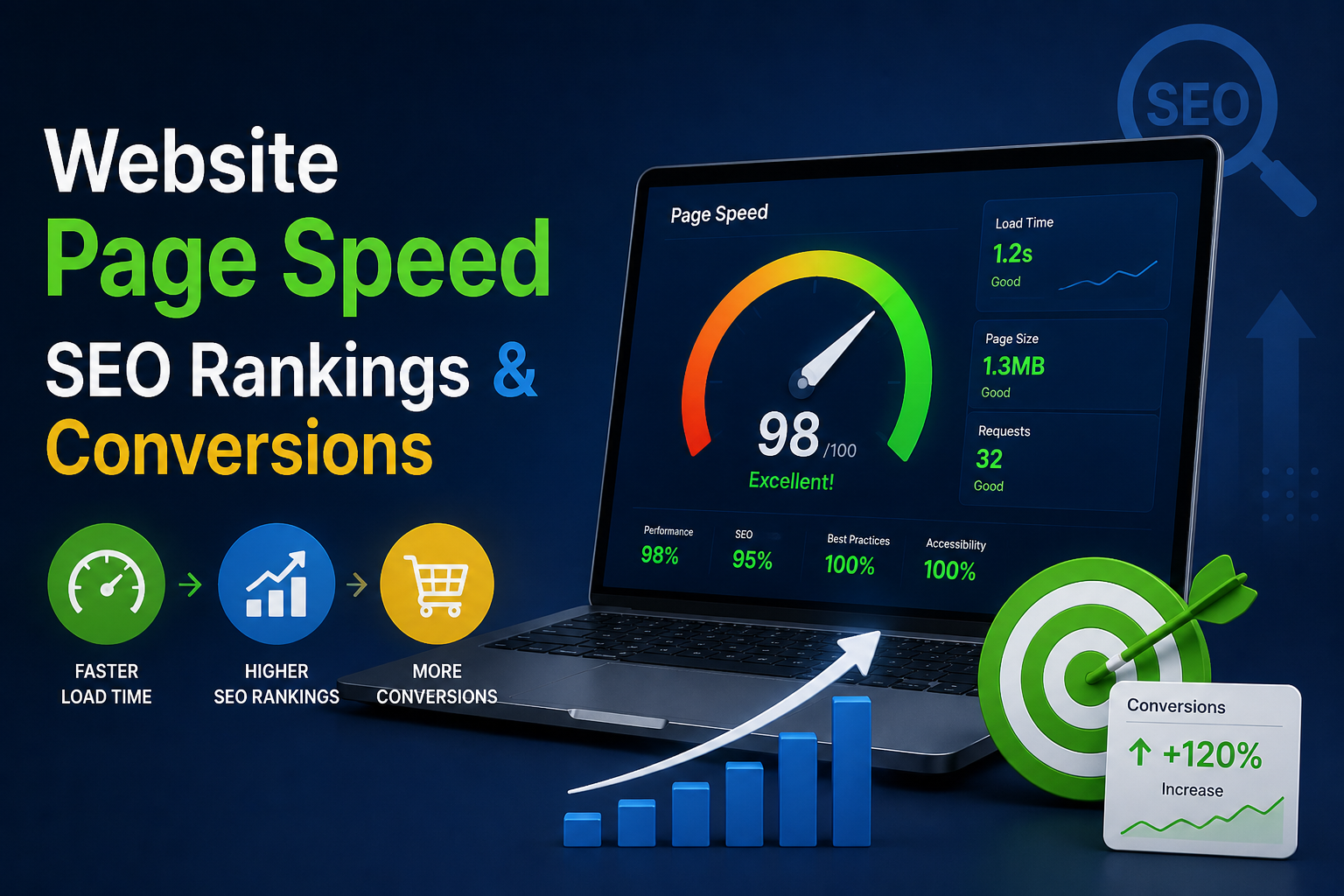
Core Web Vitals are Google’s metrics for measuring user experience. In 2026, they’re more important than ever—and they’re now a prerequisite for both organic visibility and AI citation visibility.
Google’s 2026 passing scores are:
| Metric | Threshold | What It Measures |
|---|---|---|
| LCP (Largest Contentful Paint) | Under 2.5 seconds | How fast the main content loads |
| INP (Interaction to Next Paint) | Under 200 milliseconds | How quickly the page responds to interactions |
| CLS (Cumulative Layout Shift) | Under 0.1 | How much the page shifts while loading |
Here’s the uncomfortable truth: only about 42% of mobile sites pass all three Core Web Vitals. That means more than half of websites are leaving rankings on the table simply because they’re too slow.
If your site takes 5 seconds to load, it won’t appear in AI Overviews. Period.
Mobile-First Indexing
With the majority of searches now conducted on mobile devices, Google prioritizes websites optimized for mobile viewing. This means:
-
Responsive design that adapts to any screen size
-
Tap targets that are easy to click on small screens
-
Readable text without zooming
-
No intrusive pop-ups that ruin the mobile experience
Crawlability and Indexing
If Google can’t access your pages, nothing else matters. Make sure:
-
Your
robots.txtfile isn’t blocking important pages -
You have an XML sitemap submitted to Google Search Console
-
Your site architecture is logical and easy to navigate
-
You’re not creating orphan pages (pages with no internal links pointing to them)
5. Content That Ranks (and Gets Cited by AI)
Writing for People First
Google’s Helpful Content system evaluates whether content appears to be written primarily for people or primarily to rank in search results.
The distinction matters. Content written for search engines tends to be:
-
Overstuffed with keywords
-
Shallow and repetitive
-
Lacking in original insight
-
Focused on hitting word count rather than providing value
Content written for people tends to be:
-
Clear and conversational
-
Deep and informative
-
Backed by real experience
-
Genuinely useful to the reader
Here’s a powerful stat: the correlation between AI usage and rankings is effectively zero. Using AI to generate content doesn’t automatically hurt you—but using AI to generate low-quality, unedited content definitely will.
Structuring Content for AI Overviews
With AI Overviews now a major traffic source, you need to structure your content for both human readers and AI systems.
Key tactics for AI visibility:
-
Lead with the conclusion: AI extracts information from the first third of articles 44.2% of the time
-
Use question-based headings: Headings like “What is…?” or “How do you…?” make it easy for AI to extract answers
-
Answer directly: Write clear, concise answers (40–60 words) that directly address user questions
-
Match search intent precisely: Answer what users actually want to know, not what you want to tell them
The Power of Topic Clusters
Google’s AI Mode breaks one question into multiple sub-queries. To rank well, you need to cover related questions comprehensively.
This means building topic clusters—a pillar page that covers a broad topic comprehensively, supported by cluster pages that dive deep into specific subtopics. This approach demonstrates topical authority and signals to Google that you’re an expert in your space.
6. Keyword Research in the AI Era
Keyword research in 2026 is no longer about finding “low-competition keywords” with high search volume. It’s about understanding search intent and topical authority.
Here’s a modern keyword research framework:
-
Start with seed topics, not just keywords
-
Map search intent: Understand what users actually want when they search
-
Build topic clusters around parent topics, not isolated terms
-
Analyze the SERPs to see what Google is actually rewarding
-
Prioritize based on difficulty and business value
Pro tip for beginners: New websites should avoid big, competitive keywords. Long-tail and problem-based searches are easier to rank for and help build early authority.
7. On-Page SEO Fundamentals
On-page SEO is about optimizing individual pages to rank higher. Here are the essentials for 2026:
Title Tags: Include your focus keyword naturally. Keep it under 60 characters. Make it compelling enough to earn clicks.
Meta Descriptions: Under 160 characters. Include your keyword and a clear call-to-action. This doesn’t directly affect rankings, but it affects click-through rates.
Headings (H1, H2, H3): Use a clear hierarchy. Include keywords in headings where it makes sense. Use question-based headings to improve AI visibility.
URL Structure: Keep URLs short, clean, and descriptive. Include your focus keyword.
Image Optimization: Use descriptive file names and alt text. Compress images to improve load speed.
Internal Linking: Link to other relevant pages on your site. This helps distribute authority and improves navigation.
8. Link Building That Works in 2026
Backlinks remain one of the strongest signals of authority. But the approach to link building has changed dramatically.
What doesn’t work in 2026:
-
Mass link building (20–30 links per month)
-
Buying links from low-quality sites
-
Focusing solely on Domain Authority
What does work:
-
Digital PR and original data that others want to cite
-
Selective guest contributions to high-authority publications
-
Natural link velocity: maximum 6–8 strategic backlinks per quarter
-
Brand mentions, including in AI answers
-
Link earning—creating content so valuable that others link to it naturally
“Bulk link building triggers manual review in 2026”. Quality over quantity isn’t just a cliché—it’s a survival strategy.
9. Step-by-Step: How to Rank Your Website on Google
Here’s your actionable roadmap for ranking in 2026:
Step 1: Set Up Your Technical Foundation
-
Install Google Search Console and Google Analytics
-
Check your Core Web Vitals
-
Submit your sitemap
-
Ensure your site is mobile-friendly
Step 2: Research Your Keywords
-
Identify your parent topics
-
Find long-tail keywords with clear intent
-
Map keywords to specific pages
Step 3: Create High-Quality Content
-
Write for people first, search engines second
-
Demonstrate real experience and expertise
-
Use question-based headings
-
Include original data, examples, and insights
Step 4: Optimize Your On-Page Elements
-
Craft compelling title tags and meta descriptions
-
Use proper heading hierarchy
-
Optimize images with alt text
-
Build internal links to related content
Step 5: Build Your Authority
-
Earn high-quality backlinks through great content
-
Build your brand presence
-
Get mentioned in industry publications
-
Engage with your audience
Step 6: Monitor and Iterate
-
Track your rankings in Google Search Console
-
Review your Core Web Vitals regularly
-
Update old content to keep it fresh
-
Make data-driven improvements
10. Comparison Table: SEO Platforms for Beginners
| Platform | Best For | Key Features | Price |
|---|---|---|---|
| Google Search Console | Essential monitoring | Free, official Google data, index coverage, performance metrics | Free |
| Google Analytics 4 | Traffic analysis | User behavior tracking, conversion data, audience insights | Free |
| Ahrefs | Comprehensive SEO | Keyword research, backlink analysis, competitor research | Paid |
| Semrush | All-in-one SEO | Keyword tracking, site audit, content optimization | Paid |
| Yoast SEO | WordPress on-page | Content readability, keyword optimization, technical checks | Free/Premium |
11. Measuring Your Success
To know whether you’re actually learning how to rank your website on Google, you need to track the right metrics.
Key metrics to monitor:
-
Organic traffic — Are more people finding you through search?
-
Keyword rankings — Are your target keywords moving up?
-
Click-through rate (CTR) — Are people clicking on your listings?
-
Bounce rate and time on page — Are people finding your content useful?
-
Core Web Vitals scores — Is your site performance improving?
-
AI Overview citations — Is your content being cited in AI summaries?
A critical insight for 2026: rankings and traffic are now two separate metrics that need to be tracked independently. You can hold your ranking through a core update and still see traffic decline because AI Mode is absorbing clicks above organic results.
12. Conclusion: Your Path to Google’s First Page
Learning how to rank your website on Google in 2026 isn’t about shortcuts or tricks. It’s about doing the work that actually matters:
-
Building a technically sound website that loads fast and works on mobile
-
Creating genuinely helpful content that demonstrates real experience and expertise
-
Earning authority through quality relationships and valuable contributions
-
Understanding that AI search is here to stay—and adapting your strategy accordingly
The fundamentals still matter. Clean titles, proper headings, internal links, and natural keyword usage are still enough to get started. But the bar has been raised. Google now expects more—and the websites that deliver it are the ones that rank.
Your call to action: Start with one thing today. Maybe it’s fixing your Core Web Vitals. Maybe it’s updating your oldest blog post with fresh insights. Maybe it’s setting up Google Search Console for the first time.
Whatever it is, take that first step. Because every website that ranks on Google’s first page started exactly where you are right now.
13. Frequently Asked Questions
Q: How long does it take to rank a new website on Google?
A: For a brand-new website, expect 3 to 6 months of consistent effort before seeing meaningful rankings. Some niches take longer, especially competitive ones. The key is patience and continuous improvement—not quick fixes.
Q: Do I need to use AI to rank in 2026?
A: No. The correlation between AI usage and rankings is effectively zero. What matters is content quality, not how it was created. AI can be a helpful tool, but it can’t replace genuine expertise and real-world experience.
Q: What’s more important for SEO in 2026—content or technical SEO?
A: Both. Technical SEO gets you in the game—it makes sure Google can find and understand your site. Content quality is what keeps you there and helps you climb. You need both to succeed.
Q: How do I get cited in Google AI Overviews?
A: Focus on creating authoritative, well-structured content that directly answers user questions. Use question-based headings, lead with clear conclusions, and demonstrate strong E-E-A-T signals. Traditional SEO fundamentals remain the entry ticket to AI citation.
Q: Is link building still important in 2026?
A: Yes, but the approach has changed. Focus on earning high-quality links through great content and digital PR rather than buying links or mass-building backlinks. Quality and natural growth matter far more than quantity.
Q: What are the most important Google ranking factors in 2026?
A: Content quality is the most important on-page factor, followed by page load speed, mobile responsiveness, and E-E-A-T signals. Off-page, high-quality backlinks from authoritative sites remain crucial.
Q: Should I optimize for Google AI Mode?
A: Yes. Google AI Mode breaks queries into multiple sub-questions and searches them in parallel. Building topic clusters that cover related questions is now essential for AI visibility.
Q: How often should I update my content?
A: Priority pages that drive significant results should be updated every 3–6 months. A good rule of thumb is the “30% rule”—a republish should reflect roughly 30% content change.
14. Key Takeaways
-
E-E-A-T is non-negotiable in 2026. Demonstrate Experience, Expertise, Authoritativeness, and Trustworthiness in everything you publish.
-
Core Web Vitals are a prerequisite for both rankings and AI citations. Only 42% of mobile sites pass all three—be in the minority that does.
-
AI Overviews now appear for 48% of queries. Structure your content to be easily cited by AI systems using question-based headings and clear, direct answers.
-
Keyword research is about intent and topical authority, not just search volume. Build topic clusters, not isolated pages.
-
Link building requires a quality-over-quantity approach in 2026. Maximum 6–8 strategic backlinks per quarter.
-
Rankings and traffic are now separate metrics. Being cited in AI Overviews can be more valuable than holding a traditional top-three position.
-
Start with the basics: clean titles, proper headings, internal links, and natural keyword usage are still enough to get started.