Is Rice Mill a Profitable Business? A Step-by-Step Beginner’s Guide

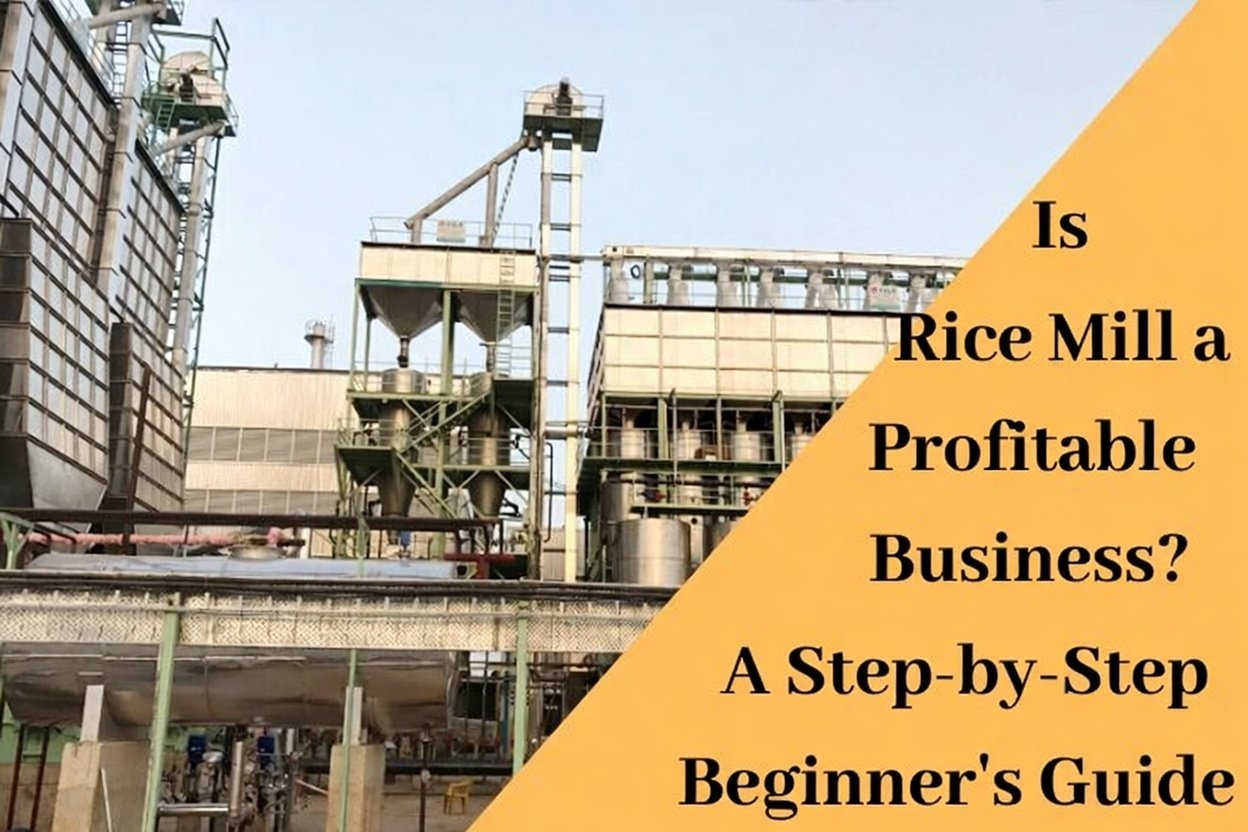 Business
 Is Rice Mill a Profitable Business? A Step-by-Step Beginner's Guide
The global demand for rice, a staple food for over half the world’s population, ensures that the rice processing industry remains a cornerstone of the agricultural sector. For aspiring entrepreneurs, the question “is rice mill a profitable business” is a crucial starting point. The short answer is yes—it holds significant potential. However, like any agricultural venture, its success depends on careful planning, location, scale, and execution.

This comprehensive guide is designed for beginners. We will walk you through every step, from understanding the basics to launching and marketing your own rice mill. By the end, you’ll have a clear roadmap to determine if this path is right for you and how to navigate it successfully. As you consider this venture, it’s helpful to look at other agricultural models; for instance, understanding the principles in a guide like How to Start Organic Farming Business: A Complete Guide for Beginners in 2026 can offer valuable insights into the broader agribusiness landscape.
Table of Contents
ToggleWhy Consider a Rice Mill Business?
Before diving into the “how,” let’s explore the “why.” The profitability of a rice mill stems from several fundamental factors:
-
Constant Demand: Rice is a non-cyclical, essential commodity. People buy it every day, regardless of economic conditions.
-
Value Addition: Raw paddy (unmilled rice) has a lower market value. By milling it, you transform it into a high-demand consumer product (white rice, parboiled rice), capturing the profit from the processing.
-
By-Product Revenue: A rice mill doesn’t just produce rice. It generates valuable by-products like rice husk (used as fuel or in packaging), bran (used in oil extraction and animal feed), and broken rice (used in flour, brewing, and pet food). These create additional income streams.
-
Scalability: You can start small with a single mini-mill and gradually expand to a large-scale automatic mill as your business grows.
Step 1: Understanding the Basics and Market Research
Your first step is not to buy machinery, but to understand your market. You need to find concrete answers to the question, “is rice mill a profitable business in my specific location?”
-
Identify Your Target Market: Who will you sell to? Local grocery stores, wholesale traders, restaurants, or large-scale food processing companies?
-
Analyze the Competition: Visit other rice mills in your area. What types of rice do they process? What are their prices? What are their strengths and weaknesses?
-
Source of Raw Material (Paddy): Can you source paddy consistently from local farmers? What are the prevailing prices? Building good relationships with local farmers is key.
-
Assess Local Demand: Is there a demand for specific rice varieties (e.g., Basmati, Sona Masoori, parboiled rice) in your region?
Just as you would research a service-based startup, understanding your market is paramount. For a different perspective on identifying customer needs, you might find parallels in a guide like What is Business Communication PDF: A Complete Guide to Workplace Excellence, which emphasizes the importance of clear communication with your future customers and suppliers.
Step 2: Creating a Detailed Business Plan
A solid business plan is your blueprint for success. It forces you to think through every aspect and is essential if you plan to seek a loan. Your plan should include:
-
Executive Summary: A brief overview of your business concept.
-
Company Description: Your business structure (sole proprietorship, partnership, LLC), mission, and vision.
-
Market Analysis: The research you conducted in Step 1, summarized.
-
Product Line: The specific rice types and by-products you will offer.
-
Marketing and Sales Strategy: How you will reach your customers and make sales.
-
Financial Plan: Detailed startup costs, projected income statement, cash flow statement, and break-even analysis. This is where you prove to yourself (and investors) that a rice mill is a profitable business on paper.
Step 3: Legal Formalities and Licenses
Operating a food-related business requires compliance with local laws. The specific licenses vary by country and region, but generally include:
-
Business Registration: Register your business name and obtain a permanent account number (PAN) or equivalent tax ID.
-
GST Registration: Goods and Services Tax registration is mandatory once your turnover crosses a certain threshold.
-
FSSAI License / Food Safety Permit: Since you are handling food products, you need a license from the food safety authority in your country. This ensures your product is safe for consumption.
-
Trade License: Obtain a license from your local municipal corporation to operate the business in your chosen location.
-
Pollution Control Board Clearance: Rice mills can generate dust and noise. You may need a No Objection Certificate (NOC) from the Pollution Control Board to ensure your operations are environmentally compliant.
Step 4: Location, Infrastructure, and Setup
The location of your mill is a critical factor in determining if a rice mill is a profitable business for you.
-
Proximity to Paddy Source: Ideally, set up close to paddy-producing areas to minimize transportation costs for raw materials.
-
Adequate Space: You need space for the milling machinery, a covered area for storing raw paddy, and a separate godown for storing the finished rice and by-products.
-
Utilities: Ensure a reliable supply of three-phase electricity and a good source of water, as both are essential for milling, especially if you plan to offer parboiling services.
-
Loading/Unloading Area: Space for trucks to load and unload goods easily.
Step 5: Choosing the Right Machinery and Technology
This is one of the biggest investment decisions. The type of machinery you choose will define your capacity, efficiency, and product quality.
-
Mini Rice Mill: Ideal for beginners with low capital. It’s a single-unit machine that combines all processes. Capacity: 200-500 kg/hour. Good for very small, local markets.
-
Modern Rice Mill: These are fully or semi-automatic units with separate machines for cleaning, husking, polishing, and grading. They offer higher capacity (1 ton/hour and above), better recovery rates, and superior rice quality, leading to higher profits.
-
Key Machinery Components:
-
Pre-cleaner: Removes impurities like straw, stones, and dust from the paddy.
-
De-stoner: Separates stones and other heavy impurities.
-
Sheller/Husker: Removes the husk from the paddy to produce brown rice.
-
Paddy Separator: Separates the unhusked paddy from the brown rice.
-
Whitener/Polisher: Removes the bran layer from brown rice and polishes it to the desired whiteness.
-
Grader/Sorter: Sorts the polished rice by size (head rice, medium, and small brokens).
-
Color Sorter (Optional but Recommended): Uses optical sensors to remove discolored or defective grains, ensuring premium quality.
-
Step 6: Financial Planning – Costs and Profitability
Let’s address the core question directly: is rice mill a profitable business? Here’s a look at the numbers.
| Investment/Cost Category | Mini Mill (Estimate) | Modern Mill (Small Scale Estimate) |
|---|---|---|
| Land & Building (Rental) | $50 – $200/month | $500 – $2,000/month |
| Machinery Cost | $3,000 – $10,000 | $50,000 – $200,000+ |
| Initial Working Capital | $5,000 – $15,000 | $30,000 – $100,000+ |
| Licenses & Permits | $500 – $1,500 | $1,000 – $5,000 |
| Total Estimated Startup | $8,500 – $26,700 | $81,500 – $307,000+ |
Profitability Analysis:
-
Revenue Streams: Your income comes from:
-
Milling Charges: Charging farmers a fee to mill their paddy.
-
Trading Rice: Buying paddy, milling it, and selling the finished rice at a profit.
-
Selling By-Products: Selling husk to power plants or brick kilns, and bran to oil mills.
-
-
Profit Margin: Profit margins can range from 2% to 10% or more, depending on your scale, efficiency, and whether you trade rice or just offer milling services. The key to high profitability is maximizing the recovery of head rice (whole grains) and effectively monetizing all by-products.
-
Break-Even Point: A mini mill might break even in 1-2 years, while a larger modern mill might take 3-5 years to recover the initial investment.
Step 7: Sourcing Raw Material and Building Supply Chains
Your business will thrive or fail based on your ability to secure a steady supply of quality paddy.
-
Direct from Farmers: This is the most profitable model. Build trust with local farmers by offering fair prices, timely payments, and even services like paddy drying or storage.
-
From Mandis/APMC Markets: You can buy paddy from government-regulated wholesale markets. The quality is often graded, but prices can be more competitive.
-
From Cooperatives: Partnering with farmer producer organizations (FPOs) or agricultural cooperatives can ensure bulk and consistent supply.
Step 8: Marketing Your Rice and Building a Brand
In a crowded market, how do you ensure your business answers “is rice mill a profitable business” with a resounding “yes”? Through smart marketing.
-
Branding: Create a simple, memorable brand name and logo for your rice. Package it in attractive, sealed bags with clear branding.
-
Distribution Network: Build relationships with wholesalers, retailers, and hotel/restaurant/catering (HoReCa) businesses.
-
Leverage Local Networks: Attend local farmer meetings and agricultural trade fairs.
-
Online Presence: Even for a traditional business like this, having a simple website or a WhatsApp Business account to take orders and communicate with clients is beneficial. As you build your business, understanding core principles from broader guides, such as Which Business is Best in Dubai for Beginners with Low Investment? (2026 Guide), can spark ideas for efficiency, customer service, and scaling your operations, even in a completely different market.
Step 9: Managing Challenges and Risks
Be aware of the potential hurdles:
-
Price Fluctuations: The prices of both paddy and rice can be volatile.
-
Working Capital Lock-in: If you trade rice, a significant amount of capital will be tied up in inventory.
-
Machinery Maintenance: Regular maintenance is crucial to avoid costly breakdowns during peak season.
-
Labor Management: Finding and retaining skilled labor to operate the machinery can be a challenge.
-
Wastage: Inefficient milling leads to higher breakage and lower profits.
Conclusion: Is It Worth It?
So, is rice mill a profitable business? For a beginner with a solid plan, sufficient research, and a passion for the agricultural sector, the answer is a definitive yes. It offers a unique blend of stability (due to constant demand) and opportunity (through value addition and by-products).
Starting small—perhaps with a mini mill to learn the ropes—is a wise approach. As you gain experience, build relationships with farmers and buyers, and reinvest your profits, you can scale up to a larger, more automated facility. The journey requires hard work, patience, and attention to detail, but the potential to build a sustainable and profitable enterprise in this essential industry is very real.
The key is to move from asking “is rice mill a profitable business” to taking the first concrete step: writing that business plan and visiting a local mill to see the process in action. Your future in the rice industry starts now.


