
Introduction
In today’s digital world, computers serve a wide variety of purposes, from general everyday tasks to highly specialized operations. Among these systems, one important concept is what is meant by a dedicated computer. This term refers to a system designed and built to perform a specific task or a narrow set of tasks efficiently and reliably.
Unlike general-purpose computers that can run many applications, a dedicated computer focuses on doing one job exceptionally well. These systems are widely used in industries such as healthcare, manufacturing, transportation, education, and business environments where precision and reliability are essential.
In this comprehensive article, we will explore the meaning, types, characteristics, advantages, and real-world applications of dedicated computers. We will also compare them with general-purpose systems and provide useful examples to help you understand their importance.
Understanding the Concept of a Dedicated Computer
A dedicated computer is a computing device specifically designed to perform a single function or a limited number of tasks. It is optimized for efficiency, speed, and reliability in performing that particular task.
Key Definition
A dedicated computer is a system that is programmed and configured to carry out a specific operation rather than multiple general tasks.
These systems are often embedded into larger machines or devices and operate automatically with minimal user interaction.
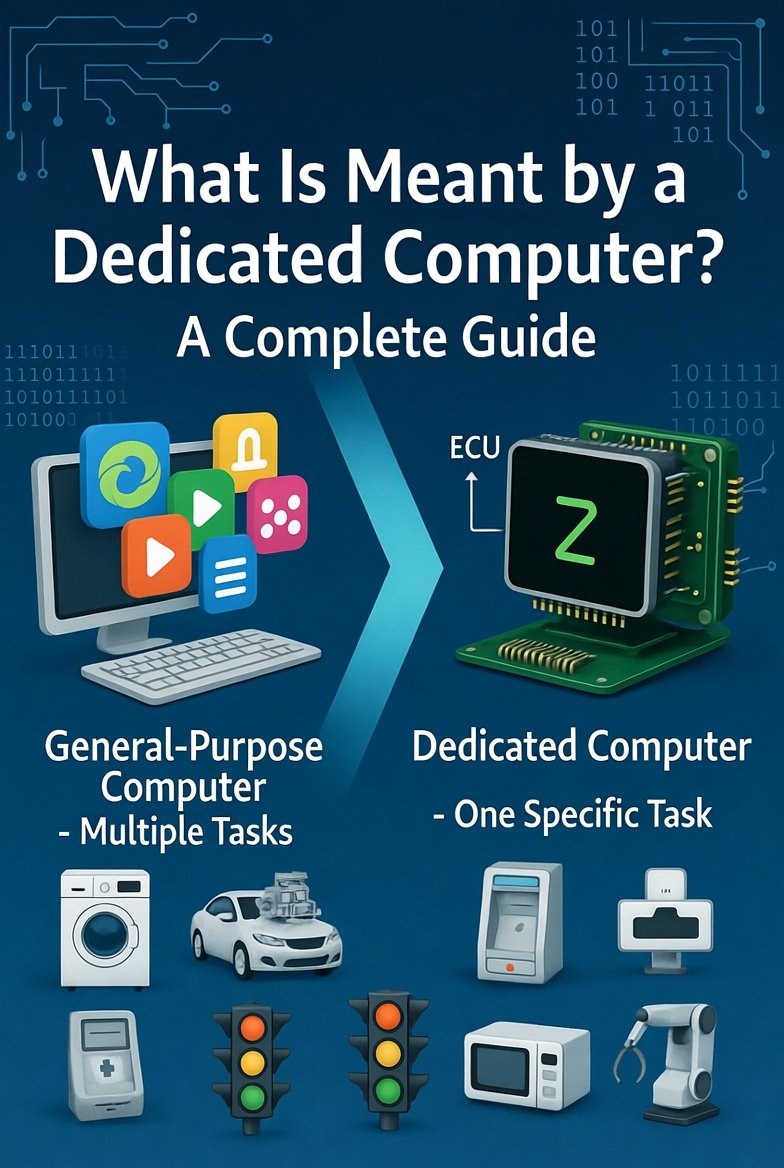
Difference Between Dedicated and General-Purpose Computers
Understanding the difference between dedicated computers and general-purpose computers is essential.
General-Purpose Computers
- Designed for multiple tasks
- Examples: laptops, desktops, tablets
- Flexible and user-controlled
- Can run various applications
Dedicated Computers
- Designed for one specific task
- Limited flexibility
- High efficiency for a particular job
- Often embedded in devices
For example, a personal computer can browse the internet, run software, and play media. In contrast, a dedicated system in a washing machine only controls washing operations.
Characteristics of a Dedicated Computer
Dedicated computers have unique features that make them suitable for specialized tasks.
1. Task-Specific Design
They are built to perform a particular function without unnecessary features.
2. High Efficiency
Since they focus on one job, they perform faster and more efficiently.
3. Reliability
They are designed for continuous operation with minimal errors.
4. Limited User Interaction
Many dedicated systems operate automatically without human intervention.
5. Embedded Nature
Often integrated into larger systems such as machines or appliances.
Types of Dedicated Computers
Dedicated computers come in different forms depending on their purpose and application.
Embedded Systems
These are the most common type of dedicated computers. They are built into devices like:
- Washing machines
- Microwaves
- Cars
Learn more about embedded systems here
Real-Time Systems
These systems respond instantly to inputs and are used in:
- Air traffic control
- Medical monitoring devices
- Industrial automation
Control Systems
Used to control machines and processes such as:
- Manufacturing robots
- Power plants
- Traffic signals
How Dedicated Computers Work
Dedicated computers operate based on pre-programmed instructions stored in their memory. These instructions guide the system to perform its specific task efficiently.
Basic Working Process
- Input is received from sensors or users
- The system processes the input using predefined logic
- Output is generated (action or display)
For example, in a microwave oven:
- Input: User sets cooking time
- Processing: Internal system calculates time and power
- Output: Food is heated accordingly
Examples of Dedicated Computers in Daily Life
Dedicated computers are everywhere, even if we don’t always notice them.
Household Devices
- Washing machines
- Refrigerators
- Air conditioners
Transportation
- Car engine control systems
- Traffic lights
- Railway control systems
Healthcare
- Patient monitoring systems
- Diagnostic machines
Banking and Business
- ATMs
- Point-of-sale systems
Importance of Dedicated Computers in Modern Technology
Dedicated computers play a crucial role in improving efficiency and reliability in many industries.
Increased Productivity
They automate repetitive tasks, saving time and effort.
Accuracy
Since they follow programmed instructions, they reduce human errors.
Cost Efficiency
Long-term use reduces operational costs.
Safety
Used in systems where human error can be dangerous.
Advantages of Dedicated Computers
Dedicated computers offer several benefits compared to general-purpose systems.
1. High Performance
They are optimized for specific tasks, resulting in faster execution.
2. Reliability
Less prone to crashes or failures.
3. Security
Limited functionality reduces exposure to threats.
4. Energy Efficiency
Consumes less power due to focused operations.
5. Minimal Maintenance
Requires less frequent updates or maintenance.
Disadvantages of Dedicated Computers
Despite their advantages, they also have some limitations.
1. Lack of Flexibility
Cannot perform multiple tasks like general computers.
2. Upgrade Limitations
Difficult to modify or upgrade.
3. Initial Cost
Development can be expensive.
4. Dependency
If the system fails, the entire process may stop.
Applications of Dedicated Computers in Different Industries
Dedicated computers are widely used across various sectors.
Education Sector
- Smart boards
- Automated attendance systems
Industrial Sector
- Manufacturing automation
- Quality control systems
Healthcare Sector
- Diagnostic machines
- Monitoring systems
Transportation Sector
- Navigation systems
- Traffic management
Dedicated Computers in Embedded Systems
Embedded systems are one of the most common forms of dedicated computers.
They are designed to perform specific tasks within a larger system. These systems are usually compact, efficient, and reliable.
Features of Embedded Systems
- Small size
- Low power consumption
- Real-time performance
You can explore more technical details here
Role of Dedicated Computers in Automation
Automation relies heavily on dedicated computers to perform tasks without human intervention.
Benefits in Automation
- Improved efficiency
- Reduced labor
- Consistent performance
For example, in a factory, dedicated systems control machines to produce goods with precision.
Dedicated Computers vs Servers
Sometimes people confuse dedicated computers with servers, but they are different.
Dedicated Computer
- Performs one task
- Limited functionality
Server
- Provides services to multiple users
- Can handle multiple tasks
Mid-Article Insight
At this stage, it becomes clear that understanding what is meant by a dedicated computer helps us appreciate how modern devices function efficiently behind the scenes.
From simple home appliances to complex industrial systems, dedicated computers ensure smooth and reliable operations.
Future of Dedicated Computers
With advancements in technology, dedicated computers are becoming more powerful and intelligent.
Trends
- Integration with artificial intelligence
- Internet of Things (IoT) connectivity
- Smart automation systems
These developments will further enhance their capabilities and applications.
Related Keywords
- Dedicated computing system
- Embedded computer system
- Special-purpose computer
Real-Life Case Study
Consider an automated production line in a factory.
How It Works
- Sensors detect materials
- Dedicated systems process data
- Machines perform actions
This setup ensures high efficiency and minimal errors.
Why Businesses Prefer Dedicated Computers
Businesses use dedicated computers to improve operations.
Key Reasons
- Reliability
- Speed
- Cost savings
- Improved productivity
Security Benefits of Dedicated Systems
Dedicated computers offer enhanced security due to limited functionality.
Features
- Restricted access
- Minimal vulnerabilities
- Controlled environment
Energy Efficiency and Sustainability
Dedicated computers consume less energy compared to general-purpose systems.
Benefits
- Reduced electricity usage
- Lower environmental impact
Challenges in Using Dedicated Computers
While useful, they also present challenges.
Common Issues
- Limited scalability
- Difficult upgrades
- Dependence on specific hardware
How to Choose a Dedicated Computer
When selecting a dedicated system, consider:
Factors
- Purpose
- Performance requirements
- Budget
- Reliability
Conclusion
Dedicated computers are an essential part of modern technology, enabling efficient and reliable performance in various applications. They are designed for specific tasks, making them highly efficient and dependable.
Understanding their role helps us appreciate the hidden technology behind everyday devices and industrial systems. As technology continues to evolve, dedicated computers will play an even more significant role in automation, smart systems, and innovation.