
The Basics: What Is Computer?
Computers come in all shapes and sizes. Some fit in your pocket, like smartphones. Others are huge and fill whole rooms, like supercomputers. But all of them follow the same idea: they follow instructions to handle data.
People first used the word “computer” for humans who did math problems. That changed in the 1900s when machines took over. Now, a computer uses electricity to think and remember things fast.
Think of a computer as a helpful friend. You tell it what to do through programs, and it does the job without getting tired. This makes it great for school, work, and fun.
A Quick Look at Computer History
Computers did not start with screens and keyboards. They began long ago with simple tools.
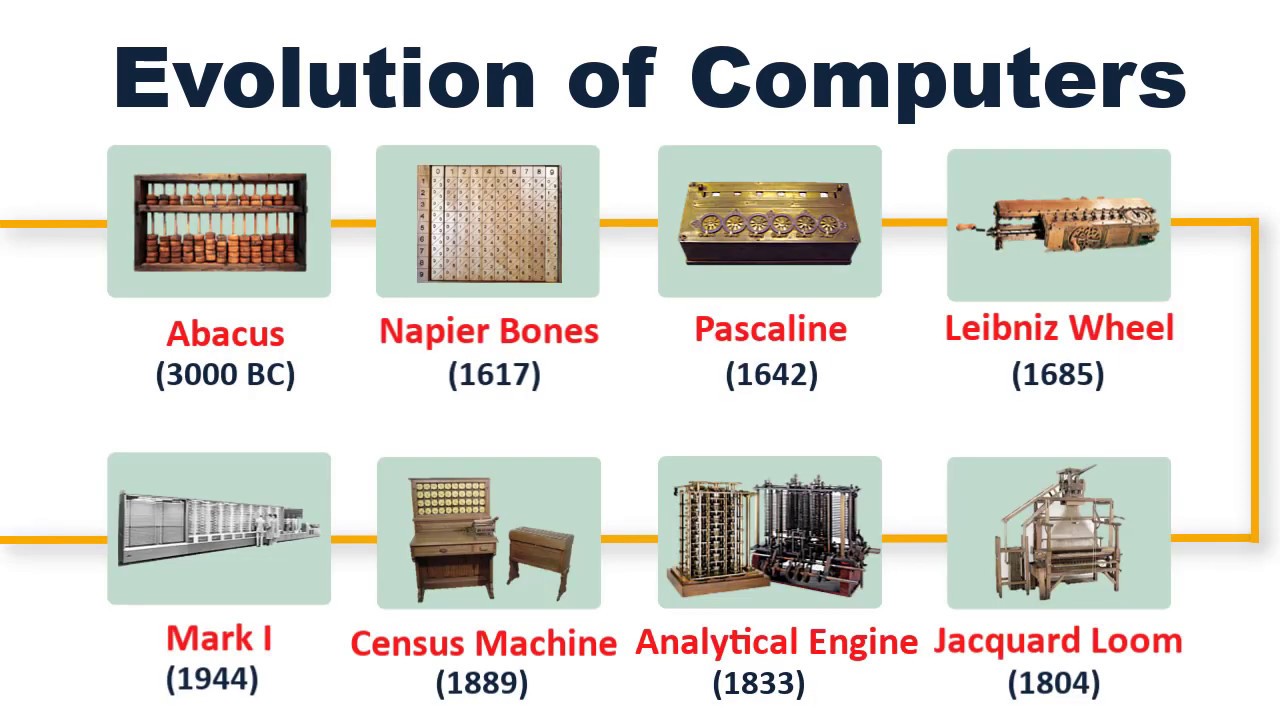
Early people used sticks and stones to count. Around 3000 BC, the abacus helped with adding and subtracting. It was like beads on wires.
In the 1600s, inventors made better tools. Blaise Pascal built a machine in 1642 that added numbers automatically. Gottfried Leibniz improved it in 1694 to multiply too.
The 1800s brought big ideas. Charles Babbage dreamed up the Analytical Engine in 1837. It could follow steps like today’s computers. Ada Lovelace wrote the first program for it, making her the world’s first programmer.
Machines got faster in the 1900s. During World War II, teams built ENIAC in 1945. It was the first electronic computer that could change its jobs easily. ENIAC had 18,000 vacuum tubes and weighed 30 tons! It helped with war math but used as much power as a small town.
Transistors came in 1947, making computers smaller and cheaper. By the 1970s, microprocessors like Intel’s 4004 fit whole brains on tiny chips. This led to personal computers, or PCs.
In 1981, IBM sold the first popular PC. Apple made the Macintosh in 1984 with easy pictures on screen. Laptops arrived soon after, like the Osborne 1 in 1981, which you could carry but weighed 24 pounds.
Today, computers connect us all through the Internet, which started as ARPANET in 1969. Billions of devices link up now. For a deep dive into this timeline, check out this detailed history.
Key Parts: What Makes Up a Computer?
A computer has main parts that work together. Let’s break them down.
The Brain: CPU
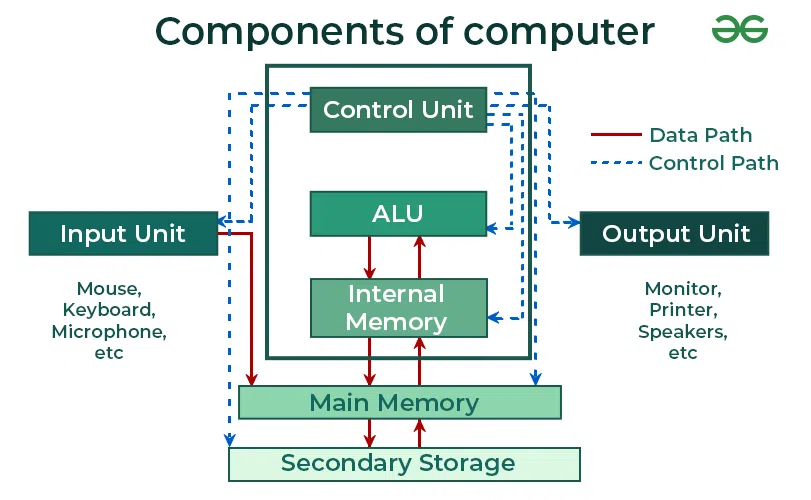
The CPU, or Central Processing Unit, acts as the computer’s brain. It does all the thinking. Inside, the ALU (Arithmetic Logic Unit) handles math like adding or comparing. The control unit tells other parts what to do next.
Modern CPUs run at billions of steps per second, measured in gigahertz. For example, a 3 GHz CPU does 3 billion actions each second!
Memory: Where Data Lives
Computers use RAM (Random Access Memory) to remember things while working. It’s like a desk where you keep papers you need right now. More RAM means the computer handles more tasks at once without slowing down.
There’s also storage like hard drives or SSDs. These keep files even when the power is off. SSDs are faster because they have no moving parts.
Input and Output Devices
You put information in with input devices. A keyboard lets you type words. A mouse points and clicks. Microphones catch sounds, and scanners copy papers.
Output shows results. A monitor displays pictures and text. Speakers play sounds, and printers make hard copies.
All parts connect through wires called buses. They carry data like roads carry cars.
For business uses, computers help with marketing and data. Learn more at businesstomark.com.
Different Types of Computers
Computers vary by size and job. Here are common ones:
- Personal Computers (PCs): These sit on desks. They run programs for work or games. Examples include Dell or HP models.
- Laptops: Portable PCs with batteries. Great for travel. They fold up and have built-in screens.
- Smartphones and Tablets: Tiny computers in your hand. They make calls, take photos, and browse the web.
- Servers: Powerful machines that share files over networks. Businesses use them to store data for many people.
- Supercomputers: The biggest and fastest. They solve huge problems like weather predictions. The El Capitan supercomputer, built in 2025, handles national security tasks.
- Embedded Computers: Hidden in things like cars or microwaves. They control features without you noticing.
Each type uses similar ideas but fits different needs. For more on types, see Wikipedia’s computer page.
How Computers Work: The Magic Inside
Computers follow a cycle: input, process, output, store.
- Input: You give data, like typing a search.
- Process: The CPU works on it using programs.
- Output: You see results on screen.
- Store: Save for later.
They use binary code – just 0s and 1s. Everything turns into this code. A letter “A” might be 01000001.
Programs tell computers what to do. Simple ones add numbers. Complex ones like games have millions of lines.
Moore’s Law says computers double in power every two years. This started in 1965 and still holds, making tech cheaper and better.
Software: The Instructions Computers Follow
Hardware is the body; software is the mind.
- Operating Systems (OS): Like Windows or macOS. They manage everything.
- Apps: Programs for specific jobs, like browsers for the web or editors for photos.
Software comes in languages. Low-level ones talk directly to hardware. High-level ones like Python are easier for people.
Bugs are mistakes in software. They cause crashes. Teams fix them with updates.
Uses of Computers in Daily Life
Computers touch everything.
In schools, they help learn with videos and quizzes.
At work, they track sales and talk to customers. For SEO and partnerships in tech, explore strategies for growth.
In health, they run machines for scans.
For fun, they stream movies and connect friends.
Stats show: Over 5 billion people use the Internet on computers daily. Smartphones alone number 6.8 billion in 2023.
Challenges and Limits
Computers are not perfect. They need power and can break.
The halting problem says some questions make them loop forever.
They lack feelings. AI helps them learn, but humans guide them.
Keep them safe from viruses with good habits.
FAQs About What Is Computer?
What is computer and why do we use it?
A computer is a device that processes data. We use it to make tasks faster, like calculating or communicating.
How has what is computer changed over time?
From big rooms to small phones, computers got smaller and smarter thanks to chips.
What are the main parts in what is computer?
Key parts include CPU, RAM, keyboard, and monitor.
Can kids learn what is computer easily?
Yes, with simple games and tools, anyone can start.
What future holds for what is computer?
Quantum computers might solve hard problems super fast.
Conclusion
In summary, what is computer? It’s a powerful tool that stores, processes, and shares information to help us every day. From ancient abacuses to today’s smart devices, computers have grown amazingly. They have parts like CPU and RAM, come in types like laptops and servers, and run on software. With billions in use, they shape our world.
What do you use your computer for most? Share in the comments!
References
- Britannica – Provides in-depth history and definitions. Updated Dec 2025. Great for students and beginners.
- Wikipedia – Comprehensive overview with citations. Ideal for detailed research on architecture and programming.
- RankNewly – Guide on SEO partnerships. Useful for tech business insights, dated Jan 2026.

Editorial Director & Publisher — Driving content strategy, creation and publishing excellence at BusinessToMark | Linkz.Media businesstomark@gmail.com