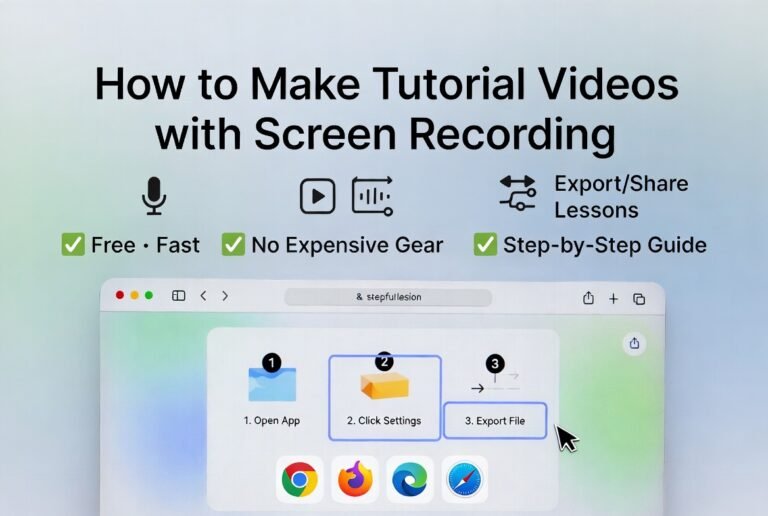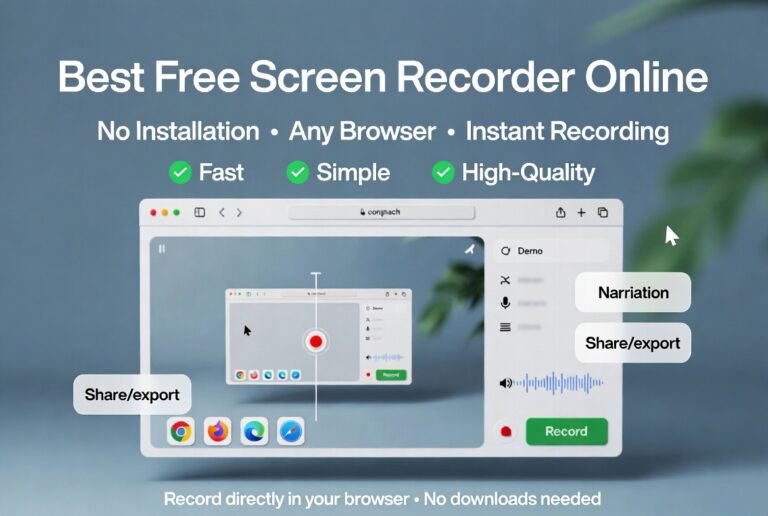



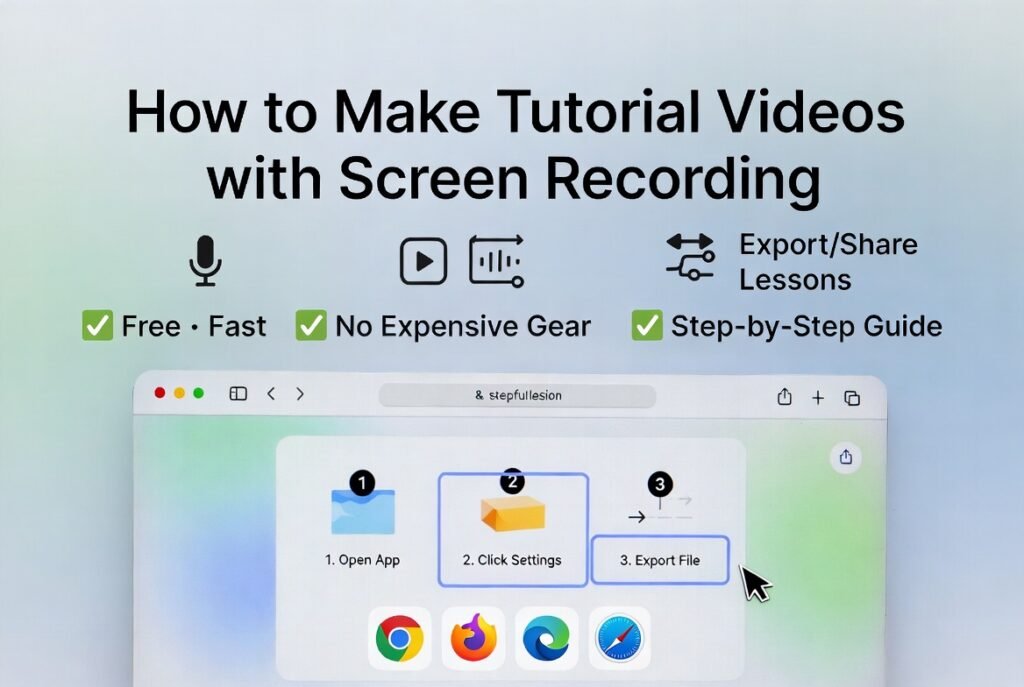


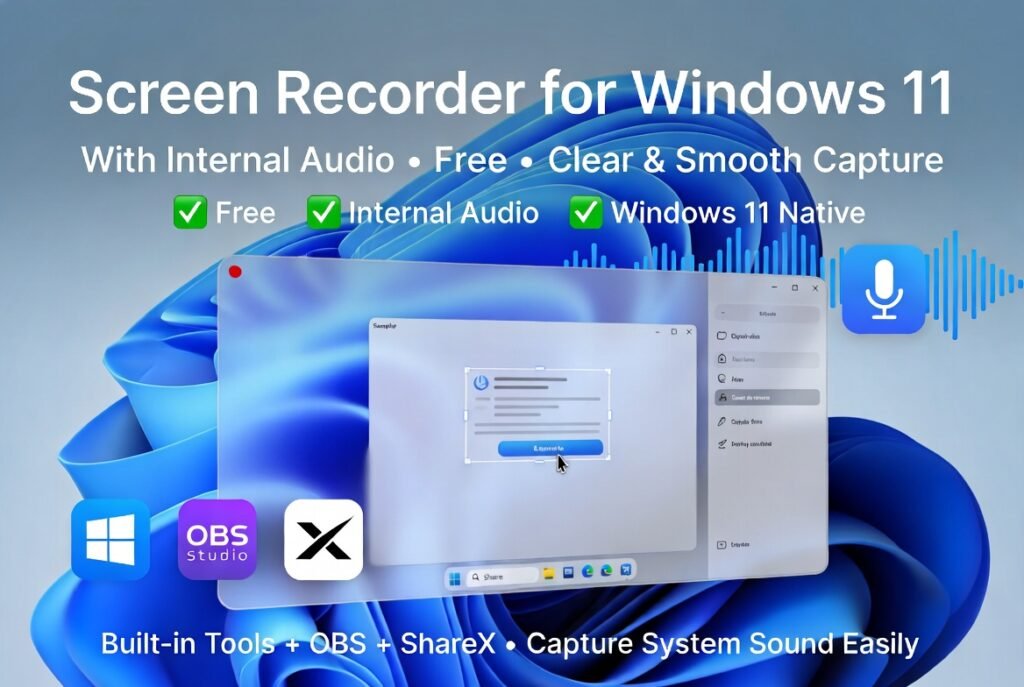
Finding the right recording setup can save time, improve clarity, and make your tutorials look much more professional. A screen recorder for windows 11 with internal audio free is especially valuable when you want to capture app sounds, system alerts, browser playback, or voice notes without paying for extra software. Microsoft offers a built-in screen recording path in Windows 11, while open-source tools like OBS Studio and ShareX remain strong free choices for users who need more control. For a broader definition of the format, Wikipedia’s screencast overview explains that screen recordings are digital captures of on-screen activity, often paired with audio narration.
That mix of built-in convenience and free third-party flexibility is what makes this topic so useful. Some people only need a quick clip. Others need better sound balance, cleaner visuals, and a simple workflow they can repeat every day. The best method depends on what you record most often, how much editing you plan to do, and whether you care more about speed or fine control. Windows 11 gives you a starting point, but free tools can expand what is possible when your recordings need clearer audio and more dependable results.
If you also create screenshots, you may find these related resources helpful: How to Screenshot on Surface Pro Laptop, Finding the Best Free Antivirus Software for Windows 10 and 11 Full Version Download, and Best Backup Software for Windows PC with Cloud Support Ashampoo Backup Pro Review.
Why internal audio matters more than most people think
A recording can look perfect and still feel incomplete if the sound is weak. Internal audio gives your video the voice of the computer itself. That may include a browser video, app notifications, system sound effects, game music, or the audio from a presentation. Without that layer, a clip can look polished but feel empty.
This matters most when you make tutorials. A viewer may not only need to see what you clicked; they may also need to hear the result. If a website plays a confirmation tone, if an app gives a warning sound, or if a training video includes narration plus software audio, internal sound helps the message land more naturally. It also saves time later because you do not have to explain every sound effect in text.
There is another reason internal audio is important: consistency. A recorder that handles sound cleanly across many sessions makes your workflow predictable. Predictability is useful whether you are preparing a lesson, saving a work meeting, or capturing a short demonstration for later review. Good audio is not a luxury; it is part of the clarity of the recording itself.
That is why many users look beyond the most basic built-in option. The built-in tool in Windows 11 is convenient, but people who want more reliable system audio often prefer software that gives them greater control over input sources, levels, and capture modes. When the sound is important, the recorder should do more than just press record.
What to look for before you choose a recorder
Not every free tool is worth your time. Some are too limited. Others feel cluttered. A good recording setup should feel simple at the start and dependable after many uses.
Start with audio handling. If your goal is internal audio, the software should offer clear support for desktop sound or application sound. OBS Studio is a strong example because its official quick-start guide says it is set to capture desktop audio and microphone audio by default, and its application audio guide explains that Windows 10 and Windows 11 users can capture audio from specific applications as well. That kind of flexibility matters when you want cleaner control over what gets recorded.
Next, look at capture simplicity. A tool that launches quickly and starts smoothly is more useful than a tool that looks impressive but takes too long to set up. ShareX is known as a free and open-source program that lets you capture or record any area of your screen with a single keystroke. That makes it attractive for fast work, especially when you need a lightweight option.
You should also think about editing needs. Some recordings are meant to be shared right away. Others need trimming, cropping, or audio balancing. If you only record once in a while, a simple recorder may be enough. If you create content regularly, a tool with scenes, sources, or reusable presets can be a better fit.
Another point is system impact. A good recorder should not make Windows 11 feel slow or unstable while you use it. Open-source tools often appeal to users here because they are built for function first. OBS Studio is described by the project as free and open source software for video recording and live streaming, and the Windows build supports Windows 10 and Windows 11.
Finally, look at the kind of files you want to produce. A short support clip, a training demo, and a polished content piece are not the same thing. The best free recorder is the one that matches the job you do most often.
The built-in Windows 11 option: simple, fast, and practical
Windows 11 includes a built-in path for screen recording through Microsoft’s recording tools. Microsoft’s learning center explains that Windows 11 offers built-in screen recording capability and that you can record any portion of the screen or the whole screen with the Snipping Tool screen recorder. That makes it a natural first place to start for users who want a simple method already available on the system.
This built-in approach is best when speed matters more than advanced control. It is handy for quick captures, short demonstrations, and routine work where you do not need a complicated setup. For many users, that convenience is enough. You open the tool, start recording, and save your clip without installing anything extra.
The strongest advantage here is accessibility. Because the tool is already part of the Windows 11 environment, it fits easily into a normal workflow. There is less to learn, fewer settings to worry about, and less chance of getting lost in menus. That makes it a smart starting point for beginners.
The limitation is that basic convenience and advanced audio control are not always the same thing. When you need more detailed sound handling, a dedicated tool can offer a smoother path. That is why many users keep the built-in option for quick jobs but switch to a more specialized recorder when the sound needs more attention.
A practical approach is to think of the built-in recorder as your everyday backup and a more advanced tool as your heavier-duty choice. That way you are not forced to choose one method for every task. You simply use the tool that fits the recording in front of you.
Free tools that deserve attention
When people search for a free recorder, they usually want three things at once: clean video, dependable sound, and an easy setup. Two names come up again and again because they balance those needs well.
OBS Studio is one of the most respected free options. The project describes it as free and open source software for video recording and live streaming, and the official download page confirms support for Windows 10 and Windows 11. More importantly for your needs, OBS gives you audio control that can reach beyond simple capture. Its quick-start guide says desktop audio is captured by default, and its application audio guide explains that specific app audio capture is available on Windows 10 version 2004 and later as well as Windows 11.
ShareX is another strong option, especially if you want a lightweight tool. The project describes it as free and open source, and it can capture or record any area of the screen with a single keystroke. That makes it useful for people who want a quick, low-friction workflow and do not need a full broadcasting-style interface.
A good way to compare them is by purpose. OBS is more powerful and better suited to users who want scenes, sources, and more precise audio handling. ShareX is quicker and simpler for fast capture jobs. The built-in Windows tool is the easiest first step. None of these choices is “wrong”; each one serves a different kind of user.
If you need one free setup that can grow with you, OBS is often the stronger long-term choice. If you want fast capture with less setup, ShareX is appealing. If you only need a simple clip now and then, the Windows 11 built-in recorder may be enough.
A simple setup path that works for most users
The easiest way to begin is to decide what matters most in your recording. If you want the fastest result, use the built-in Windows 11 screen recording feature. If you need more control over audio, choose OBS. If you want a lighter tool for quick captures, choose ShareX. That choice alone makes the rest of the process much easier.
Before recording, close unnecessary apps. Fewer background programs mean fewer distractions, fewer popup alerts, and less chance of capturing something you do not want in the video. Clean up the desktop too. A simple background helps the viewer focus on the task, not the clutter.
Then check your sound source. This is where many recordings go wrong. A recorder can be open and ready while the wrong audio device is active in the background. In OBS, for example, the quick-start guide explains that audio sources appear in the audio mixer, and if they are not moving, you may need to select the device manually in settings. That kind of check helps avoid silent recordings or recordings with the wrong sound source.
After that, choose the screen area carefully. If you only need one application window, keep the recording focused on that window. If you need to show several steps, record a cleaner area that does not reveal unrelated notifications or tabs. A focused screen makes editing easier later and makes the final video feel more intentional.
Then run a short test. Record ten to fifteen seconds, play it back, and listen carefully. Check the balance between internal audio and your voice if you are speaking. A brief test is much cheaper than redoing a long session.
Once the test sounds right, record the real clip. Keep your pace steady and avoid unnecessary pauses. The more deliberate the recording, the less time you spend trimming it later.
How to keep system audio clear and balanced
Sound quality is often about balance, not just volume. Internal audio should be loud enough to hear but not so loud that it overwhelms everything else. If you speak over the system sound, your voice should stay clear. If the recording is only meant to capture app audio, the sound should remain clean and free from distortion.
The first rule is to avoid pushing volume too high. Loud audio can clip, and clipped audio is difficult to fix later. It is better to start a little lower and make a small adjustment than to record too loudly and discover distortion after the fact.
The second rule is to separate sound sources when possible. This is one reason users like OBS. The software is designed around source control, so you are not forced into a one-size-fits-all sound path. The official guide notes that OBS can capture desktop audio by default and also supports application audio capture on modern Windows systems. That flexibility helps when you want one app’s sound but not every background noise on the PC.
The third rule is to keep external noise under control if you use a microphone. Even if your main goal is internal audio, a noisy room can reduce the quality of the whole clip. A quiet space, a stable microphone position, and a few seconds of silence before speaking can make the recording feel much more polished.
The fourth rule is to listen to the playback on the same device you expect your audience to use. What sounds fine on headphones may sound weak on laptop speakers. A short playback check on normal speakers gives you a more realistic sense of the final result.
When the audio is clear, your video needs less explanation. That is what makes good recording so effective. It feels simple to the viewer because the sound and visuals are working together rather than competing.
Best use cases for Windows 11 recording
Different recording jobs need different tools. A quick support clip does not require the same setup as a polished tutorial. Once you understand the use case, choosing the right workflow becomes much easier.
For short demonstrations, the Windows 11 built-in recorder is often enough. It is quick, direct, and does not demand much setup. That makes it suitable for showing a simple process, saving a short example, or preserving a quick on-screen moment while you keep moving through your workday. Microsoft’s recording tools are designed for exactly that kind of practical use.
For step-by-step tutorials, OBS may be the stronger choice. The reason is control. Tutorials often need better audio management, clean framing, and the ability to repeat the same layout across multiple sessions. OBS is built for those sorts of tasks because it supports recording, live streaming, and more detailed source management.
For quick knowledge-sharing or short internal team updates, ShareX can be ideal. It is lightweight, free, and easy to trigger with a shortcut. That makes it handy when you need to respond quickly and do not want to spend time configuring a full production workspace.
For browser-based demos, the important thing is clarity. Keep the tab count low, enlarge the content if needed, and avoid unnecessary motion on the screen. A viewer should be able to follow the main point without having to guess where to look. Internal audio can help a browser demo feel more complete because the audio confirms what the action is doing in real time.
For training videos, the goal is consistency. Use the same layout, the same sound balance, and the same pace every time. That creates a familiar style that makes later clips easier to follow.
The middle ground: simple tools with enough control
There is a sweet spot between “too basic” and “too complicated.” Many users do not want a studio-style setup, but they also do not want a recorder that feels limited the moment they try to use internal sound. That middle ground is where your recording process feels comfortable rather than frustrating.
The phrase screen recorder for windows 11 with internal audio free describes exactly that middle ground. You want a tool that is free, works on Windows 11, and captures sound from the computer itself without needing a paid upgrade or a difficult workaround. That is why OBS and ShareX are so often recommended alongside the Windows 11 built-in recorder. They give users different levels of control while still remaining free.
This is also where workflow matters. A good workflow is not only about which software you use. It is about how quickly you can open it, verify audio, start recording, and save the file. The more repeatable that process is, the more likely you are to use it consistently.
If you are recording often, create a small routine. Open the recorder. Confirm the correct source. Make a short test. Record the real session. Review the playback. That routine sounds simple, but it saves a surprising amount of time over weeks and months.
A middle-ground setup also leaves room for future growth. You can begin with the built-in tool or ShareX and move to OBS later if your needs expand. That flexibility is useful because your recording needs may change as your projects become more detailed.
Common problems and how to avoid them
A lot of recording frustration comes from a handful of repeat problems. The good news is that most of them are easy to prevent.
Silent audio is one of the most common issues. It usually means the wrong source is selected or the audio input was not checked before recording. This is why a short test is so important. In OBS, the audio mixer and settings make it possible to verify the source before starting a full session.
Another problem is recording the wrong area of the screen. This can happen when the capture frame is too wide, too narrow, or placed incorrectly. To avoid it, decide on the target window first and make sure the recorder is aimed at the exact content you want to show. Simplicity helps here. A clean screen is much easier to manage than a busy one.
A third problem is uneven sound. If your voice is loud but the system audio is faint, the clip will feel unbalanced. If the system audio is too strong, it can distract from your explanation. Testing and playback solve most of this before the final recording.
A fourth problem is clutter. Notifications, popups, and background windows can make even a useful tutorial feel messy. The easiest fix is also the simplest: close what you do not need, mute what might interrupt you, and keep the desktop tidy.
The last common issue is file organization. People sometimes record a good clip and then lose it in a folder full of random file names. Create a consistent naming habit. Even a simple format like date plus topic can save time when you return to the file later.
How a good recording routine helps your work
Good recording habits do more than make nice videos. They reduce stress. They make tutorials easier to repeat. They help you explain ideas with less effort. And they create a cleaner record of your work over time.
When a recording process is stable, you spend less energy on setup and more energy on the message itself. That matters whether you are teaching, sharing a product walkthrough, or documenting a process for your own reference. The tool becomes invisible, which is exactly what a good tool should do.
It also helps to think of screen recording as a communication skill. The clip does not only show what happened; it also shapes how easily another person can understand what happened. Internal audio, clean visuals, and a steady pace all support that goal.
This is one reason the topic connects naturally with other practical computer skills. If you are learning how to capture a screen accurately, it also helps to know how to take screenshots effectively and how to protect your files afterward. That is why related guides such as How to Screenshot on Surface Pro Laptop and Best Backup Software for Windows PC with Cloud Support Ashampoo Backup Pro Review can fit naturally into the same workflow. Both are part of a broader habit of managing digital work with care.
The same logic applies to system safety. If you plan to install any new software, it is wise to keep your machine protected. A related resource like Finding the Best Free Antivirus Software for Windows 10 and 11 Full Version Download is useful because it fits the same practical mindset: record well, store safely, and keep the system healthy.
A practical recommendation for most users
For most people, the best path is simple: begin with the built-in Windows 11 recorder for quick jobs, use ShareX when you want a lightweight shortcut-driven experience, and use OBS when internal audio and more advanced control matter most. That combination gives you flexibility without forcing you into one rigid method. Microsoft provides the built-in starting point, OBS adds deeper audio control, and ShareX offers a compact free option for fast capture.
That is a sensible setup because it covers three common needs: speed, simplicity, and control. You do not have to overthink every recording. You simply match the tool to the task.
If you record often, OBS is probably the strongest long-term free choice because it is open source, supported on Windows 10 and 11, and built for audio-aware video capture. If your goal is occasional screen capture with minimal effort, ShareX or the Windows 11 built-in recorder may be easier. That kind of practical comparison is usually better than chasing one “perfect” tool.
In the end, the right recorder is the one you will actually use. The more comfortable the setup feels, the more likely you are to create clean, useful recordings when you need them.
Final thoughts
A strong screen recording workflow on Windows 11 does not have to be expensive or complicated. With the built-in Microsoft option, open-source tools like OBS Studio, and lightweight choices such as ShareX, you can create clear recordings that include the sound you need. The key is to keep your process simple, test your audio before the full recording, and choose the tool that matches the kind of clip you make most often.
If you want one last principle to remember, make it this: clarity is more important than complexity. A clean screen, balanced sound, and a stable workflow will do more for your recordings than a crowded set of features you never use.