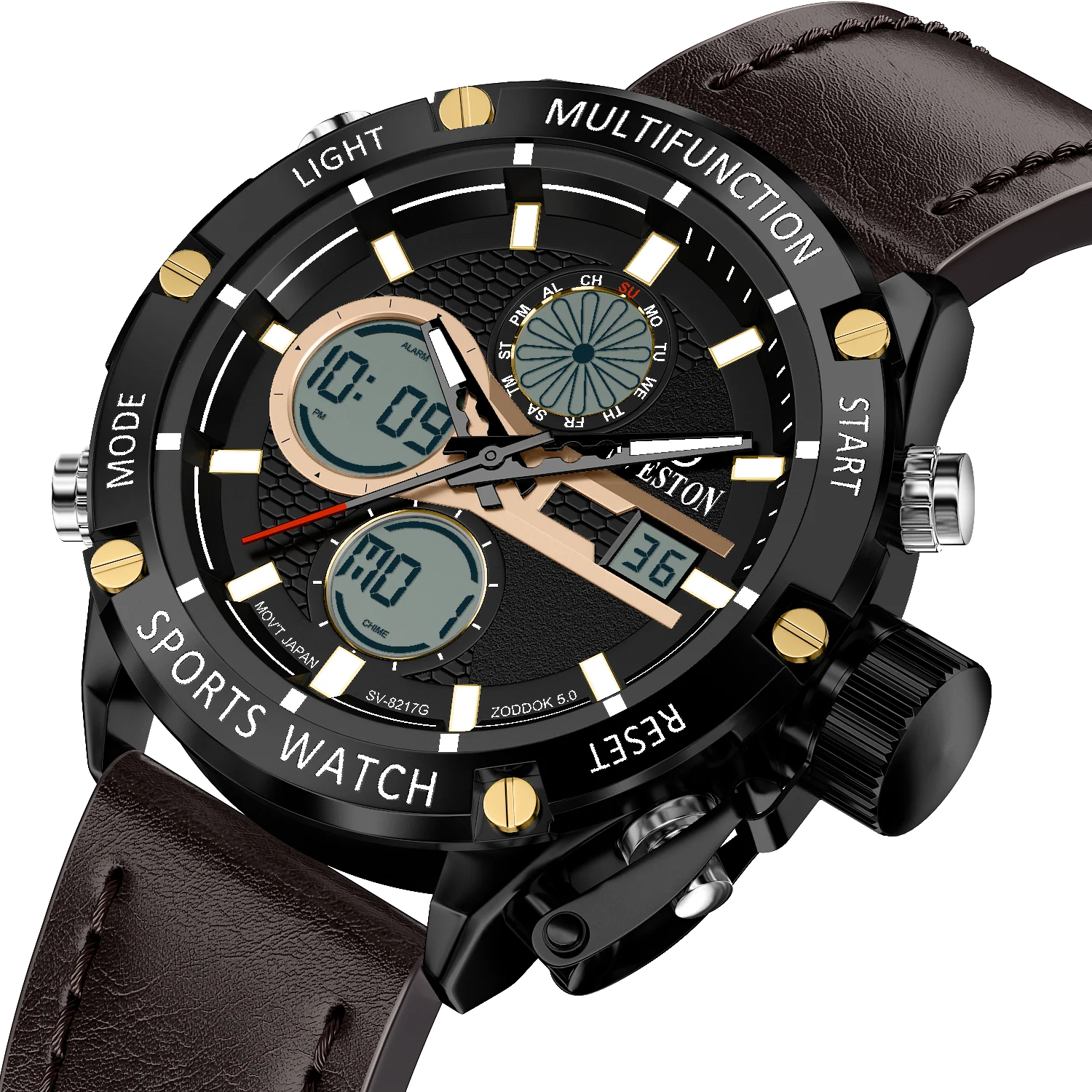
Every first-time watch buyer eventually hits the same fork in the road: automatic or quartz. The debate has been running since quartz technology upended the industry in the late 1960s, but in 2026 it’s less about which movement is objectively better and more about matching the right mechanism to how you actually plan to wear the watch.
The Basic Mechanical Difference
A quartz watch runs on a battery that sends electrical pulses through a quartz crystal, which vibrates at exactly 32,768 times per second — a circuit counts those vibrations and advances the hands accordingly. An automatic watch has no battery at all: a rotor inside the case winds the mainspring using nothing but the motion of your wrist as you wear it. According to a detailed 2026 mechanical breakdown from Maeslux, this fundamental difference — battery-driven precision versus wrist-powered mechanics — is what drives every other trade-off between the two.
Accuracy: Quartz Wins on Paper, But It Rarely Matters Day to Day
A standard quartz movement runs accurate to within about ±15 seconds a month — roughly half a second a day. A well-regulated automatic movement typically runs within ±5 to ±10 seconds per day, with COSC-certified chronometers tightening that to around ±4 seconds daily. That gap sounds significant until you consider it in practice: for anyone who isn’t timing a professional event, the difference between losing half a second and five seconds a day is genuinely imperceptible in daily life.
Maintenance: This Is Where the Real Lifestyle Decision Lives
Quartz watches need almost nothing beyond a battery replacement every two to five years, and their simpler construction generally makes them more shock-resistant too. Automatic watches, by contrast, are built from hundreds of interacting mechanical parts and benefit from periodic professional servicing — cleaning, lubrication, and inspection — to keep running smoothly over decades. If you’re the kind of person who wants to buy a watch and never think about it again, that maintenance gap alone often settles the decision. This mirrors a similar buy-vs-maintain calculation we’ve covered in how to decide between DIY repair and professional service for electronics — the cheaper option upfront isn’t always the lower-maintenance one over years of ownership.
Cost: Why Automatics Command a Real Premium
Quartz watches are generally cheaper because they’re simpler and far easier to mass-produce at scale. Automatic watches cost more specifically because of the precision engineering required to machine and assemble hundreds of tiny mechanical components that all need to work together reliably — that manufacturing complexity is a genuine cost driver, not just a brand markup, though brand and craftsmanship reputation add their own premium on top.
Longevity: The Argument That Actually Favors Automatics
This is where automatic watches genuinely pull ahead over a long enough timeline. A well-maintained mechanical watch can run for decades — sometimes over a century — and remains fully serviceable and repairable for its entire life, which is part of why [CLIENT LINK PLACEHOLDER] heirloom and estate watch buyers specifically seek out vintage automatics rather than quartz pieces from the same era. Quartz watches can also last many years, but once certain integrated circuits fail on older or cheaper models, repair options narrow considerably compared to a mechanical movement’s replaceable parts.
The Honest Recommendation for Most Buyers
If you want reliable, accurate timekeeping you can put on and forget, or this is your first real watch and you want the most function for your money, buy quartz. If you specifically care about mechanical craftsmanship, enjoy the small ritual of occasionally resetting or winding a watch, and want something you could realistically pass down, buy automatic. A genuinely common and sensible path is starting with a quartz daily-wear watch, then adding an automatic once you know the mechanical side of the hobby actually appeals to you.