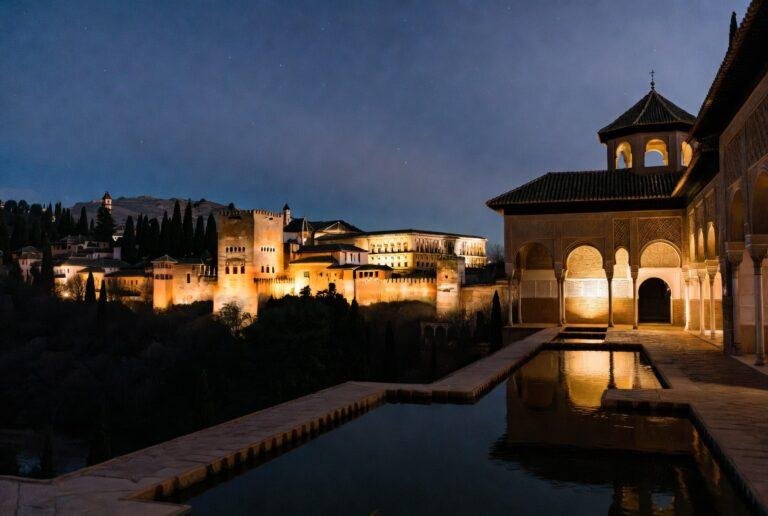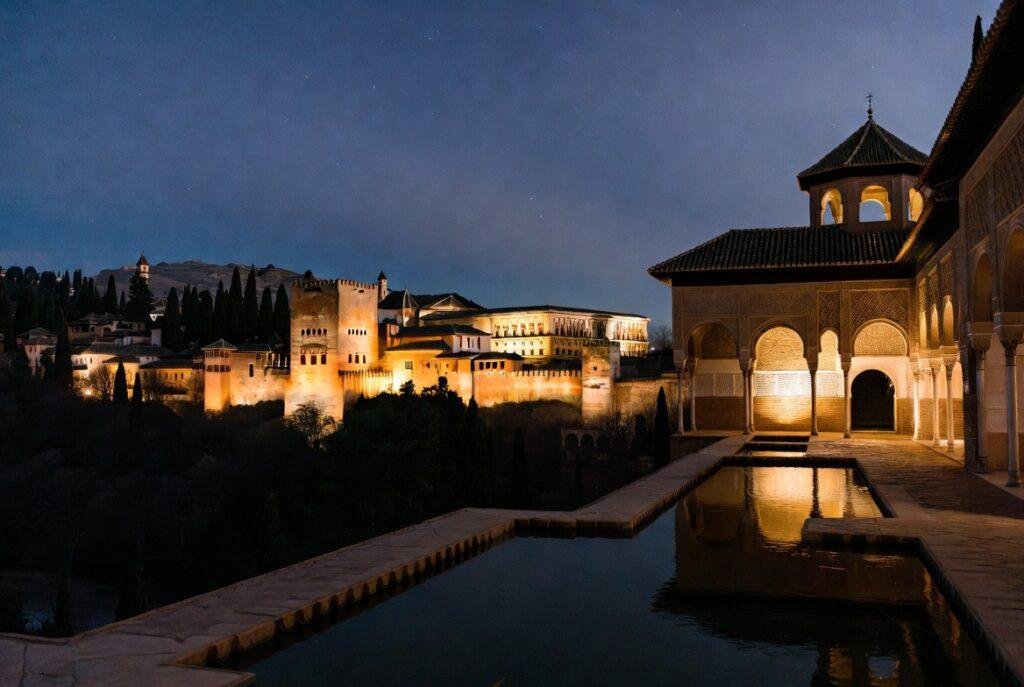







The Alhambra Palace night tour attendance revenue stands as a shining example of how thoughtful heritage management can blend timeless beauty with modern economic vitality in one of Spain’s most treasured destinations. Nestled on a hill overlooking Granada, the Alhambra draws millions of admirers each year, but its evening experiences offer a special magic that extends visiting hours, reduces daytime crowds, and creates premium opportunities for both cultural appreciation and financial sustainability.
The Historical Splendor of Alhambra Palace
The Alhambra Palace, a UNESCO World Heritage Site since 1984, represents the pinnacle of Moorish architecture and Islamic artistic achievement in Europe. Construction began in 1238 under Muhammad I Ibn al-Ahmar, founder of the Nasrid dynasty, on the Sabika hill where earlier fortifications once stood. Over the following centuries, Nasrid rulers like Yusuf I and Muhammad V expanded the complex into a self-contained royal city featuring palaces, gardens, mosques, baths, and workshops.
At its heart lie the Nasrid Palaces, renowned for their intricate courtyards, reflective pools, and stunning decorative elements. The Court of the Myrtles in the Comares Palace features a serene central pool that mirrors the surrounding architecture, while the Hall of Ambassadors boasts a magnificent wooden dome composed of over 8,000 pieces. The Palace of the Lions showcases a famous fountain supported by 12 marble lions and exquisite muqarnas vaulting that creates a starry, honeycomb-like ceiling effect.
Adjacent to the main complex is the Generalife, a former summer estate and country palace with lush gardens, orchards, and pavilions designed for relaxation and contemplation. Its Patio de la Acequia, with long water channels and blooming flowers, exemplifies the Nasrid mastery of landscape and hydraulic engineering. Water systems, including aqueducts and channels, were integral to the site’s functionality and aesthetic harmony.
Following the 1492 Reconquista, the Alhambra served as the royal residence of Ferdinand and Isabella. Later additions, such as the Renaissance-style Palace of Charles V, blended styles but never overshadowed the original Moorish elegance. Romantic writers like Washington Irving popularized the site in the 19th century through works such as Tales of the Alhambra, sparking global interest and eventual restoration efforts.
Today, managed by the Patronato de la Alhambra y Generalife, the site spans 142,000 square meters and includes fortifications like the Alcazaba, grand gates such as the Puerta de la Justicia, and panoramic viewpoints. Its preservation reflects a commitment to cultural heritage that respects its Islamic roots while welcoming visitors from around the world to experience shared human artistry and ingenuity.
This rich history forms the foundation for all tours, but the night visits particularly highlight the architectural details under dramatic lighting, allowing guests to appreciate carvings, inscriptions, and water features in a serene, less crowded atmosphere.
Evolution of Night Tours at Alhambra
Night tours at the Alhambra emerged as a strategic response to growing tourism demand and the need to protect the monument from overuse. Limited daytime capacity helps preserve delicate tiles, stucco, and gardens, prompting the introduction of evening slots for the Nasrid Palaces and Generalife gardens.
Schedules vary seasonally: from mid-March to mid-October, Nasrid Palaces night visits run Tuesday to Saturday from 22:00 to 23:30, while winter months (mid-October to mid-March) feature Friday and Saturday sessions starting at 20:00. Separate tickets allow access to the Generalife gardens at similar times, emphasizing different aspects of the site.
These tours typically last 1.5 to 2 hours and operate with strict group sizes to maintain tranquility and safety. Ticket prices reflect the premium nature of the experience, ranging from approximately €8 to €13 depending on the specific area and season, with options for guided enhancements.
The evolution reflects broader trends in cultural tourism, where extended hours create additional revenue streams without compromising conservation. Early implementations focused on basic access, but recent years have incorporated improved lighting, audio guides highlighting poetic inscriptions, and occasional cultural performances that align with the site’s artistic legacy.
Attendance Trends and Visitor Demographics
The Alhambra welcomes around 2.7 million visitors annually, making it one of Europe’s premier cultural attractions. Night tours represent a smaller but highly valued segment, with estimates of 120,000 to 150,000 participants each year — roughly 5 to 6 percent of total attendance.
This controlled volume stems from deliberate capacity limits: typically 300 to 400 visitors per evening session, ensuring an intimate experience. Peak demand occurs during spring and summer when milder evening temperatures and longer daylight appeal to international travelers. Off-season months see steadier but lower numbers, often filled by domestic Spanish visitors or cultural enthusiasts seeking quieter moments.
Demographics reveal a diverse mix. Families, couples, and solo travelers from Europe, North America, and Asia predominate, with growing interest from Middle Eastern and Asian markets drawn to the Islamic architectural heritage. Many attendees are repeat or extended-stay tourists who combine the night tour with daytime explorations or city sightseeing in Granada’s Albaicín quarter.
Advance booking is essential, as popular dates sell out weeks ahead. Tourism data shows night visitors often stay longer in Granada, contributing to extended economic activity. Seasonal patterns align with Spain’s broader tourism boom, where international arrivals have surged in recent years.
Factors influencing attendance include global travel trends, marketing through travel agencies, and partnerships promoting experiential heritage visits. The exclusivity of limited slots enhances perceived value, driving consistent high sell-out rates.
Analyzing Alhambra Palace Night Tour Attendance Revenue
A key driver of the site’s financial health is the alhambra palace night tour attendance revenue, which provides a high-yield complement to daytime operations. According to tourism analysts, these evening experiences generate between €8 million and €12 million annually from ticket sales and related services.
Despite lower volume compared to the millions of daytime visitors, night tours deliver disproportionately strong returns through premium pricing and efficient operations. Lower congestion reduces staffing and maintenance pressures during peak hours, while higher per-visitor spending on add-ons like audio guides or bundled experiences boosts margins.
Revenue supports critical functions: monument conservation, restoration projects, staff training, and visitor infrastructure improvements. A portion funds ongoing archaeological research and sustainable practices that ensure the Alhambra remains accessible for future generations.
Comparisons with daytime visits highlight the efficiency. Day tours emphasize volume with more affordable entry, while night sessions focus on quality and exclusivity. This balanced model maximizes overall ticket revenue — night contributions reportedly account for 15 to 20 percent of total earnings despite the modest share of visitors.
Broader economic multipliers amplify the impact. Night tour participants frequently dine in Granada’s restaurants, stay in local accommodations, and engage with evening cultural events, creating spillover benefits estimated at 20 percent higher local spending than daytime-only visitors.
Economic Benefits to Granada and Beyond
The financial success of night tours extends far beyond the palace walls, energizing Granada’s local economy and supporting Andalusia’s tourism sector. Visitors drawn by the evening allure often extend their stays, filling hotels, enjoying tapas bars, and exploring the historic Albaicín neighborhood after sunset.
This extended activity distributes economic gains more evenly throughout the day and supports small businesses, transportation services, and cultural venues. Studies on heritage tourism in Granada indicate that each euro spent on Alhambra tickets generates additional local spending through hospitality and retail.
On a regional level, the revenue aids Spain’s cultural economy, where tourism remains a vital growth engine. The Patronato’s management model demonstrates how controlled access and diversified experiences can sustain heritage sites while fostering community prosperity.
Internal link example: For more on Spain’s evolving tourism strategies, see related insights on Spain tourism industry growth. Another perspective on sustainable business practices in heritage sectors appears in cultural heritage tourism strategies.
The Unique Visitor Experience During Night Tours
What sets night tours apart is the transformative ambiance. Soft lighting accentuates the delicate stucco carvings, shimmering pools, and Arabic calligraphy that might be overlooked in daylight. The Court of the Lions takes on a mystical quality under evening illumination, while the Generalife gardens offer peaceful strolls amid fragrant blooms and gentle water sounds.
Guided options provide deeper context on Nasrid history, poetry inscribed on walls, and engineering feats. Many visitors describe the experience as meditative — a chance to connect emotionally with the site’s artistic and spiritual dimensions.
Accessibility features and family-friendly pacing make the tours suitable for diverse audiences. The cooler temperatures and reduced crowds enhance comfort, particularly for older travelers or those with young children.
Related keyword integration: Granada evening tours and Nasrid Palaces night visits consistently rank highly in traveler reviews for their immersive quality.
Sustainability and Preservation Efforts
Sustainability lies at the core of night tour operations. Strict capacity controls minimize wear on fragile surfaces, while revenue directly funds preservation. The Patronato implements eco-friendly lighting, water management, and waste reduction to align with UNESCO guidelines.
Educational programs during tours raise awareness about heritage protection, encouraging responsible visitation. Future initiatives may include digital enhancements that further reduce physical impact while enriching experiences.
External link: Discover more about the Alhambra’s architectural and historical details on Wikipedia’s Alhambra page.
Future Outlook for Alhambra Tourism
Looking ahead, night tours are poised for measured growth through enhanced digital marketing, targeted international campaigns, and potential collaborations with Granada’s cultural calendar. Climate considerations and overtourism management will shape strategies, prioritizing quality over quantity.
Innovations like virtual previews or hybrid experiences could broaden access while maintaining on-site limits. Continued investment in staff and infrastructure will ensure the Alhambra remains a model of responsible cultural tourism.
Conclusion
The Alhambra Palace night tour attendance revenue illustrates a successful fusion of cultural preservation and economic opportunity. By offering enchanting evening access, the site not only generates vital funds but also deepens global appreciation for its extraordinary legacy. As tourism evolves, these thoughtful approaches will help safeguard the Alhambra for generations while enriching the lives of visitors and local communities alike.