Few individuals in modern business history have built a network of companies as sprawling, interconnected, and consistently headline-generating as Elon Musk. From an online city-guide startup in the 1990s to a trillion-dollar network spanning electric vehicles, rockets, artificial intelligence, and brain implants, Musk’s business history is a genuine case study in how a founder can move between industries that rarely intersect — and make them reinforce one another. Here’s the full picture: where it started, what he’s built, and how the pieces fit together today.
In this article
- The Early Years: From South Africa to Silicon Valley
- Zip2: The First Real Company
- X.com and the Birth of PayPal
- SpaceX: Betting Everything on Rockets
- Tesla: Joining as an Early Investor, Then Taking Control
- The Boring Company: Solving Traffic With Tunnels
- Neuralink: Brain-Computer Interfaces
- X (formerly Twitter): The Most Controversial Acquisition
- xAI and Grok: Musk’s Direct Entry Into AI
- How the Businesses Actually Connect
- Musk’s Net Worth and Wealth Trajectory
- A Pattern Worth Noting: Near-Failure Before Breakthrough
- Leadership Style: Hands-On to an Unusual Degree
- Regulatory and Legal Challenges Along the Way
- What This Means for Entrepreneurs and Investors Studying the Model
- The Bottom Line
The Early Years: From South Africa to Silicon Valley
Musk was born in Pretoria, South Africa, in 1971, and showed an early interest in computing, reportedly teaching himself programming and selling a video game he coded as a preteen. He left South Africa in his late teens, eventually making his way to Canada and then the United States, where he enrolled at the University of Pennsylvania, earning degrees in physics and economics. In 1994, while still a student, Musk secured internships in Silicon Valley — one at an energy-storage startup and another at a game development company — an early signal of the range of industries he’d eventually build businesses in.
He briefly enrolled in a physics PhD program at Stanford in 1995 but left after just two days, choosing instead to pursue the internet business opportunities emerging during the early dot-com boom. That decision set the pattern for the rest of his career: a consistent willingness to bet everything on a specific opportunity rather than a conventional, credentialed path.
 Also readTesla Q3 2026 Earnings Preview: 6 Things to Watch Today
Zip2: The First Real Company
Musk’s first real venture was Zip2, an online city-guide and business directory service he co-founded with his brother Kimbal in 1996, essentially building an early version of what would later become services like Yelp and online Yellow Pages combined with mapping. Zip2 licensed its software to newspapers, including major clients like The New York Times and the Chicago Tribune. In 1999, Compaq acquired Zip2 for roughly $307 million in cash, of which Musk’s personal share was approximately $22 million. Reuters’ historical business coverage of Musk’s early ventures has documented how this early exit funded everything that followed.
X.com and the Birth of PayPal
Musk used a substantial portion of his Zip2 proceeds to found X.com in 1999, an online banking and payments startup with an ambitious vision of building a full online financial services platform. X.com eventually merged with Confinity, a company that had built a money-transfer product called PayPal, and the combined company adopted the PayPal name in 2001 after internal disagreements over which underlying technology and brand to prioritize — disagreements that reportedly contributed to Musk’s temporary removal as CEO.
PayPal went public in 2002 and was acquired by eBay later that same year for approximately $1.5 billion in stock. Musk, PayPal’s largest shareholder at the time, received about $176 million from the sale — the capital that would fund his next and far more ambitious ventures. It’s worth noting that the informal group of early PayPal executives and founders, often called the “PayPal Mafia,” went on to found or fund an outsized share of major Silicon Valley companies, including Musk himself with SpaceX and Tesla, alongside figures who built companies like LinkedIn and Palantir.
SpaceX: Betting Everything on Rockets
In 2002, Musk founded Space Exploration Technologies Corporation — SpaceX — investing roughly $100 million of his own PayPal proceeds, and taking on the roles of CEO and chief engineer himself despite having no formal aerospace engineering background. The stated long-term mission was, and remains, making human life multiplanetary by dramatically reducing the cost of space travel. NASA’s own historical record of commercial spaceflight partnerships documents how central SpaceX became to American space capability over the following two decades.
The company came close to complete failure in its early years — its first three orbital launch attempts all failed, and by 2008, Musk has said the company was down to its final attempt before running out of money entirely. The fourth launch succeeded, and shortly after, SpaceX secured a significant NASA contract to resupply the International Space Station, providing the financial stability it needed to keep developing reusable rocket technology, which has since become the company’s signature achievement and a major driver of its valuation.
By 2026, SpaceX had grown into the most valuable private aerospace company in history, going public via an IPO that briefly became the largest in history, and quickly reaching a market capitalization exceeding $2.4 trillion. Beyond launch services, SpaceX operates Starlink, a satellite internet provider that has become a major independent revenue source, reportedly generating billions in annual operating income even as SpaceX’s broader operations, including deep investment in Starship development, have posted overall losses in some recent years.
Tesla: Joining as an Early Investor, Then Taking Control
Contrary to popular belief, Musk didn’t found Tesla — the company was started in 2003 by Martin Eberhard and Marc Tarpenning. Musk joined in 2004 as the lead investor in Tesla’s Series A funding round, becoming chairman of the board, and only became CEO in 2008 after a period of internal conflict and financial difficulty during which the company nearly went bankrupt amid the broader financial crisis.
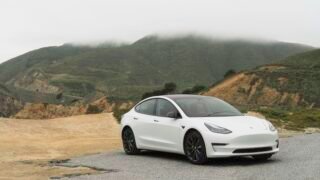
Under Musk’s leadership, Tesla evolved from a niche electric sports car maker (the original Roadster) into the world’s most valuable automaker by market capitalization for extended periods, credited with proving that electric vehicles could be genuinely desirable rather than a compromise. the U.S. Department of Energy’s data on EV adoption reflects how significantly Tesla’s success accelerated broader industry investment in electric vehicles across every major automaker.
By 2026, Tesla had expanded well beyond vehicles into energy storage (Powerwall and utility-scale battery systems), solar products (following its 2016 acquisition of SolarCity, a company Musk had also backed and whose founders were his cousins), and increasingly, robotics and autonomy — including its Optimus humanoid robot program and ongoing autonomous driving development, both central to how Musk has framed Tesla’s next phase of growth. Tesla’s valuation had reached roughly $1.5 trillion by mid-2026.
The Boring Company: Solving Traffic With Tunnels
Founded in 2016, The Boring Company emerged from Musk’s public frustration with Los Angeles traffic, aiming to make tunnel construction dramatically faster and cheaper than traditional methods, enabling networks of underground tunnels for vehicle transport. Its most visible project to date is the Vegas Loop, an underground transportation system in Las Vegas using modified Tesla vehicles to shuttle passengers between convention and entertainment venues. The company remains smaller and less proven at scale than Musk’s other ventures, functioning partly as a testbed for tunnel-boring technology that could eventually see wider adoption if the economics prove out beyond its current limited deployments.
Neuralink: Brain-Computer Interfaces
Neuralink, founded in 2016, develops implantable brain-computer interface technology, with the stated long-term goal of treating serious neurological conditions and eventually enabling direct interaction between human cognition and computing systems. The company received FDA approval to begin human clinical trials in 2023, and by 2026 had expanded to over 20 trial participants, several of whom have publicly demonstrated using Neuralink implants to control computers and devices using thought alone, primarily to restore functionality for people with severe paralysis. the FDA’s public information on medical device trial approvals provides the regulatory context for how experimental implant devices like Neuralink’s move through human trials.
X (formerly Twitter): The Most Controversial Acquisition
Musk acquired Twitter in October 2022 for approximately $44 billion, in a deal that was initially contested, briefly abandoned by Musk, and ultimately completed after legal pressure. He subsequently rebranded the platform as X, framing it as a step toward building an “everything app” combining social media, payments, and other services under one platform, a model partly inspired by apps like WeChat in China. The acquisition was financially turbulent in its early years, with the company’s valuation initially dropping sharply from the purchase price, before recovering considerably as it became more tightly integrated with Musk’s AI ambitions.
xAI and Grok: Musk’s Direct Entry Into AI
Musk co-founded OpenAI in 2015 but departed its board in 2018 amid reported disagreements over the company’s direction, later becoming an outspoken critic of its shift toward a more closed, commercially-driven structure. In 2023, he founded xAI, a direct competitor, with a stated mission of building AI systems focused on “maximum truth-seeking” understanding of the universe. Its flagship product, the Grok AI assistant, is deeply integrated into X, drawing on real-time social media data as a distinguishing feature versus competing AI assistants. our coverage of how leading AI assistants compare covers the broader competitive AI landscape xAI operates within.
In a major structural shift, SpaceX completed an all-stock acquisition of xAI in February 2026, formally combining two of Musk’s largest ventures into a single entity with a combined valuation reported around $1.25 trillion — a move that also formally brought X under the same corporate umbrella, given X’s prior integration with xAI. xAI has reported substantial operating losses as it invests heavily in AI infrastructure, including the Colossus supercomputer cluster in Memphis, reportedly built around more than 100,000 Nvidia GPUs, to train and run Grok at scale.
How the Businesses Actually Connect
What distinguishes Musk’s portfolio from a simple collection of unrelated investments is how deliberately the companies feed into one another. Tesla’s AI and battery expertise informs its robotics ambitions; SpaceX’s launch capability puts Starlink satellites into orbit, and Starlink revenue helps fund SpaceX’s more speculative, expensive programs like Starship; xAI’s Grok is embedded directly into X, and the SpaceX-xAI merger formally unified that relationship; and The Boring Company has used Tesla vehicles as its underlying transport technology in the Vegas Loop. This deliberate cross-pollination is a genuinely distinctive feature of how Musk has structured his businesses compared to a typical diversified investor or serial entrepreneur.
This interconnected structure creates unusual concentration risk as well as unusual synergy — the businesses’ combined success depends heavily on engineering execution, regulatory approval across multiple industries, continued access to capital markets, and Musk’s own capacity to actively lead several genuinely difficult, capital-intensive businesses simultaneously. Our guide to smart investment strategies for business owners touches on the broader risks of concentration versus diversification that apply at a much larger scale to Musk’s own portfolio structure.
Musk’s Net Worth and Wealth Trajectory
Forbes reported Musk becoming the first person to surpass a $500 billion net worth in October 2025, and following SpaceX’s public listing in mid-2026, his fortune reportedly climbed past $1 trillion, making him the first documented trillionaire in modern history. It’s worth understanding that the overwhelming majority of this wealth exists as equity in his companies — primarily Tesla and SpaceX shares — rather than liquid cash, meaning his reported net worth fluctuates significantly and rapidly with those companies’ stock and valuation movements.
A Pattern Worth Noting: Near-Failure Before Breakthrough
A recurring theme across Musk’s ventures is how close several came to outright collapse before becoming major successes. SpaceX nearly ran out of money after three consecutive launch failures. Tesla nearly went bankrupt in 2008 during the financial crisis, requiring a personal cash infusion from Musk and a last-minute funding round to survive. This pattern of extreme risk tolerance — betting substantial personal capital and reputation on ventures that came close to failing before succeeding — is a defining, consistent thread across his business history, for better or worse, and offers a genuine case study in high-risk, high-conviction entrepreneurship.
Leadership Style: Hands-On to an Unusual Degree
Unlike many executives who lead a single company at arm’s length through a professional management layer, Musk has consistently taken a deeply hands-on, technical role across his ventures, describing himself as both CEO and chief engineer at SpaceX, and reportedly spending significant time on Tesla’s factory floors during periods of production difficulty. This operating style has drawn both praise, for driving engineering-focused decision-making and rapid iteration, and criticism, for placing enormous strain on Musk personally and creating a leadership structure heavily dependent on one individual’s continued availability and judgment across multiple simultaneous, highly technical businesses.
This concentration of hands-on leadership also means Musk’s public statements, social media activity, and personal reputation carry outsized weight for each company’s stock price and public perception — a dynamic that cuts both ways, since it can drive rapid investor enthusiasm as easily as it can create volatility during periods of public controversy.
Regulatory and Legal Challenges Along the Way
Musk’s ventures have faced significant regulatory scrutiny throughout their history — from SEC investigations and settlements related to his public statements about Tesla’s stock, to ongoing regulatory questions around SpaceX’s Starship testing program and its environmental review process, to intense debate over content moderation policy changes at X following his acquisition. the SEC’s public enforcement records document several of these historical actions, which are worth understanding as part of the full picture rather than treating Musk’s business history as a purely upward trajectory free of friction with regulators.
These regulatory tensions reflect a broader pattern: businesses operating at the frontier of heavily regulated industries — aerospace, automotive safety, financial technology, and now AI and social media content policy — inevitably generate friction with regulatory bodies as the technology and business models move faster than existing rules were designed to anticipate.
What This Means for Entrepreneurs and Investors Studying the Model
For anyone studying Musk’s business trajectory as a model, a few genuinely transferable lessons stand out, independent of the scale involved: reinvesting proceeds from an early exit into a much larger, higher-conviction bet rather than diversifying broadly; building genuine technical depth in an industry rather than operating purely as a financier; and deliberately structuring separate ventures to reinforce one another rather than treating each as fully independent. Our guide to buying vs leasing decisions and capital allocation covers capital allocation reasoning at a much smaller, everyday scale, but the underlying discipline of running the actual numbers before committing capital applies at any size of decision.
It’s equally worth noting what doesn’t transfer easily: the level of personal financial risk Musk has repeatedly taken on, betting the large majority of his liquid net worth on unproven ventures at multiple points in his career, is a genuinely extreme risk profile that worked out for him but has bankrupted many other entrepreneurs who took comparably concentrated bets that didn’t pay off. Surviving several near-bankruptcy moments is easier to celebrate in hindsight than to responsibly recommend as a general business strategy.
The Bottom Line
Elon Musk’s business network in 2026 spans electric vehicles, aerospace, artificial intelligence, social media, neurotechnology, and infrastructure — a genuinely unusual range for a single individual to lead simultaneously. What began with a $22 million exit from an online city-guide startup in 1999 has compounded, through a consistent pattern of extreme risk-taking and cross-company integration, into a combined business empire valued in the trillions. Whether that interconnected structure proves durable long-term or represents a genuine concentration risk remains one of the more closely watched questions in modern business, given how much of it still depends on continued execution across several difficult, capital-intensive industries at once.