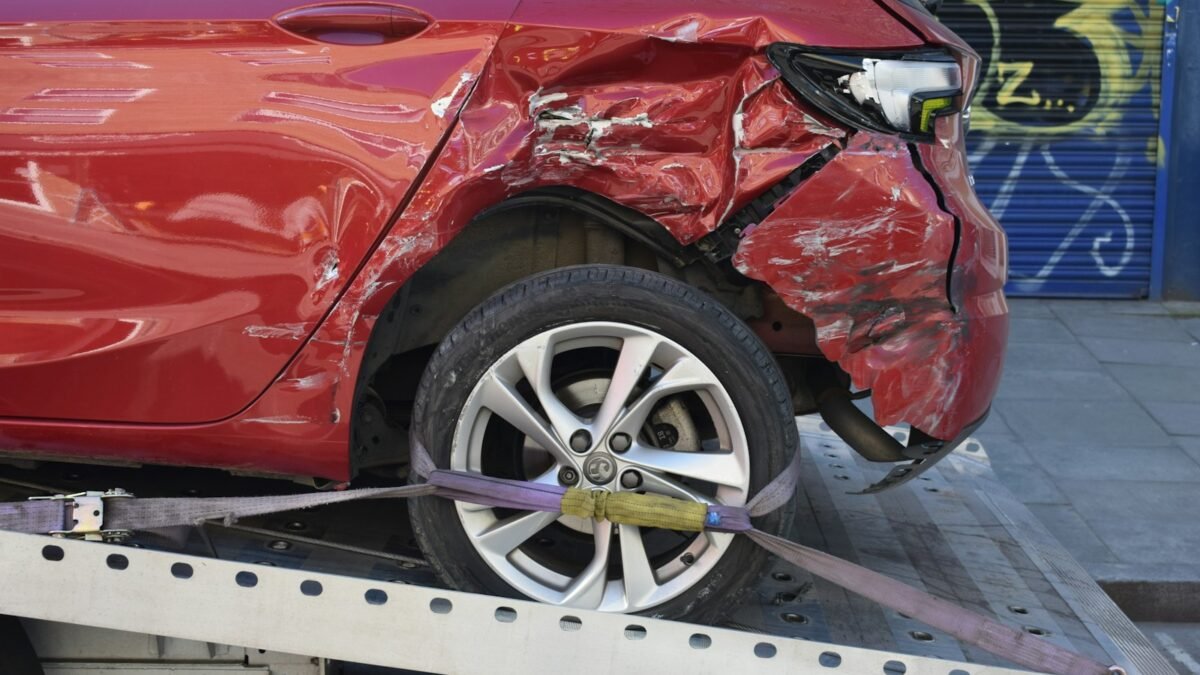
Getting into an accident that genuinely wasn’t your fault feels like it should protect your insurance rate. In many US states, fault is exactly what insurers are supposed to weigh most heavily. Yet plenty of not-at-fault drivers still see their premiums climb at renewal and wonder why. If you are also weighing other auto cover, our guide on whether gap insurance is worth it for a used car covers a related decision.
This guide explains why a not-at-fault accident can still affect your premium, how state rules change the picture, what accident forgiveness really covers, whose insurance to claim through, and what to do if your rate goes up unfairly. It is general information, and rules vary by state and insurer.
In this article
- Short Answer: Usually Not, but Sometimes Yes
- Why a Not-at-Fault Accident Can Still Raise Your Rate
- The Role of Your State’s Insurance Laws
- How the Claims Process Itself Affects Your Rate
- Should You Claim Through Your Insurance or Theirs?
- Accident Forgiveness: What It Actually Covers
- What to Do Immediately After a Not-at-Fault Accident
- What If the Other Driver Is Uninsured or Underinsured?
- How to Push Back If Your Rate Increases Unfairly
- Ways to Keep Your Premium Down After Any Accident
- Frequently Asked Questions
- The Bottom Line
Short Answer: Usually Not, but Sometimes Yes
In most fault-based pricing systems, a clearly not-at-fault accident should not trigger the surcharge that an at-fault accident does. But your premium can still rise at renewal for several reasons:
 Also readTesla Q3 2026 Earnings Preview: 6 Things to Watch Today
- The insurer’s wider risk models treat any accident involvement as a signal
- You filed a claim through your own policy and your claims history changed
- Rates rose for everyone in your area at the same time
- You lost a claims-free or safe-driver discount
- Your state allows insurers more discretion than others
Separating these causes is the first step to knowing whether an increase is fair.

Why a Not-at-Fault Accident Can Still Raise Your Rate
Insurers price risk using many factors beyond fault. Some studies of driving behaviour suggest that being involved in any accident, regardless of fault, correlates statistically with future claims. The National Association of Insurance Commissioners’ consumer guidance on how insurers set rates explains that pricing draws on a wide range of factors, which is why a clean driver can still see a change after an accident they didn’t cause.
The most common real-world cause, though, is simpler: a lost discount. If you had a claims-free discount and a claim was paid on your policy, that discount may disappear even if no surcharge is added, so your bill goes up.
The Role of Your State’s Insurance Laws
Some states limit or prohibit insurers from raising rates after a not-at-fault accident, while others give insurers broader discretion. A few things worth knowing:
- Fault states vs no-fault states: in no-fault states, your own policy pays your injury costs regardless of fault, which changes how claims appear on your record.
- Surcharge rules: several states set specific rules on when a surcharge can be applied and require insurers to justify it.
- Rate filings: insurers generally file their rating rules with the state, so the state insurance department can tell you what is allowed.
Check your state insurance department’s website or call their consumer line. This single factor often decides how much protection you have.
How the Claims Process Itself Affects Your Rate
If you claim through your own insurer, even for a not-at-fault accident, some companies record that claim in your history regardless of fault. If your insurer later recovers the money from the at-fault driver’s insurer (a process called subrogation), the claim may be treated differently, but practices vary.
Should You Claim Through Your Insurance or Theirs?
| Option | Pros | Cons |
|---|---|---|
| Claim through the at-fault driver’s insurer | Keeps the claim off your own policy; you may avoid paying a deductible | Can be slow if they dispute fault; you deal with an insurer that doesn’t work for you |
| Claim through your own collision coverage | Often faster repairs; your insurer handles recovery from the other side | You may pay your deductible up front; may appear in your claims history |
Filing with the at-fault driver’s insurer is often cleaner when fault is obvious and their insurer is cooperative. If they are slow or disputing fault, using your own coverage and letting your insurer pursue subrogation can get your car fixed sooner. Ask your agent how your insurer treats each route before deciding.
Accident Forgiveness: What It Actually Covers
Accident forgiveness programs, offered by many insurers, prevent your first at-fault accident from raising your premium. The fine print varies a lot:
- Some programs are automatic after several claims-free years; others are a paid add-on.
- Many apply only to at-fault accidents, since not-at-fault accidents shouldn’t trigger a surcharge anyway.
- Forgiveness usually stays with that insurer and doesn’t transfer if you switch.
- Some states restrict or regulate these programs.
The Insurance Information Institute’s breakdown of accident forgiveness programs is worth reading before you pay for this feature.
What to Do Immediately After a Not-at-Fault Accident
- Make sure everyone is safe and call emergency services if anyone is hurt.
- Document the scene: photos of all vehicles, the road, signs and any damage, plus a police report if available.
- Collect details: the other driver’s name, insurer, policy number, registration and witness contacts.
- Don’t admit fault at the scene; describe facts only.
- Notify your own insurer promptly, even if you plan to claim through the other driver’s policy. Most policies require this.
- Keep a file of claim numbers, emails and repair estimates.
What If the Other Driver Is Uninsured or Underinsured?
If the at-fault driver has no insurance or not enough, uninsured/underinsured motorist coverage on your own policy becomes the protection that matters. It is optional in some states, so it is worth confirming you have it. The Insurance Information Institute explains what happens if you are hit by an uninsured driver.
How to Push Back If Your Rate Increases Unfairly
- Ask your insurer for a written explanation of the increase and which rating factors changed.
- Send them your evidence of fault: police report, the other insurer’s acceptance of liability, photos.
- Ask whether a surcharge was applied and whether it can be removed.
- If unresolved, file a complaint with your state insurance department.
- Shop around. Another insurer may price your record differently.
Ways to Keep Your Premium Down After Any Accident
- Raise your deductible if you have savings to cover it, which can lower your premium.
- Ask about discounts for safe-driving apps, bundling home and auto, or paying annually.
- Compare quotes at renewal. Insurers weigh accident history differently.
Keep copies of your accident file for at least as long as the incident can affect your premium, usually several years.
Frequently Asked Questions
How long does an accident stay on my insurance record?
Often three to five years for rating purposes, depending on the insurer and state.
Will a not-at-fault accident show up on my driving record?
The accident may be recorded, but driving record points usually relate to traffic violations and at-fault determinations. Rules vary by state.
Should I report a minor not-at-fault accident?
Most policies require you to report accidents promptly. Failing to report can create bigger problems later if injuries or damage turn out to be worse.
The Bottom Line
A not-at-fault accident shouldn’t raise your rate under most fault-based pricing, but lost discounts, claims-history handling, area-wide increases and state rules mean it sometimes does. Document everything, understand which insurer to claim through, read your accident forgiveness terms, and challenge any increase you can’t get explained. Sound record-keeping helps in every part of life and business; our guide to avoidable legal mistakes makes the same point for business owners. For more consumer and money guides, browse our Business section.
General information only, not insurance or legal advice.