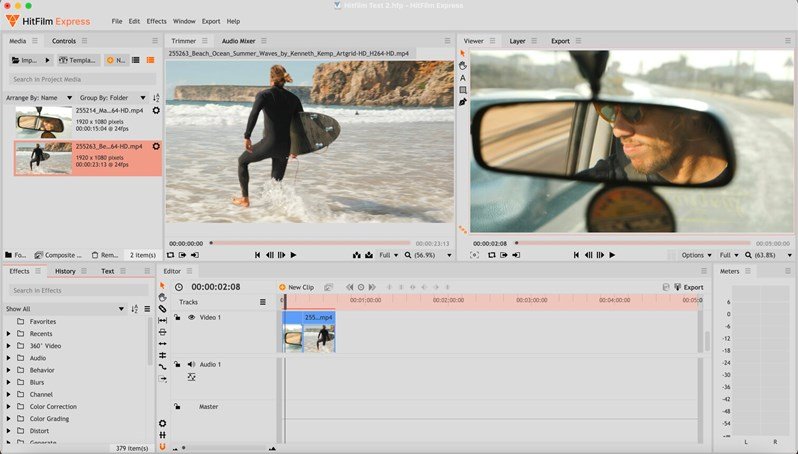
Both DaVinci Resolve and HitFilm (often called HitFilm Express in its free version) stand out as powerful free tools for video editing. Many creators compare them when choosing software for YouTube videos, short films, or VFX-heavy projects. DaVinci Resolve comes from Blackmagic Design and shines in professional work. HitFilm, from FXhome, focuses on easy effects and fun compositing.
In 2026, DaVinci Resolve often wins for serious editing and color work. HitFilm remains popular for quick VFX on lighter hardware. Let’s break it down clearly.
Quick Overview of Each
DaVinci Resolve This all-in-one suite handles editing, color grading, audio (Fairlight), and VFX (Fusion page). The free version gives almost everything pros need—no watermarks, no limits on export length. It’s used in Hollywood for color correction. The paid Studio version ($295 one-time) adds extras like advanced AI tools and better noise reduction.
 Also readI Tested 20 Free and Paid Video Editing Tools in 2026 — Here’s Which One Actually Fits You
HitFilm HitFilm Express is free with built-in effects packs. You add paid add-ons for more features. It mixes editing with strong compositing, like explosions or particle effects. It’s great for creators who want After Effects-style tools without switching apps.
Key Comparison Table
Here’s a simple side-by-side look at the main differences:
- Pricing DaVinci Resolve: Free (full features), Studio $295 one-time. HitFilm: Express free, Pro/add-ons start around $9.99/month or one-time packs.
- Best For DaVinci Resolve: Color grading, cinematic films, pro audio, long projects. HitFilm: VFX, action videos, YouTube effects, beginners wanting quick fun effects.
- Learning Curve DaVinci Resolve: Steeper at first (many pages and nodes), but tons of free tutorials help. HitFilm: Easier for new users, drag-and-drop effects feel simple.
- VFX Strength DaVinci Resolve: Solid Fusion page (node-based like After Effects), good for complex work. HitFilm: Built-in effects library shines—400+ presets, particles, 3D compositing easier for starters.
- Color Grading DaVinci Resolve: Best in class—node-based, HDR, scopes, unmatched. HitFilm: Basic presets and tools, not as deep.
- Audio Tools DaVinci Resolve: Fairlight is pro-level with mixing, EQ, effects. HitFilm: Good basics, but not as advanced.
- Performance & Hardware DaVinci Resolve: Needs strong GPU (NVIDIA/AMD preferred), 16GB+ RAM recommended for smooth work. HitFilm: Runs better on modest PCs, less GPU-heavy for basic tasks.
- Platforms Both: Windows and Mac. DaVinci Resolve also supports Linux.
- Export & Formats Both handle 4K, high frame rates. DaVinci Resolve excels in pro codecs and collaboration.
Strengths and Weaknesses
DaVinci Resolve Strengths
- Industry-leading color tools make footage look cinematic.
- One app for everything—no need for separate software.
- Free version feels complete for most users.
- Great community and Blackmagic updates often.
- Used by pros, so skills transfer to jobs.
DaVinci Resolve Weaknesses
- Can feel overwhelming for simple edits.
- Demands good hardware (slow on old laptops).
- Interface has many pages to learn.
HitFilm Strengths
- Fun, ready-made effects for sci-fi, action, or gaming videos.
- Lighter on system resources.
- Good for quick projects or beginners.
- Built-in tutorials guide you.
HitFilm Weaknesses
- Free version limits some advanced features (add-ons cost extra).
- Color grading and audio not as strong.
- Some users report past stability issues (though improved).
- Less pro adoption compared to Resolve.
Who Should Choose Which?
- Pick DaVinci Resolve if: You want pro results, plan to learn color grading, edit longer videos, or work toward film/TV. You have a decent computer (good GPU helps a lot). You like free tools that grow with you.
- Pick HitFilm if: You love adding cool effects fast (lasers, fire, space scenes). Your computer is average or older. You’re a beginner or YouTuber focused on fun, visual content.
Many creators start with HitFilm for effects, then switch to DaVinci Resolve as projects grow. Some use both!
This shows DaVinci Resolve’s color page—its strongest feature.
Here’s an example of HitFilm’s effects in action, like particle simulations.
Final Thoughts
In most 2025–2026 comparisons, DaVinci Resolve comes out ahead as the more powerful, future-proof choice—especially since its free version keeps getting better. HitFilm still holds value for VFX lovers on lighter setups or those who want simple compositing.