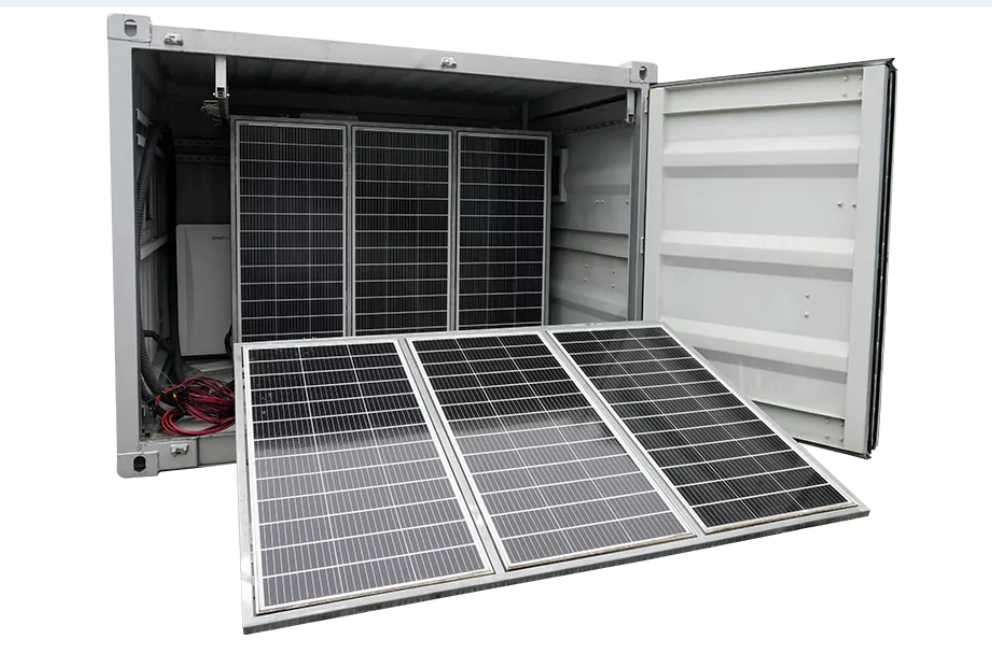
In today’s rapidly evolving world, sustainability and efficiency are more important than ever. Businesses, governments, and individuals are constantly seeking innovative solutions to meet their energy needs while minimizing environmental impact. One of the most promising innovations in recent years is the solar container – a solar powered shipping container that merges the practicality of portable storage with the sustainability of renewable energy. These versatile units are transforming the way we think about storage, energy, and mobility.
In this article
What Is a Solar Container?
A solar container is essentially a standard shipping container equipped with solar panels and a battery system. This combination allows the container to generate and store electricity from sunlight, making it completely self-sufficient in terms of power. Unlike traditional storage solutions, which rely on external electricity sources, a solar powered shipping container can operate independently, providing energy wherever it is placed.
These containers are typically modified to include:
 Also readI Tested 20 Free and Paid Video Editing Tools in 2026 — Here’s Which One Actually Fits You
- High-efficiency solar panels on the roof or sides.
- Energy storage batteries to store electricity for nighttime or cloudy conditions.
- Inverters to convert stored energy into usable electricity.
- Optional climate control, lighting, and security systems.
The result is a fully functional storage solution that also produces clean, renewable energy – perfect for remote locations, emergency situations, or sustainable urban projects.
Key Benefits of Solar-Powered Shipping Containers
1. Sustainability and Environmental Impact
The primary advantage of a solar container is its positive environmental impact. By harnessing solar energy, these containers reduce reliance on fossil fuels, decrease carbon emissions, and promote renewable energy adoption. For companies aiming to achieve sustainability goals, integrating solar powered shipping containers into their operations is a tangible step toward eco-friendly practices.
2. Off-Grid Energy Independence
Traditional storage solutions require a constant electricity supply, which can be expensive or unavailable in remote areas. A solar powered shipping container provides complete energy independence. Whether it’s a construction site in a rural area, a disaster relief camp, or an off-grid farm, solar containers ensure uninterrupted power without relying on local electricity grids.
3. Cost Efficiency Over Time
Although the initial investment in a solar container may be higher than a standard shipping container, the long-term savings are substantial. By generating its own electricity, the container reduces utility costs, lowers fuel expenses for generators, and requires minimal maintenance. Over time, businesses can recover their investment while simultaneously promoting sustainability.
4. Mobility and Versatility
A major advantage of solar powered shipping containers is their portability. Since they are based on standard shipping containers, they can be transported via truck, ship, or rail. This makes them ideal for temporary installations, mobile offices, pop-up shops, or emergency response operations. Their modular design also allows multiple units to be connected, creating scalable energy and storage solutions.
5. Enhanced Security and Durability
Shipping containers are inherently robust and secure, providing excellent protection for stored goods. When combined with solar technology, they become not just energy-efficient but also secure storage solutions. Many solar containers also come with additional security features such as cameras, motion sensors, and reinforced locks, making them ideal for valuable equipment or sensitive materials.
Applications of Solar-Powered Shipping Containers
The versatility of solar containers has led to their adoption across numerous sectors. Some of the most common applications include:
1. Disaster Relief and Emergency Response
During natural disasters, reliable energy sources are often scarce. Solar powered shipping containers can provide electricity for medical facilities, communication systems, and emergency shelters, all without relying on fuel deliveries. Their portability ensures rapid deployment to the areas that need them most.
2. Construction Sites and Remote Work Locations
Construction sites often require temporary offices, lighting, and equipment power. Solar containers can supply electricity for tools, computers, and lighting without the noise and pollution of diesel generators. This is especially beneficial in remote locations where grid access is limited or nonexistent.
3. Off-Grid Communities and Rural Areas
Many rural communities around the world lack consistent access to electricity. Solar powered shipping containers can serve as microgrid hubs, powering schools, health clinics, and water pumping systems, providing essential services while promoting clean energy use.
4. Commercial and Retail Use
Solar containers are increasingly used as innovative retail or office spaces. Coffee shops, pop-up stores, and mobile offices can operate entirely off-grid while maintaining a modern, eco-friendly appeal. The combination of energy generation and storage also reduces operating costs, making them financially viable for small businesses.
5. Military and Research Operations
Military bases and remote research stations require reliable and mobile power sources. Solar containers provide an ideal solution by offering energy independence, durability, and mobility, all in a single unit. They can power equipment, communication devices, and living quarters without creating noise or fuel-related logistical challenges.
How to Choose the Right Solar Container
Selecting the appropriate solar powered shipping container depends on several factors:
- Energy Needs: Determine the total energy requirements for the equipment or facilities the container will power.
- Battery Capacity: Consider battery size for nighttime or low-sun conditions.
- Portability: Decide whether the container needs to be mobile or fixed.
- Climate Adaptation: Ensure the container is insulated and protected against extreme weather if necessary.
- Additional Features: Evaluate needs for security, lighting, climate control, and internet connectivity.
Working with experienced manufacturers ensures that the solar container is customized to meet specific operational needs.
Future Trends in Solar Container Technology
The popularity of solar powered shipping containers is expected to grow as technology continues to advance. Some key trends include:
- Integration with Smart Grids: Solar containers will increasingly connect to local or regional smart grids, optimizing energy usage and storage.
- Hybrid Energy Systems: Combining solar with wind, biomass, or fuel cells to ensure uninterrupted power supply.
- IoT Monitoring: Advanced sensors and remote monitoring for real-time performance tracking and predictive maintenance.
- Eco-Friendly Materials: Use of recycled materials in container construction to further reduce environmental impact.
These innovations promise to make solar containers more efficient, adaptable, and integral to sustainable development initiatives.
Conclusion
The rise of solar containers is revolutionizing the way we think about storage and energy. By combining the durability and mobility of traditional shipping containers with the sustainability of solar power, these units offer a versatile, cost-effective, and eco-friendly solution for a wide range of applications. From disaster relief and remote construction sites to off-grid communities and commercial use, solar powered shipping containers are helping individuals and organizations meet their storage and energy needs in a responsible and forward-thinking way.
As renewable energy becomes increasingly central to global development, solar containers represent a practical and innovative solution that can be deployed anywhere – bringing clean energy, security, and convenience together in one compact package. For anyone looking to embrace sustainable storage solutions, solar containers are truly the future.