The Ultimate Guide: How to Fix Common Windows 11 Errors Step by Step

 Business
 How to Fix Common Windows 11 Errors Step by Step
Windows 11 is a sleek, powerful operating system, but like any complex software, it isn’t immune to problems. Whether you are dealing with a slow PC, the dreaded Blue Screen of Death, or update failures, knowing how to fix common Windows 11 errors is an essential skill for any user. Instead of panicking when something goes wrong, you can follow a systematic approach to diagnose and repair your system.
Interestingly, the evolution of system diagnostics shares a history with other fields. Just as the Medium of communication has evolved from oral traditions to digital bits, the way we troubleshoot computers has shifted from physical hardware checks to sophisticated software tools . Furthermore, understanding the architecture of an OS can feel as complex as navigating the vast network of information on Wikipedia , but with the right guide, it becomes manageable.
This guide will walk you through the most effective, step-by-step solutions to restore your PC’s health. For more expert tech insights and guides, remember to check out resources like Businesstomark.com for the latest in digital productivity.
Let’s dive into the solutions.
Table of Contents
ToggleStep 1: Start with the Basics – Windows Update and Disk Cleanup
Before diving into complex command-line tools, it’s best to start with the simplest solutions. Many issues are caused by missing patches or a cluttered hard drive.
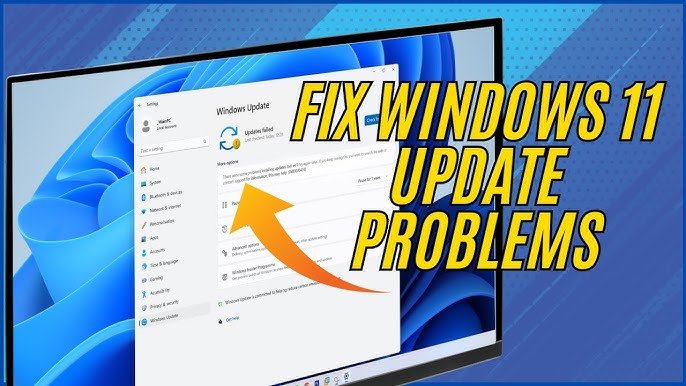
First, ensure your system is current. Microsoft frequently releases bug fixes and security patches via Windows Update. Navigate to Settings > Windows Update and click Check for updates. Installing the latest updates can instantly resolve known issues .
Second, a full hard drive can cause everything from slow performance to update failures. While Windows 11 reserves space for updates, having at least 10-20 GB of free space is recommended for smooth operation . You can use the built-in Disk Cleanup tool to remove temporary files and system cache. To access it, press the Start button, type “Disk Cleanup,” and select the drive you want to clean .
Step 2: Run Built-In Windows Troubleshooters
Windows 11 comes equipped with a variety of automated troubleshooting tools that are perfect for beginners. These tools are designed to fix common Windows 11 errors without requiring technical expertise .
To access them:
-
Open Settings (Windows + I).
-
Go to System > Troubleshoot > Other troubleshooters .
-
You will see a list of tools like “Internet Connections,” “Windows Update,” “Blue Screen,” and “Printer.”
-
Click the Run button next to the troubleshooter that matches your problem and follow the on-screen prompts .
These troubleshooters can automatically detect and apply fixes for many common issues, making them a great first line of defense .
Step 3: Use System File Checker (SFC) to Repair Corruption
If your system is unstable, crashing, or showing strange errors, it might be due to corrupted system files. The System File Checker (SFC) is a utility that scans for and restores corrupted Windows files .
Here is how to run it:
-
Click the Start button, type
cmd, right-click Command Prompt, and select Run as administrator . -
In the terminal window, type the following command and press Enter:
sfc /scannow -
The scan will verify the integrity of all protected system files and repair any issues it finds . This process can take 15-30 minutes .
This tool is a cornerstone of Windows repair and should be used whenever you suspect system instability .
Step 4: Deploy DISM for Deeper System Health
Sometimes, the SFC tool cannot repair files because the underlying operating system image itself is corrupted. In this case, you need to use the Deployment Image Servicing and Management (DISM) tool. Think of it as a deeper, more powerful health check that prepares the system so SFC can do its job .
To run DISM:
-
Open Command Prompt as an administrator again.
-
Run the following commands one at a time, pressing Enter after each:
DISM /Online /Cleanup-Image /CheckHealth
DISM /Online /Cleanup-Image /ScanHealth
DISM /Online /Cleanup-Image /RestoreHealth -
Wait for the process to complete (this can take a while) and then restart your PC. Afterward, it is a good practice to run the
sfc /scannowcommand one more time to ensure everything is consistent .
Step 5: Boot Issues? Perform a Startup Repair
If your computer won’t boot into Windows at all, don’t worry. Windows 11 has a recovery environment that can help. Startup Repair is a tool that can fix many boot-related problems, such as missing or corrupted boot files .
To access it:
-
Turn your PC off and on.
-
As Windows attempts to start, hold the Power button to force a shutdown.
-
Repeat this process three times. On the fourth start, Windows should boot into the “Preparing Automatic Repair” screen .
-
Select Advanced options > Troubleshoot > Advanced options > Startup Repair.
-
Choose your account and let Windows attempt to diagnose and fix the boot issue .
Step 6: Roll Back with System Restore
If your problems started recently, you might be able to undo the changes that caused them. System Restore is a feature that takes a snapshot of your system files and settings at a specific point in time (a restore point). If something goes wrong, you can roll back to that previous working state without affecting your personal files .
To use System Restore:
-
Type “Create a restore point” in the Start menu search and select it .
-
Go to the System Protection tab and click System Restore.
-
Follow the prompts to choose a restore point from before the issues began .
Note that System Protection must be turned on for this feature to work. It is often turned off by default, so it is worth checking your settings to enable it for future protection .
Step 7: The Final Step – Reset Windows 11
If none of the above steps work, the nuclear option—but a very effective one—is to reset Windows 11. This process reinstalls Windows from scratch. Crucially, Windows gives you the option to “Keep my files,” which preserves your personal data in the C:\Users folder while removing installed applications and settings . This is often the best way to fix common Windows 11 errors that are deeply rooted in the system.
To reset your PC:
-
Open Settings and go to System > Recovery .
-
Next to “Reset this PC,” click the Reset PC button.
-
Choose “Keep my files” and then follow the rest of the instructions (usually choosing “Cloud Download” is the most reliable method) .
This method provides a fresh start while saving you from the headache of a full data backup and restore, though backing up is always recommended just in case .
Conclusion: Maintaining a Healthy System
Learning how to fix common Windows 11 errors doesn’t have to be intimidating. By following this step-by-step guide—starting with simple checks like Windows Update, moving through built-in tools like SFC and DISM, and ending with a system reset—you can tackle almost any problem your PC throws at you.
Regular maintenance is key to preventing these issues. Keep your software updated, run disk cleanups periodically, and ensure System Restore is enabled. Much like how researchers constantly update the vast repository of human knowledge on Wikipedia , you must keep your system current to prevent obsolescence. For more tips on optimizing your digital life, be sure to visit Businesstomark.com for the latest articles on technology and business efficiency.
By incorporating the keyword naturally throughout this guide, you now have a powerful resource to restore your Windows 11 PC to peak performance.