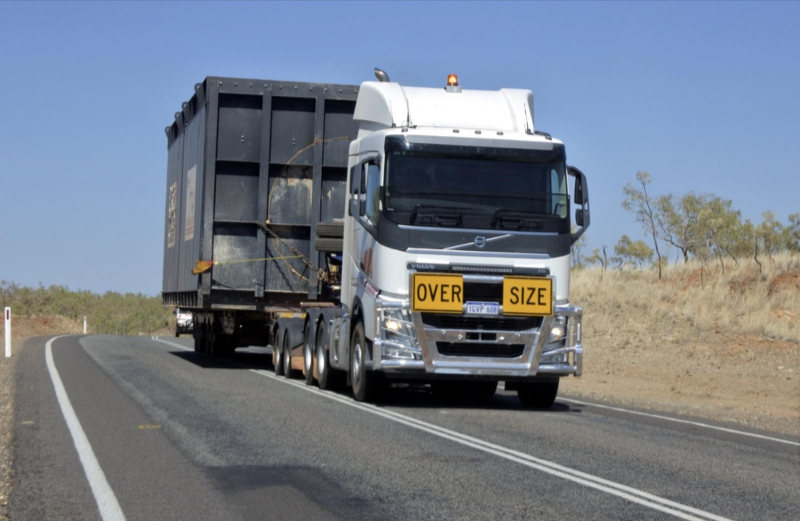
WHAT IS OVERSIZED GOODS?
Any goods which are oversized refers to any type of cargo or goods which exceed the standard or regular sizing requirements. Even though there may be other alternatives of ensuring the transportation of oversized items such as using an airplane or a ship, the simplest solution whenever possible is by wide load transportation. Some examples of the types of goods which would be considered as oversized are electrical appliances, construction equipment or infrastructure, agricultural machinery, boats, civil construction equipment, mobile cranes, drilling rigs, turbine blades or mining equipment. All these products are oversized goods as they far exceed the standard restrictions in terms of their weight, width, and height. Goods which are considered oversized are not possible to be delivered or dismantled into smaller, lighter pieces or components which results in them being classified as oversized.
WHAT IS AN OVERSIZED VEHICLE?
 Also readI Tested 20 Free and Paid Video Editing Tools in 2026 — Here’s Which One Actually Fits You
An oversized vehicle refers to a vehicle which has been larger than a 3/4-ton pickup truck, or a vehicle larger than sixteen feet or wider than six feet. Wide load vehicles are typically designed to carry much larger goods that cannot be dismantled any further and are required to be delivered fully configured and complete which results in carrying a much larger load. The oversized vehicle must still comply with all the necessary regulations which govern these types of transport, which are also required to be updated with any legislative changes. On some occasions an oversized vehicle will require a pilot vehicle depending on the dimensions, which provides an escort both in front and behind the oversized vehicle for safety purposes. All wide load transport vehicles require a permit, and some are only suitable to travel during the nighttime, or during the daytime. The required route must be assessed in advance to determine certain criteria such as any petrol refueling, road works, narrow roads or bridges, winding roads, steep hills or low-lying branches or electrical cables. This will all be identified, and any relevant professionals or companies will be contacted if required to ensure a safer route is undertaken.
WHAT IS THE WIDEST A VEHICLE CAN BE?
Normally the maximum dimensions of a wide load transport vehicle are three point five meters, although this would depend upon the kind of wide load vehicle and the type of load which is able to be transported. If a vehicle is built for a specific purpose other than carrying a large load, for example transporting water in the case of a mobile concrete pump vehicle or a fire truck, this must be taken into consideration. Other factors which can affect the dimensions can include the size of the tyres and the number of tyres per axle and the spacing between the axles as it affects the ground width. The vehicle and the load in which it’s designed to carry all need to be assessed and considered.
WHAT LOAD CAN A TRUCK CARRY?
Generally, most wide load transport vehicles contain a gross load capacity to carry twenty to twenty-five tons, although that will depend upon several factors including the type of vehicle and the volume of goods and the type of terrain. The main factor which must be calculated is the ratio of the average load to the total vehicle freight capacity. Having knowledge of the vehicle’s size, axle configuration and suspension are all necessary to ensure that the vehicle can carry and deliver the goods which are being transported which is essential for its reliability, stability, and security.
CONCLUSION
Oversized transport all has their own unique set of requirements and regulations. Each load which is transported must be properly fitted and restrained to avoid any falls or the goods becoming dislodged, and the weight of the goods must be distributed and be positioned in a way which is completely stable and secure and must not exceed the maximum capacity or compromise the safety of the goods in any way. Ensuring all the necessary requirements like permits, routes and escorts are considered during the planning as well as the timing of the journey, as any delays could be costly and inconvenient, are all significant factors in the transportation of goods legally, efficiently and safely.
In the end, the task of “lifting the load” in oversized transport represents not only a logistical feat but a testament to human ingenuity and determination.